The Pie and Mash Paradox: A London Institution Battles for Survival
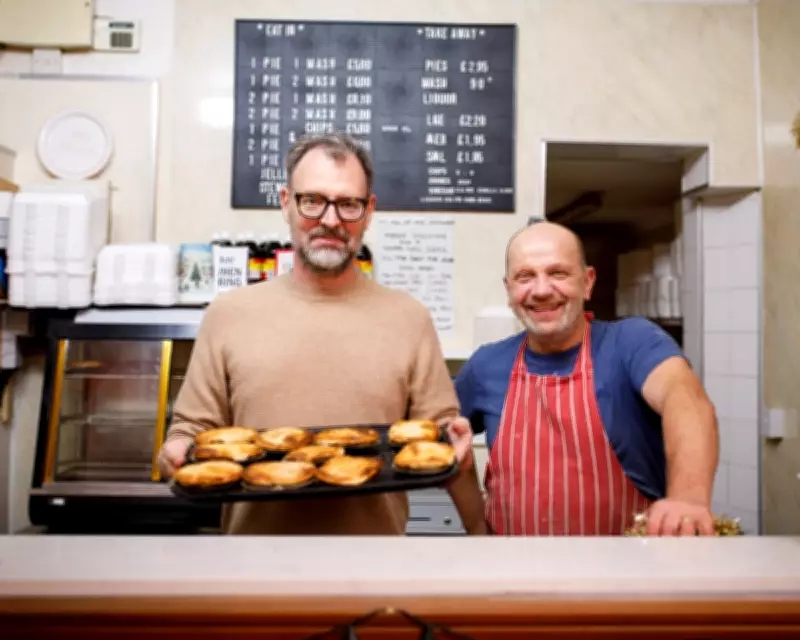
Rain lashes against the windows of BJ's Pie and Mash cafe on Barking Road in Plaistow, the pavement outside a deserted blur. Inside, proprietor Nathan Jacobi surveys his domain, where a "CASH ONLY" sign stands defiantly on the counter. When card machine companies suggest he's missing out, Jacobi retorts with East End pragmatism: "They're the ones missing out. Cos they ain't getting pie and mash." This scene encapsulates the complex struggle of London's traditional pie and mash shops, caught between nostalgic revival and unrelenting decline.
A Surprising Social Media Resurgence
Recent headlines suggest a remarkable comeback for what the Washington Post termed "London's original fast food." The TikTok generation's fascination with these establishments and their obscure customs has brought renewed attention. M Manze's in Bermondsey, founded in 1902 as London's oldest surviving pie and mash shop, reports unprecedented busyness. At Goddards in Greenwich, queues stretch down the street every weekend, suggesting a vibrant revival of hearty "cockney cuisine" with its working-class East End roots.
The Stark Reality of Relentless Decline
Behind this flurry of enthusiasm lies a sobering truth. Where once hundreds of pie and mash shops thrived across London, now barely more than thirty remain. The Pie and Mash Club's website lists five closures in Greater London during 2025 alone, including another Manze's on Deptford High Street which shut after more than a century in business. That final day saw queues not for trendiness, but to mark the end of an era. Yet amidst the closures, new establishments like Barney's in Walthamstow (opened 2018) and Bush Pie & Mash in Shepherd's Bush (acquired 2021) suggest a more nuanced picture.

The Intimidating Rituals of Tradition
Food blogger James Dimitri, who has visited nearly all London's pie and mash establishments, describes a divided landscape: "A lot of the ones I go to, they're packed at lunchtimes... Others are doing less well." Jonathan Nunn, co-editor of Vittles magazine, identifies the insular nature of pie and mash culture as both its charm and its challenge. "There's an insularity about pie and mash which is one of the reasons why people love it. On the other hand, that insularity makes it difficult to induct new customers," he observes, noting the arcane rituals that can intimidate outsiders.
These rituals include eating with only a fork and spoon (never a knife), flipping pies to make Xs in the bottom crust, and liberally applying salt, white pepper, and chilli vinegar. "You must put the vinegar on, because it changes the meal altogether," insists Jacobi, who traces the no-knife tradition to World War II metal drives, a story he heard from a Chelsea pensioner in full regalia.
The Eel Question and Evolving Traditions
Originally filled with eels as a cheap protein source, pies switched to minced beef as economics shifted in the late 19th century. Today, eels survive as a side dish - stewed or jellied - representing what Nunn calls "a decidedly acquired taste." Jacobi acknowledges that jellied eels mainly appeal to older customers, though his son enjoys them having been brought up with the tradition. The liquor (parsley sauce) traditionally uses eel stock, though Jacobi alternates batches with potato water based on availability.
Innovation Versus Tradition
BJ's itself represents the tension between preservation and adaptation. Jacobi offers chips alongside mash (fried in beef dripping rather than palm oil - "At least I'm saving orangutans"), serves mash in domed scoops rather than traditional scraped cliffs, and provides gravy as an alternative to liquor. These innovations draw criticism from purists. "You put this on the internet, that you've had pie and chips, the stick you'll get," Jacobi acknowledges.

Online platforms present both opportunity and challenge. TikTok and YouTube bring valuable exposure, with influencers regularly visiting. Yet bloggers can be doctrinaire, deducting points for non-canonical offerings, while new critics sometimes misunderstand the culture. Jacobi recalls one woman giving three stars because "a geezer moaned at her for leaving the door open." American food critic Keith Lee's assessment that pie and mash represents comfort food rather than culinary revelation sparked debate last year.
The Protected Status Debate
In October 2024, MP Richard Holden called for pie and mash to receive Traditional Speciality Guaranteed (TSG) status. Fifteen representative producers agreed on a standardised recipe in February 2025. This raises crucial questions: would such designation provide a lifeline or create a straitjacket? The pie and mash shop itself emerged from innovation - providing indoor dining as an alternative to street pie sellers, switching from eel to mince when economics demanded. Now that tradition has become the point, innovation risks being seen as a drawback.
Dimitri represents the purist perspective: "I like the ones that strictly just do pie and mash and nothing else. The core audience... don't want them to change." Nunn takes a more pragmatic view: "Having the choice of gravy, or vegetarian pies, if those are things that will help pie and mash shops thrive in 2026 London, then I would rather that happen." He considers liquor the one non-negotiable element of the tradition.
The Business Reality
Running a traditional pie and mash shop demands extraordinary commitment. Jacobi describes the gruelling routine: "Tuesdays and Thursdays I mince me own meat... you're here at five o'clock every morning, preparing pies for four or five hours. So you're not earning a penny, you're just preparing pies." BJ's survival owes much to his father Benjamin owning the freehold when he opened in 1982, returning to the East End after council resistance to his suburban Elm Park venture. Today, BJ's stands as Newham's only surviving pie and mash shop.
As the rain slows at BJ's, the shop begins to fill with customers. Jacobi moves between tables, holding court while working. The scene embodies the central question: can social media attention and protected status ensure the survival of London's original fast food, or must these establishments mutate to endure? The answer likely lies in balancing respect for tradition with adaptation to contemporary London, preserving what Nunn calls "a comforting working-class dish" while making it accessible to new generations. The survival of pie and mash may depend on embracing both its history and its potential evolution.