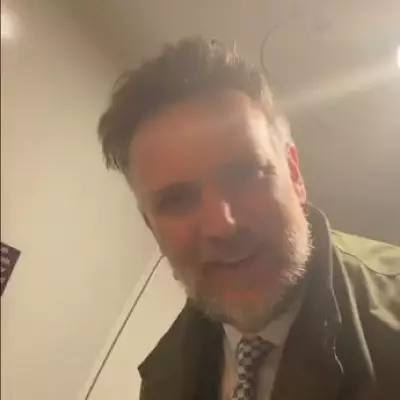
Mark Constantine, the co-founder of the cosmetics retailer Lush, has launched a robust defence of the company's political activism, labelling sceptics of its 'woke' approach as 'bigots'. In a defiant interview, he insisted that customers who disagree with the firm's pro-Gaza stance should actively boycott its stores.
Defiant Stance on Gaza and Compassion
Speaking to the BBC's Big Boss podcast, Constantine addressed the backlash following Lush's decision to close its shops for a day last September. The move was a protest against the humanitarian situation in Gaza, with the company stating it 'shares the anguish that millions of people feel seeing the images of starving people'.
When questioned on whether shoppers should avoid Lush if they disagreed with this position, Constantine was unequivocal. 'Absolutely you should, that's what you should do,' he stated. 'You shouldn't come into my shop. Because I'm going to take the profits you're giving me and I'm going to do more of that - so you absolutely shouldn't support me.'

Dismissing the 'Go Woke, Go Broke' Myth
Constantine directly challenged the popular notion that companies suffer financially for taking principled stands. He argued that the idea firms 'go woke and go broke' is a false narrative, particularly in the current political climate.
'The figures don't support the anti-woke,' he asserted. 'When you go into detail, especially in the American companies, those that kept to their ideals, they saw their sales rise, they saw their engagement rise. Those that didn't saw it fall.' He maintained that businesses sticking to their principles have ultimately performed better.
Embracing 'Woke' as Empathy
Constantine, who built the Lush empire with his wife, framed his views not as left-wing politics but as fundamental human compassion. 'I'm often called left wing because I'm interested in compassion,' he said. 'I don't think being compassionate has a political stance, I think being kind, being sympathetic, being compassionate is something we're all capable of.'
He proudly embraced the term 'woke', stating: 'I suppose really I like being woke. I've been waiting all my life for a society that is empathic and sympathetic. And I believe it is there in spades.' He defined this as being thoughtful of others regardless of their sexual orientation or colour.
In a pointed remark about his detractors, Constantine suggested the anti-woke movement was driven by intolerance. 'It's just a lot of people who would prefer to be bigoted in one way or another are fed up with being force-fed by people like me, stuff they don't want to hear,' he said. 'The question is, is it that you can't change, or that you won't change?'