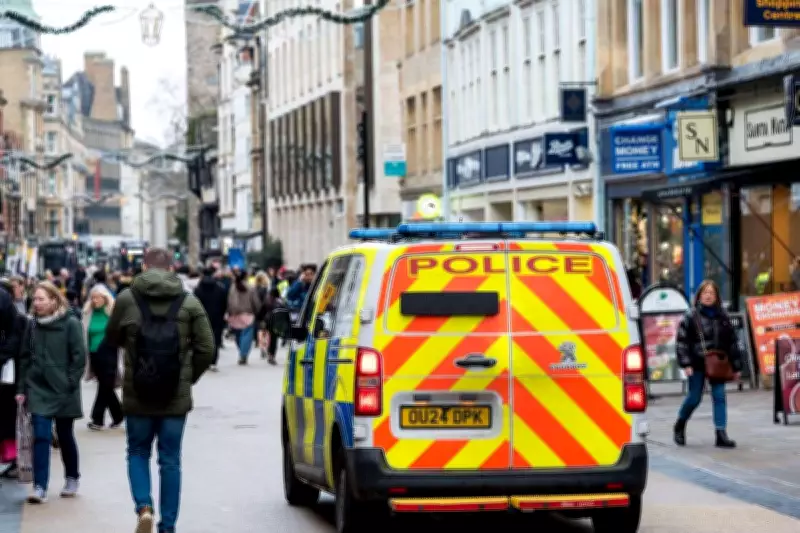
Retail Violence Declines by One-Fifth but Stays at Second Highest Recorded Level
Violence and abuse directed at retail workers in the United Kingdom fell by a fifth last year, according to new figures. However, the overall number of incidents remains at its second highest level on record, described as "unacceptably high" by industry leaders.
Daily Incidents of Physical Violence Remain Stubbornly High
The British Retail Consortium (BRC) Crime Report reveals that incidents involving physical violence against retail staff showed little change from the previous year, averaging 118 per day. Additionally, there were an average of 36 incidents daily involving weapons, highlighting the persistent dangers faced by workers.
The overall reduction from approximately 2,000 incidents per day to 1,600 represents what the BRC calls "hard-won" progress. Yet, this figure remains far above the pre-pandemic level of 455 daily incidents, indicating a significant ongoing challenge.

Improved Police Response and Security Investments Show Impact
The report notes a slight improvement in police responsiveness, with 13% of retailers now rating police response to incidents as good or excellent, up from 9% in the previous year's assessment. Retailers have also invested heavily in security measures, spending more than £5 billion over the past five years on enhancements such as CCTV systems and security personnel.
This substantial investment is "starting to pay off," according to the BRC, contributing to the overall decline in incidents. However, theft continues to pose a major problem, with 5.5 million detected incidents last year costing retailers nearly £400 million. The BRC warns that many incidents go undetected, suggesting the true financial impact is likely much higher.
Organised Crime and New Threats Emerge
The report highlights an increasing trend of organised criminal gangs targeting high-value, easily resold goods, exploiting perceived lack of consequences. For the first time, the report includes data on parcel theft, which cost retailers more than £100 million last year alone.
Upcoming legislative changes through the Crime and Policing Bill aim to address these issues by introducing a standalone offence for assaulting retail workers and removing the £200 threshold for what is currently considered "low level" theft.
Industry Leaders Call for Continued Action
BRC chief executive Helen Dickinson stated: "Violence remains endemic. No-one should go to work fearing for their safety, and we must redouble our efforts to bring these numbers much further down once and for all." She emphasized the growing link between theft and organised criminal gangs who systematically target stores, stealing tens of thousands of pounds worth of goods in single operations.
Dickinson called for continued collaboration between retailers, police, and government, focusing on consistent enforcement, improved data and intelligence sharing, and targeted action against prolific offenders and organised criminal networks.
Joanne Thomas, general secretary of shop workers union Usdaw, welcomed the reduction in violence and abuse but cautioned: "Both Usdaw and BRC data shows that retail workers continue to face unacceptable levels of violence and abuse simply as a result of going to work." She noted that two-thirds of attacks on retail staff are triggered by theft or armed robbery, with repeated offences causing anxiety, fear, and physical harm beyond the immediate theft incidents.
The report underscores that while progress has been made through significant security investments and slight improvements in police response, retail workers continue to face substantial risks, with theft remaining a huge issue that frequently escalates into violence against staff.