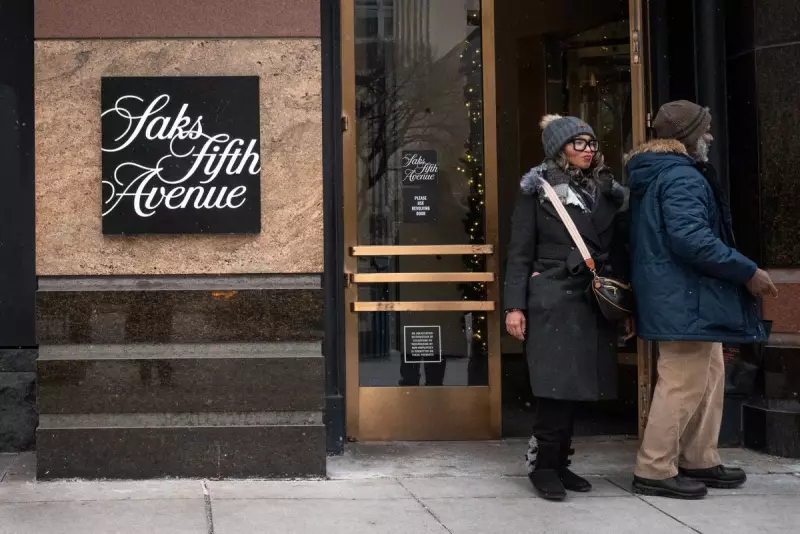
The future of America's largest luxury department store group hangs in the balance after its parent company, Saks Global, filed for Chapter 11 bankruptcy protection. The move, confirmed on Tuesday 13 January 2026, casts significant doubt over the fate of iconic retail brands including Saks Fifth Avenue, Bergdorf Goodman, and Neiman Marcus.
A Defining Moment and a New CEO
In an official press release on Wednesday 14 January, the conglomerate announced it had initiated proceedings in the U.S. Bankruptcy Court for the Southern District of Texas. Simultaneously, it revealed a leadership change, appointing Geoffroy van Raemdonck as its new Chief Executive Officer with immediate effect. Van Raemdonck previously led the Neiman Marcus Group before its acquisition by Saks in 2024.
"This is a defining moment for Saks Global, and the path ahead presents a meaningful opportunity to strengthen the foundation of our business and position it for the future," the newly installed CEO stated. The company has secured $1.75 billion in debtor-in-possession financing from creditors to support its operations during the restructuring process.

Uncertainty for Stores and Designers
The bankruptcy filing creates profound uncertainty for the group's extensive network of high-end stores in major cities like New York, Chicago, and Los Angeles, as well as international locations. While Chapter 11 does not force immediate liquidation, it often allows companies to renegotiate or terminate costly property leases.
In its statement, Saks Global indicated it is "evaluating its operational footprint to invest resources where it has the greatest long-term potential." It has filed customary 'first day' motions to continue honouring customer programmes, paying vendors, and maintaining employee wages and benefits. However, industry analysts, cited by The New York Times, suggest the filing could lead to the closure of multiple Saks and Neiman Marcus locations.
The ripple effects extend beyond the company's own employees. The bankruptcy could also jeopardise numerous small and independent designers who rely on the group's department stores to sell their products.
Root Causes: Debt, Acquisitions, and a Shifting Market
The filing did not come as a complete surprise. The Independent had previously reported predictions from unnamed sources, who pointed to the group's unsustainable debt burden. This financial strain was exacerbated by the $2.65 billion acquisition of Neiman Marcus in 2024. Last month, the company reportedly failed to make a $100 million interest payment related to that purchase.
Leadership turmoil also preceded the bankruptcy. The firm's former CEO, Marc Metrik, resigned in January. Some observers have criticised his management style, while others pinpointed the expensive Neiman Marcus deal as the core problem.
Ultimately, the filing reflects broader challenges facing traditional retail. The sector has been fundamentally disrupted by the rise of online, direct-to-consumer shopping, which has eroded brick-and-mortar revenues. Saks Global's bankruptcy is part of a wider wave of corporate insolvencies, which hit a 15-year high in 2025 as companies contended with inflation, rising costs, and trade policy impacts.
A spokesperson for Saks Global did not immediately respond to a request for comment from The Independent.