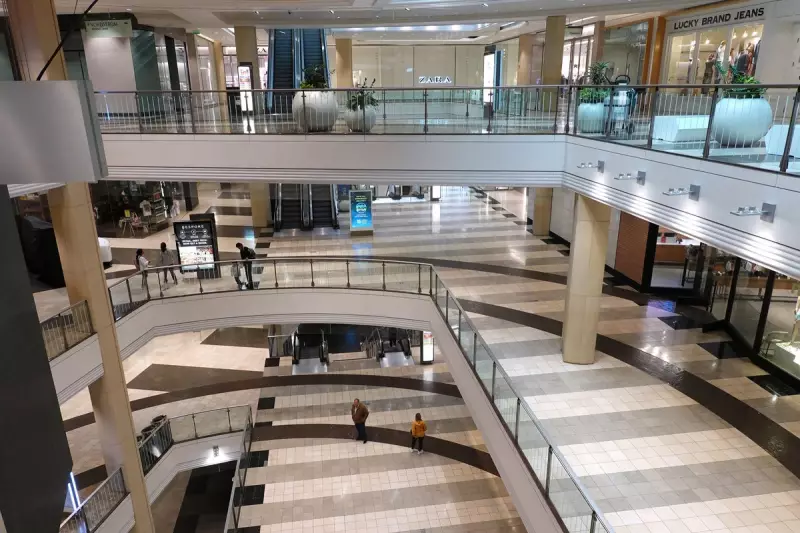
The San Francisco Center, a once-thriving downtown shopping destination previously known as the Westfield Mall, will permanently close its doors on Monday, January 26, marking a significant blow to the city's retail landscape. This closure follows a prolonged period of declining visitor numbers and a cascade of store departures, largely attributed to a sharp increase in crime within the surrounding neighbourhood.
A Legacy Lost to Changing Times
Covering an impressive 1.5 million square feet, the San Francisco Center was the city's largest shopping mall and held a cherished place in the community for generations. For decades, it served as a central meeting point and retail hub for residents and visitors alike. "I get really sad thinking that nobody comes here anymore," former customer Ashley Fumore told local media. "My friends and I would always just come here and meet up. We would go in there just window shopping." Another shopper, Liz Ann Keys, echoed the sentiment, stating, "My heart was really, really sad when I saw it was leaving. Just really physically hurt. So many, many happy memories and people have loved this store."
The Impact of Crime on Commerce
Despite its proud history, the mall's fortunes changed dramatically in recent years. A surge in criminal activity, exacerbated by broader economic and social challenges including the Covid-19 pandemic, led to a severe drop in foot traffic. According to an analysis by the San Francisco Standard in September last year, while the city overall saw a decrease in crime, the southern district where the mall is located experienced a staggering 92 percent year-on-year increase.

Specifically, larceny-theft reports to the San Francisco Police Department's Southern District nearly doubled from 955 incidents to 1,876 between January and August compared to the same period in 2024. Citywide reports fell by about 23 percent during that time, indicating the problem was particularly acute in the mall's vicinity. The Standard noted that this surge was primarily driven by nonviolent thefts, creating an environment that deterred shoppers and strained retailers.
The Domino Effect on Retail Tenants
The declining safety perception had a direct and devastating impact on the mall's commercial viability. Businesses began leaving in droves, with notable restaurant chains like Panda Express and Shake Shack among the first to depart. By late 2025, fewer than 20 businesses remained in a centre designed to accommodate around 200 stores, a stark illustration of its rapid decline.
The centre's connection to public transport has already been severed, with its entrance to the Bay Area Rapid Transit (BART) system sealed to the public. Alicia Trost, BART's chief communications officer, confirmed in a statement that the mall's general manager advised of the closure. "Depending on the property's future use, any new ownership may wish to reopen the entrance. At that point BART would entertain a new license agreement for reopening the entrance," Trost stated.
Uncertain Future for a Prime Location
The future of the vast property now hangs in the balance. The building was acquired last year by a consortium of financial institutions, including banking giants Goldman Sachs and JPMorgan Chase, who bid $134 million to take formal control. Their plans for the site remain unclear, but the closure represents a pivotal moment for downtown San Francisco's urban regeneration efforts.
This permanent shutdown underscores the complex challenges facing major city centres across the United Kingdom and beyond, where retail, public safety, and urban planning intersect. The loss of such a significant commercial anchor will undoubtedly have ripple effects on the local economy and community fabric, prompting questions about the future of similar large-scale retail spaces in urban environments.