Connecticut Lawmakers Target Self-Checkout to Tackle Soaring Retail Theft
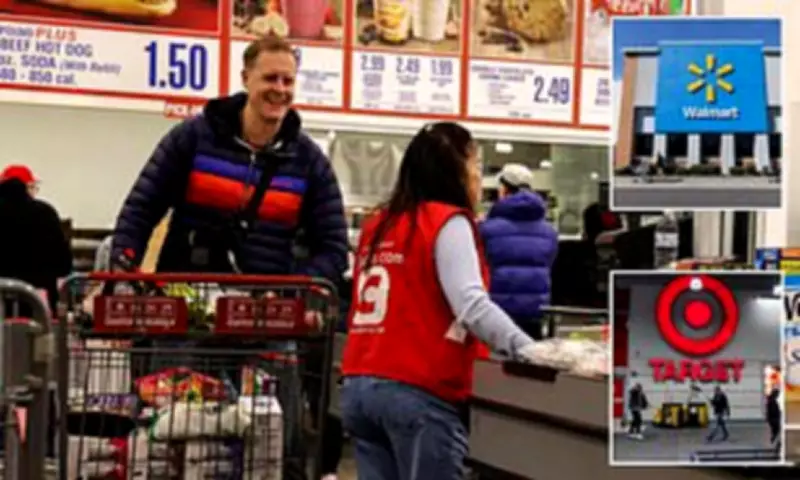
A significant legislative push in Connecticut aims to impose strict new limits on self-checkout systems at major retailers, including Walmart, Target, and Costco. The proposed rules would cap the number of self-checkout machines to no more than eight per store at any given time. Additionally, the legislation mandates enhanced staffing requirements, stipulating that employees can oversee a maximum of two machines each. For every two self-checkouts in operation, at least one traditional staffed checkout lane must remain open.
Driving Forces Behind the Crackdown
Supporters of the bill argue that these measures are essential to combat rampant shoplifting and alleviate the burden on retail workers. According to state data, retailers in Connecticut suffered losses of $895 million due to theft in 2022, the most recent year with available figures. This theft also resulted in a substantial $56.8 million loss in sales tax revenue for the state. Ivan Shang of the United Food and Commercial Workers Union Local 919 highlighted the strain on employees, noting, "They could be manning almost a dozen checkouts on their own." Proponents believe that better supervision will deter theft and create a safer, more manageable shopping environment.
Opposition and Concerns Over Business Impact
Critics, however, contend that the legislation represents governmental overreach and could negatively affect both businesses and consumers. State Representative Steve Weir described the bill as "an overreach for sure," adding, "This seems like another punitive regulation on business rather than a real solution." Wayne Pesce, president of the Connecticut Food Association, warned during a public hearing that the rules are "ill-advised" and could disrupt store operations while potentially driving up food prices. Opponents fear that reduced efficiency at checkout points may lead to longer queues and increased costs for shoppers.

National Context and Local Precedents
The Connecticut proposal is part of a broader national trend as retailers grapple with rising theft, often referred to as "shrink" in industry terminology. In Southern California, cities like Long Beach and Costa Mesa have already implemented similar restrictions. Costa Mesa, for instance, limits shoppers to 15 items at self-checkout and prohibits the scanning of high-value or locked products such as deodorant and cigarettes. Non-compliant stores face daily fines ranging from $100 to $1,000 per violation, depending on severity. A comparable measure is under consideration in New York City, where lawmakers are also exploring a 15-item cap.
Retailers' Independent Actions and Technological Shifts
Some retailers are proactively addressing theft concerns without waiting for legislative mandates. In 2024, a Walmart store in Missouri removed all self-checkout machines after recording 509 police calls. Following this change, incidents dropped sharply to just 183 calls in the first half of 2025, with arrests nearly halved. Similarly, Dollar General eliminated self-checkouts from 12,000 stores, a move that coincided with an 8 percent increase in first-quarter income. Meanwhile, companies like Sam's Club are investing in AI-powered "Scan & Go" technology to streamline purchases, while Costco is rolling out similar systems without plans to abandon self-checkout entirely.
Statistical Insights and Future Implications
Data from Capital One Shopping reveals that nearly 40 percent of grocery store registers in the United States are now self-checkout kiosks. Although 86 percent of shoppers utilize these systems, theft rates can be up to 65 percent higher compared to traditional staffed checkouts. State Senator Julie Kushner emphasized the need for balance, stating, "I think that making this balance between staffed lanes and self-checkout will help create a better environment for the people of Connecticut." As the debate continues, the outcome in Connecticut could set a precedent for other states seeking to address the complex interplay between retail convenience, employee welfare, and theft prevention.