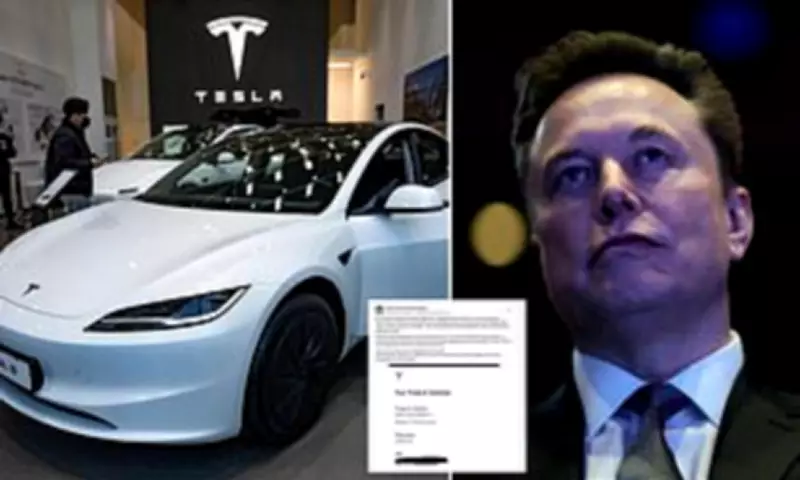
A Tesla owner from Sydney has voiced his dismay on social media after discovering his brand new 2026 Tesla Model 3 Performance had lost almost $37,000 in trade-in value within a mere 12 weeks. The driver, who invested close to $100,000 in the vehicle, had anticipated it would retain its value better than average cars, given its premium status.
Unexpected Financial Hit
The owner shared a screenshot of an official Tesla trade-in estimate, revealing the car's value had plummeted to $63,400. He expressed feeling "beyond frustrated," stating, "I get that cars depreciate, but this feels next level." He added, "You work hard, make what you think is a smart purchase, and then watch tens of thousands of dollars disappear overnight. Pretty hard not to feel ripped off when the numbers hit like that."
Broader EV Depreciation Trends in Australia
This incident aligns with recent data indicating electric vehicles in Australia depreciate at a faster rate than their petrol-powered counterparts. According to the Australian Automotive Dealer Association's (AADA) Automotive Insights Report for 2025, which analyzed used-car sales over the previous year, one-year-old EVs lose an average of 25% of their value. In contrast, petrol models depreciate by about 11.5%, and diesel vehicles (excluding utes and vans) see only a 5% drop. Hybrid electric and petrol cars fare best, with a minimal 1.7% depreciation over a year.

Factors Driving Rapid EV Depreciation
Several reasons contribute to the steep decline in resale value for fully-electric vehicles. The AADA points to "aggressive OEM discounting" by manufacturers, which introduces new models at prices competitive with used ones. For instance, in 2024, the Tesla Model 3's price fell from $61,990 to $54,990, and the Model Y dropped from $65,400 to $55,900, as reported by drive.com.au. Other brands like Jeep, Nissan, Ford, and MG have also slashed EV prices, with MG's MG4 decreasing from $40,990 to $30,990.
Additionally, rapid advancements in EV technology make newer models more appealing due to features like improved cooling and charging capabilities. The influx of new EV brands from China, challenging established carmakers with lower prices, further pressures resale values. This contrasts with past claims by Tesla CEO Elon Musk, who suggested in 2019 that Teslas could increase in value through software upgrades for self-driving features.
The Sydney driver's experience underscores a growing concern among EV owners in Australia, where the promise of premium value retention often clashes with market realities. As the EV landscape evolves, consumers may need to recalibrate expectations regarding depreciation, especially with ongoing price cuts and technological innovations reshaping the automotive sector.