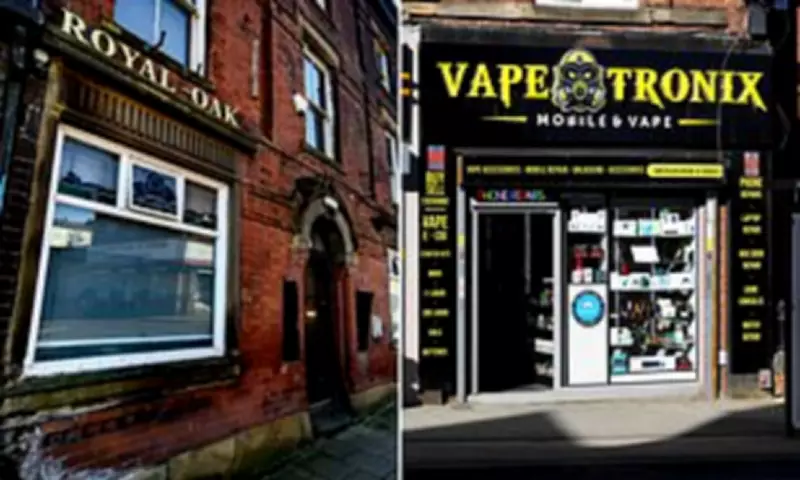
UK High Street Crisis: Seven Pubs Lost for Every New Vape Shop Opened
New analysis reveals a stark transformation of Britain's high streets, with nearly 1,800 pubs and bars closing over the past decade while 245 new vape shops have opened across the country. The Centre for Social Justice (CSJ) found this represents a ratio of seven pubs lost for every new vape store established, highlighting what experts describe as "irreparable harm to the social fabric" of communities.
The Numbers Behind the Decline
The CSJ research shows Britain now has more than 2,200 vape shops nationwide, with the spread uneven across regions. While Westminster has gained 35 more pubs and ten additional vape shops since 2015, areas like Oldham have suffered dramatically, losing 30 pubs in the same period while gaining ten vape shops.
"This place used to be heaving with people. Now look at it," said Robert Dunn, 76, a retired TV manufacturer from Oldham. "There's no jobs in the town now. And if there's no jobs, there's less money around. The pub used to be central to the community but a lot have closed because no one goes to them."

Community Impact and Safety Concerns
Residents describe high streets increasingly dominated by what they call "dodgy shops" - vape stores, mobile phone repair outlets, and discount stores that have replaced traditional community hubs. Jill Kirk, 57, an admin assistant celebrating St Patrick's Day at The Town Hall Tavern in Oldham, said: "Oldham has gone. It's lost its identity. It's just full of dodgy-looking food shops, mobile phone repair shops and barbers. And there seems to be a vape shop on every corner."
Beyond aesthetic concerns, vape shops present significant safety risks. Their volatile lithium batteries create what experts describe as a "powder keg" that could spark deadly fires, as demonstrated by the devastating Glasgow fire this month. Many residents suspect illegal operations, with one noting: "There's always rumours that most of the vapes they sell are from under the counter."
Regional Disparities and Criminal Concerns
The data reveals Greater Manchester has been particularly affected, with towns transforming from community-oriented hubs to rows of vacant units and vape shops. In Salford, ten vape shops opened while 25 pubs closed over the past decade. Bolton saw ten new vape shops register since 2015 alongside five pub closures, while Rochdale's vape shops doubled as it lost 35 pubs.
Josh Nicholson, head of housing and communities at the CSJ, explained: "There was a significant increase of vape shops in areas that are associated with low income, poverty and disadvantage. Because often those areas are cheap to set up in. What we've witnessed is a sort of explosion of organised criminals operating out of these shops."
Broader Retail Shifts and Public Opinion
The vape shop proliferation coincides with other retail changes. Since 2015, Britain has seen a 22 percent increase in barbers, nail salons, and beauty outlets, rising to 91 percent compared to 2010 levels. With an estimated three million unregistered businesses operating nationwide, the number of potentially illegal or unregulated shops is likely far higher than official statistics indicate.
Public opinion reflects growing concern, with almost 70 percent of Britons believing there are too many vape shops on high streets, and 58 percent thinking there are too many barber shops, according to Ipsos polling.
Government Response and Industry Pressure
The hospitality sector faces mounting pressures, with four hospitality businesses closing daily between October and December 2025 under current economic conditions. In January, Chancellor Rachel Reeves announced a £300 million package to support pubs against rising business rates, including a 15 percent discount from April.
However, industry groups warn this may be insufficient. Allen Simpson, chief executive of UKHospitality, told the Daily Mail: "The cost challenges facing hospitality businesses continue to grow and four businesses closing a day in the last quarter of 2025 is the unfortunate reality of a sector shouldering the highest tax burden in the economy."

A government spokesman responded: "Pubs are the heart of our communities which is why we're taking action to protect them. We're giving communities the power to buy local pubs at risk of closing through our Pride in Place programme, and putting money directly into local people's hands to invest in the places they love. This is alongside cutting business rates for pubs and bringing in new licensing laws for vape shops to make sure our high streets flourish."
As Britain's high streets continue to evolve, the tension between traditional community spaces and new retail formats creates complex challenges for policymakers and residents alike, with the fate of local pubs serving as a bellwether for broader social and economic changes.