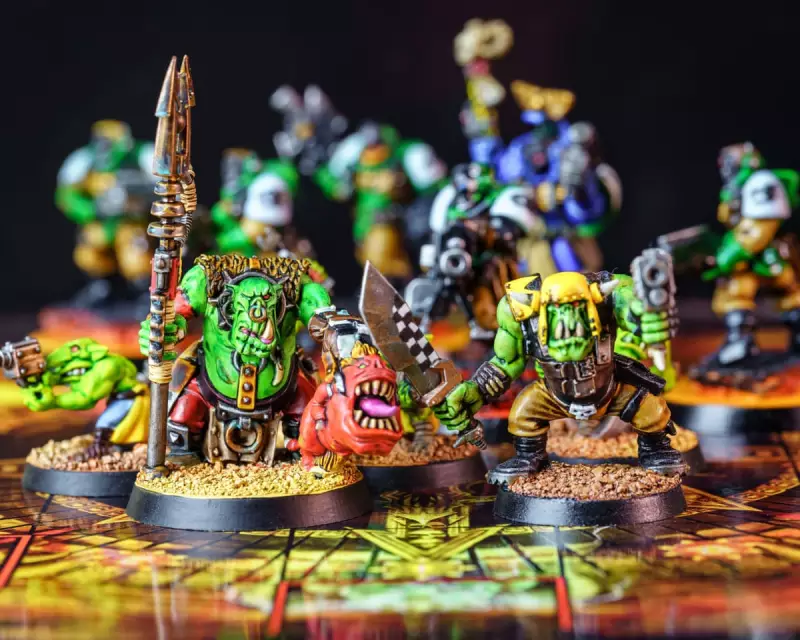
You don't have to command armies of orcs and elves to recognise the name Warhammer. What began as a niche hobby for enthusiasts has exploded into a global phenomenon, with its parent company, Games Workshop, now sitting proudly in the FTSE 100 and valued at an astonishing £6 billion.
From Humble Beginnings to High Street Dominance
The story of Games Workshop is a classic British business fairy tale. In 1975, three friends—Ian Livingstone, Steve Jackson, and John Peake—started a mail-order board games company from their flat. Today, its stores are a familiar sight on high streets across the UK, defying the retail downturn with a business model built on passion and community.
The company's recent financial performance underscores its remarkable growth. Over the past six months, revenues have surged by 10.9%, driven by soaring worldwide demand for its intricately detailed plastic models, which can cost over £100 each.

The Secret Sauce: Community, Craft, and Culture
According to co-founder Sir Ian Livingstone, the key to enduring appeal is simple: "Games Workshop was founded by gamers for gamers." He points to a major cultural shift where being a gamer is now mainstream, celebrated by celebrities like Henry Cavill, Ed Sheeran, and Vin Diesel. Cavill is even set to star in an upcoming Amazon-produced Warhammer film and TV series.
Warhammer is more than a game; it's a multifaceted hobby. It involves painting miniature figures, learning complex rules, strategic gameplay, and immersive storytelling. Games Workshop stores function as community hubs, where expert staff offer advice and host painting sessions, forging friendships through games nights.
Professor Douglas Brown of Falmouth University, who has taught alongside Steve Jackson, calls it "a gaming success story." He notes the company's rare ability to "placate shareholders and fans simultaneously" and successfully monetise geek culture.
A Broader Appeal and a Bright Future
The company's success is built on a loyal customer base, high-quality products, and a vertically integrated model where it controls the entire supply chain. Historian Jordan Sorcery credits smart business decisions, like the 1983 creation of Warhammer, which required players to collect entire armies, not just a few pieces.
While the hobby has been male-dominated, academic Mike Ryder of Lancaster University notes "an increasing number of female fans" in recent years. The stigma around 'geek' culture has faded, thanks in part to franchises like Marvel and Game of Thrones. Furthermore, new product lines offer smaller-scale games, making the hobby more accessible.
Charles Hall, head of research at Peel Hunt, explains the paradox of the company's resilience: hobbies are often viewed as an "essential spend," and the models represent affordable luxuries. For many, the emotional connection is profound. Euan Bennington, treasurer of Derby University's Warhammer Society, values the "sense of belonging," describing the hobby as a calmer, alcohol-free space that helps settle social anxiety.
With plans for a Warhammer World in the US and the major Amazon project on the horizon, Games Workshop is poised to recruit a whole new army of fans, proving that this British-born tale of fantasy and strategy is far from over.