

Good morning, and welcome to our rolling coverage of business, financial markets, and the global economy. Today, we delve into two major stories: the transformative yet turbulent rise of artificial intelligence and a significant downturn in the US dollar.
AI Boom: A Path to Winners and 'Carnage'
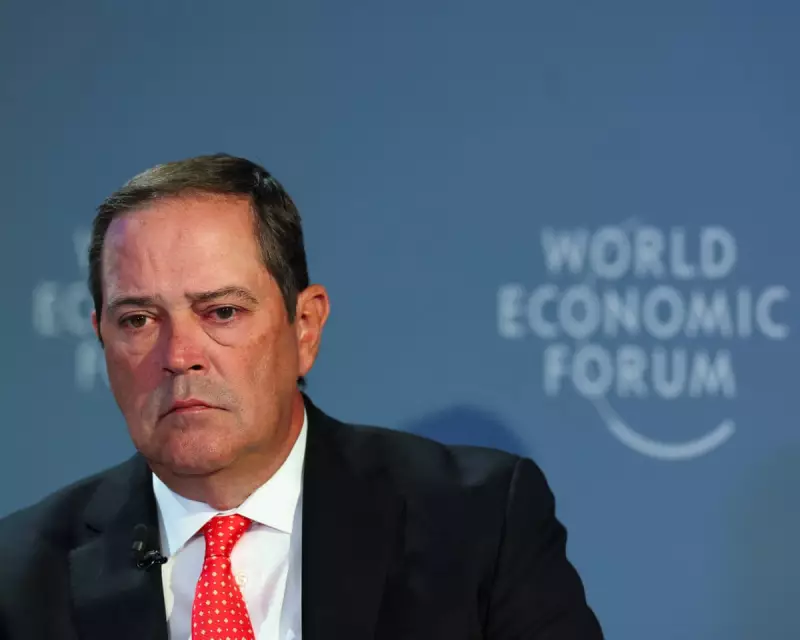
The artificial intelligence revolution is set to reshape industries, but it comes with stark warnings of disruption and instability. Chuck Robbins, the chief executive of Cisco Systems, a leading US technology company that provides IT infrastructure for AI applications, has cautioned that while AI will be "bigger than the internet," the current market frenzy likely represents a bubble.
In an interview with the BBC, Robbins predicted that there will be "carnage along the way," with some companies failing to survive the competitive landscape. He emphasised that AI will inevitably alter the job market, potentially eliminating roles in areas such as customer services where automation could reduce the need for human workers. However, he urged employees to embrace the technology rather than fear it, highlighting opportunities for adaptation and growth.

Echoes of Concern from Industry Leaders
This warning aligns with a series of recent cautions from other top executives. Jamie Dimon, the boss of JPMorgan Chase, has noted that some investments in AI may result in financial losses, while Sundar Pichai, chief executive of Google's parent company Alphabet, has pointed to "irrationality" in the ongoing AI boom. These insights underscore the volatile nature of this technological surge, raising questions about its long-term sustainability and impact on employment.
Dollar Sinks to Four-Year Lows Amid Political Uncertainty
Simultaneously, the US dollar has plummeted to its lowest level in four years, driven by comments from former President Donald Trump and broader economic tensions. The currency fell 1.3% against a basket of major currencies yesterday and has slipped an additional 0.2% this morning, marking four consecutive days of decline.
Trump's remarks, in which he described the dollar's value as "great" despite its recent drop, were interpreted by traders as a signal to continue selling. This has exacerbated pressure on the dollar, which is already struggling due to erratic trade tariffs, foreign policy shifts, and speculation about potential coordinated currency intervention by US and Japanese authorities to stabilise the yen.
Market Reactions and Analyst Insights
Kyle Rodda, a senior analyst at Capital.com, told Reuters that the situation reflects a "crisis of confidence in the US dollar." He suggested that as long as the Trump administration maintains its unpredictable policies, this weakness could persist. Markets are anticipating no change in interest rates at the upcoming Federal Reserve meeting, a stance that may disappoint Trump, who has advocated for lower rates over the past year. Analysts warn this could inject further volatility into dollar trading.
Additionally, attention is focused on the Trump administration's potential announcement of a candidate to replace Fed chair Jerome Powell, along with ongoing investigations and attempts to remove Fed officials, adding to the political and economic uncertainty.
Gold Surges to Record Highs as Safe Haven
Amid this turmoil, gold has continued its ascent, breaking through $5,200 an ounce to reach a new record high. The precious metal, often viewed as a safe haven during times of political and economic instability, jumped 1.7% to $5,278 an ounce. Last year, gold recorded a 64% gain, the largest annual increase since 1979, highlighting its appeal in uncertain times.
Today's Economic Agenda
Key events to watch include:
- 2.45pm GMT: Bank of Canada interest rate decision (no change expected)
- 7pm GMT: US Federal Reserve interest rate decision (no change expected)
- 7.30pm GMT: Fed press conference
Stay tuned for further updates as these developments unfold.






