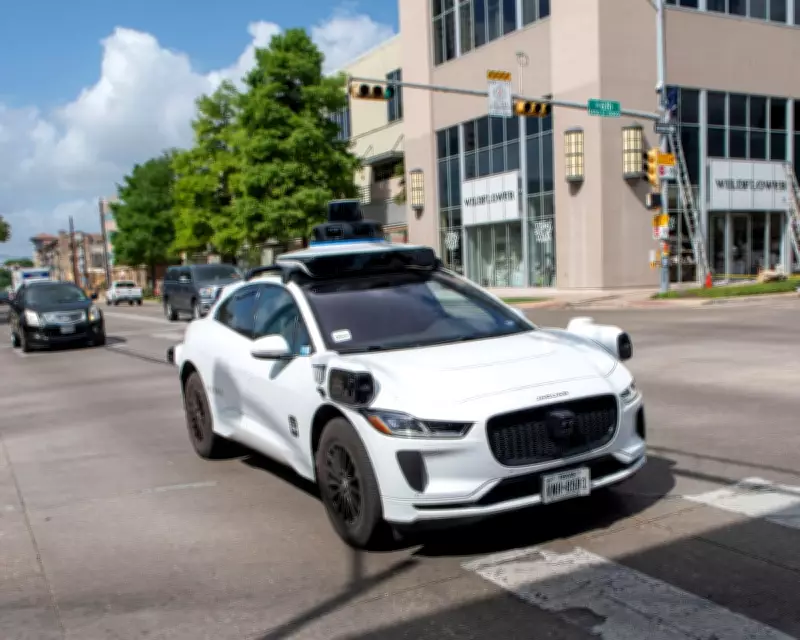
American autonomous vehicle company Waymo is meticulously training its fleet of robotaxis to navigate the distinctive challenges of London's streets, with a particular focus on mastering the city's iconic zebra crossings. The company, which is owned by Alphabet, Google's parent organisation, has revealed that its vehicles have been undergoing manual steering exercises around the capital for the past two months to acclimatise to local road conditions.
Preparing for a British Debut
Waymo currently operates a fleet of approximately twenty-four specially equipped Jaguar cars in London, each fitted with an array of advanced sensors including cameras, radar, and lidar (light detection and ranging) systems. These vehicles are being prepared for what would mark the first commercial deployment of Waymo's driverless technology outside of the United States. Company executives have expressed hope that paying customers will be able to utilise the service by the final quarter of this year, pending necessary regulatory approvals.
Learning London's Nuances
Ben Loewenstein, Waymo's Head of EU and UK Policy and Government Affairs, emphasised the importance of this training phase. "The cars have been manually steered around the city to learn the nuances, learn about the zebra crossings," he stated. This schooling is crucial because London's urban landscape, with its densely packed and often historically narrow streets, presents a significantly different environment compared to American cities like Phoenix, San Francisco, or Austin where Waymo currently operates.

The differences in pedestrian infrastructure are particularly notable. In London, zebra crossings are typically marked by Belisha beacons—flashing yellow orbs on striped poles—and often rely on subtle, non-verbal communication between drivers and pedestrians regarding right of way, rather than the traffic light systems more common in the US.
Technological Showcase and Safety Framework
At a recent event held at the London Transport Museum in Covent Garden, Waymo unveiled one of its UK-specific Jaguar vehicles. Nicole Gavel, a Senior Director at the company, explained that the sensor suite allows the vehicle to "perceive the world around them more accurately and with more of a field of view than human drivers can." Interestingly, these Jaguars are left-hand drive models built in Europe, fitted with autonomous technology in the US, and then shipped back to the UK.
The rollout is contingent upon the finalisation of secondary legislation under the Automated Vehicles Act, which received royal assent in 2024 and established a foundational safety framework for self-driving vehicles in Britain. The Department for Transport has confirmed its intention to launch a passenger piloting scheme this spring, enabling operators to run services across Great Britain subject to stringent safety requirements and local authority consent.
Government Support and Industry Competition
Lillian Greenwood, the Minister for Local Transport, articulated the government's supportive stance. "We are supporting Waymo and other operators through our passenger pilots, and pro-innovation regulations to make self-driving cars a reality on British roads," she said. Greenwood highlighted potential safety advantages, noting that automated vehicles do not suffer from fatigue, distraction, or impairment, but stressed that each vehicle must meet rigorous security standards, including protection from cyber threats.
Waymo is not alone in seeking a foothold in London's emerging autonomous vehicle market. British self-driving firm Wayve and ride-hailing giant Uber are also vying for position. However, the initiative faces opposition from some quarters, including the Licensed Taxi Drivers' Association (LTDA), which represents black-cab drivers and has derisively referred to the robotaxis as a "fairground ride."

Addressing Public Perception and Practical Concerns
Acknowledging the novelty of driverless cars on public roads, a Waymo spokesperson conceded that the sight of an empty steering wheel might initially startle other road users but expressed confidence that people would quickly become accustomed to it. The company is in ongoing discussions with Transport for London (TfL), which has previously noted "considerable uncertainty" regarding the potential for safer driving and has called for assessments on impacts related to congestion and accessibility.
As the industry awaits the final legislative green light, Waymo's training programme underscores the complex adaptation required to transplant American autonomous vehicle technology into the unique and historic fabric of London's transport ecosystem. The coming months will be critical in determining whether these AI-powered Jaguars can successfully earn their stripes on the capital's streets.