Jallikattu: Tamil Nadu's Ancient Bull Festival Thrives Amidst Controversy
In the pre-dawn darkness of Avaniyapuram, within the southern Indian state of Tamil Nadu, thousands gather with palpable anticipation. The annual Pongal harvest festival reaches its dramatic climax with Jallikattu, a centuries-old tradition where men test their courage against charging bulls. Makeshift spectator galleries line both sides of a barricaded track, with latecomers scrambling onto nearby rooftops for a vantage point.
The Thrill of the Chase
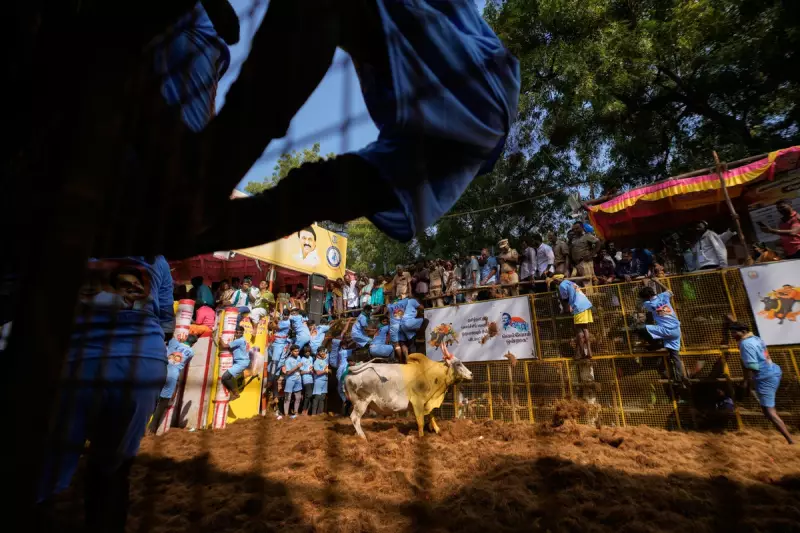
At one end of the arena, dozens of barefoot competitors in brightly coloured numbered shirts jostle for position, climbing onto each other's shoulders to peer through a narrow opening. Suddenly, a stout bull bursts through the gate, leaping several feet into the air as it emerges. Two men immediately throw themselves onto the animal's back, desperately trying to grasp its distinctive hump. Within seconds, both are thrown off as the bull charges down the track.
The competitors regroup, their eyes fixed on the gate where another bull stands adorned with marigold garlands and vermillion paste - sacred markings from pre-event Hindu rituals. This bull charges directly at the men rather than following the track, sending participants scrambling onto barricades and cowering near the edges. One quick-thinking competitor seizes his moment, leaping onto the distracted animal and clinging to its hump as it turns down the track, triggering thunderous cheers from the captivated crowd.

Tradition and Triumph
Jallikattu represents more than mere spectacle - it's a deeply ingrained cultural practice where participants demonstrate valour and skill. While prizes include practical items like utensils, mattresses, bicycles and occasionally even cars, most competitors seek something more valuable: the esteem and adulation of their communities.
Manikanda Prabhu, known locally as Mudakathan Mani, stands as one of Jallikattu's most celebrated champions. Between 1996 and 2023, he claims approximately 4,000 victories across Tamil Nadu. A contestant achieves victory by holding onto the bull for three jumps, thirty seconds, or fifteen metres (forty-nine feet).
"I was passionate about it from a very young age and traveled across the state to compete in Jallikattu events," Prabhu explains from his modest office in nearby Madurai. The space displays numerous trophies and even a framed honorary doctorate from a virtual university. Less visible are the physical scars accumulated over decades of competition. "I now own bulls and train young men to compete in the sport," he adds with evident pride.
Competitor Perspectives
Siva Swamy, a construction worker with thirteen years of Jallikattu experience and multiple victories, describes the transformative nature of competition. "I am a different man while competing. Adrenaline takes over and makes me feel like a warrior in the arena. Pain and injury don't deter me," he reveals.
Swamy emphasises the intergenerational significance of the tradition: "It's a family tradition and I feel good to be carrying it forward. I would like to be remembered as a famous champion and be the pride of my village."
Controversy and Legal Battles
Despite its cultural importance, Jallikattu faces significant opposition from animal rights activists who condemn it as cruel. Their petitions succeeded in 2014 when India's Supreme Court imposed a nationwide ban. However, massive protests across Tamil Nadu prompted legislative intervention, with new laws in 2017 specifically exempting Jallikattu from animal cruelty legislation.
Unlike the famous running of the bulls in Pamplona, Spain, Jallikattu bulls receive careful treatment and aren't harmed after events, being maintained in good condition for future competitions. This distinction forms part of defenders' arguments that the tradition respects the animals while celebrating human courage and cultural heritage.
The festival continues to evolve within this complex landscape of tradition, regulation, and protest, maintaining its position as a cornerstone of Tamil Nadu's cultural calendar while navigating contemporary ethical debates.