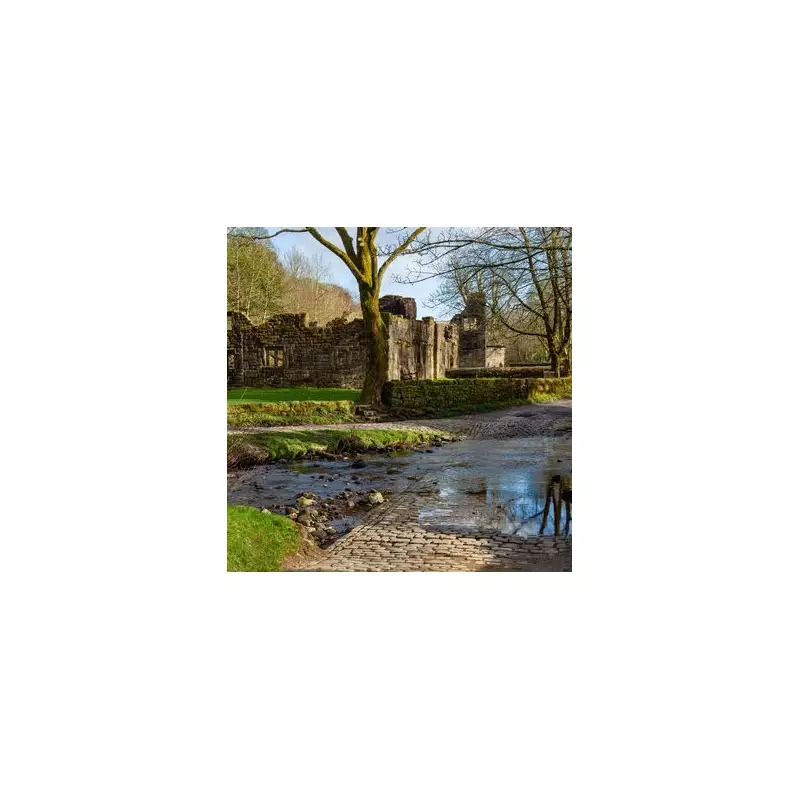
Nestled just four miles from Colne, the deserted village of Wycoller offers a captivating journey through centuries of history, from the Stone Age to its celebrated literary connection with Charlotte Brontë. Saved from neglect by dedicated local volunteers in the 1940s, this picturesque settlement now forms the heart of a free-to-explore country park, managed by Lancashire County Council.
A Literary Legacy in the Ruins
The village's most famous claim to fame is its link to the celebrated Brontë sisters, who lived nearby in Haworth. Literary scholars widely believe that Charlotte Brontë based the fictional Ferndean Manor in her seminal novel Jane Eyre on the now-ruined Wycoller Hall. The author was a frequent visitor to the area, often staying at Gawthorpe Hall with the Kay-Shuttleworth family, and the description of the approach to the manor in her book closely matches the old coach road leading to Wycoller.
From the 16th to the 18th century, Wycoller Hall was the bustling centre of village life. Today, visitors can wander amongst its evocative rubble and imagine the vibrant community that once thrived here, a scene that undoubtedly left its mark on Brontë's imagination.

Ancient Crossings and Deep History
Wycoller's history stretches back far beyond the Brontë era. The tranquil beck flowing through the village is crossed by several ancient bridges, each telling a story of the past. The remarkable Clam Bridge is considered an ancient monument, with origins believed to be over 1,000 years old, placing its construction in the early medieval period.
It is not alone in its antiquity. Sally's Bridge, which famously featured in the classic film The Railway Children, dates from between the 13th and 15th centuries. Meanwhile, the Clapper Bridge, built from large gritstone slabs resting on stone piers, is thought to originate in at least the 16th century. Archaeological finds within the village ruins provide evidence of human habitation extending all the way back to the Stone Age.
A Preserved Escape for Modern Visitors
To protect the site's unspoilt charm, Wycoller is kept deliberately free from modern intrusions. The village is a designated vehicle-free zone, accessible only on foot or to residents with a special permit. This policy ensures the peaceful, timeless atmosphere that draws visitors today.
Recent visitors on TripAdvisor praise its idyllic setting. One wrote: "Wycoller is such a cute, picturesque little place. It has a lovely stream for sitting by or paddling in... perfect for a picnic." Another highlighted the "amazing sights and a lovely shop for snacks," along with trails, bridges, and wildlife.
As part of Wycoller Country Park, this forgotten village stands as a testament to community conservation, offering a unique, free day out where nature, profound history, and literary legend beautifully intertwine.