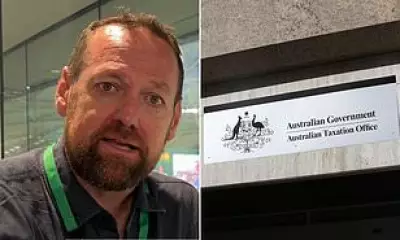
In 1998, a phone call in a Mumbai apartment delivered news so surreal it seemed like a prank. Andrew Rogers, a 34-year-old greenkeeper from Sydney's northern beaches, was told he had won a trip to see the wreck of the RMS Titanic, lying 4,000 metres beneath the Atlantic Ocean.
An Unlikely Prize from the Checkout
The life-altering journey began not at a travel agency, but during a routine supermarket shop. Before leaving Sydney for a family trip to India, Rogers's wife, Winnie, stocked up at a local Franklins store. Every $10 spent earned an entry into a competition, and against odds of 270,000, Rogers's name was drawn at Manly's now-defunct Marineland.
The prize was a seat worth $65,000 on the first commercial expedition to the iconic shipwreck. The joint venture between entrepreneur Mike McDowell and Moscow's Shirshov Institute utilised the research vessel Akademik Mstislav Keldysh and its twin submersibles, Mir-1 and Mir-2.

Leaving his family in Toronto, Rogers travelled solo to St John's, Newfoundland. There, he boarded the 125-metre Russian vessel for an 11-night voyage to the site where the Titanic sank in 1912, claiming 1,522 lives.
Descending into the Abyss
After days of waiting, Rogers's turn for the dive came. Heavy swells delayed the descent until nightfall. He secured a foam plaque for his infant son, Terence, to the submersible's basket, bearing the inscription: "To Terence, from the Titanic."
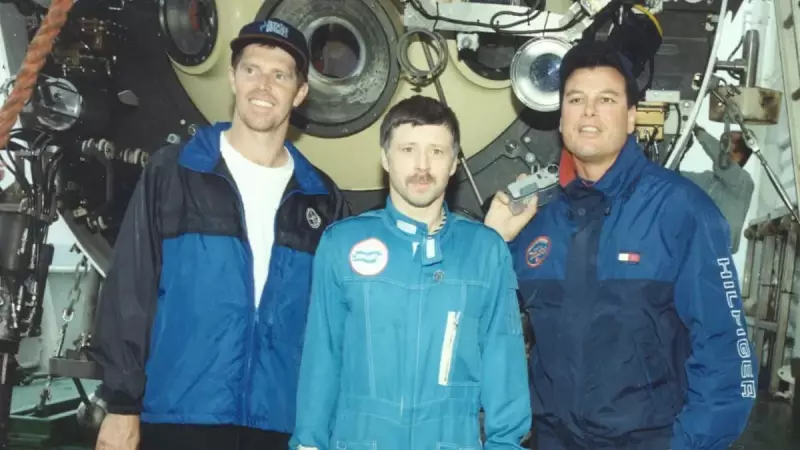
He then squeezed into the two-metre-diameter steel sphere of Mir-1 with pilot Genya Chernaiev and co-passenger Roman Sugden, a Californian undertaker. The crane lowered them into the Atlantic for a two-and-a-half-hour descent into complete darkness, a journey into 6,000 PSI of pressure where a single hull breach meant instant death.
"I was asking Genya questions and constantly looking out through the tiny porthole … [I had] no apprehensions at all," Rogers recalls. He learned this was the same submersible used by film director James Cameron for his Titanic research.
A Ghostly Vision from the Deep
As they neared the seabed, chatter ceased. The sub's floodlights revealed the ocean floor, and then, the wreck. "I can't put it into words," Rogers says. "There was nothing, and then you just see the Titanic, crystal clear."
The ship lay split in two, driven 12 metres into the silt. Rogers saw the colossal propeller, mangled rails, and the White Star Line logo still visible on the walls. They glimpsed Captain Smith's enamel bathtub and, on a sobering pass near the seabed, a single boot among shards of timber, plates, and pans—a haunting reminder of the human tragedy.
"To travel down in dark nothingness and see a sign of human life … the whole thing was mind-blowing," he says. The team even paused for a lunch of sandwiches and tea from a vacuum flask beside the wreckage.
A Lasting Legacy and a Sydney Discovery
After an 11-hour round trip, Rogers returned to the surface with unique mementos. Pilot Chernaiev gave him half of a seabed rock collected by the sub's robotic arm. A Ukrainian crew member, Gregoreya, presented a hand-whittled fish scaler inscribed with the details of their journey.
Back in Sydney, the "almost otherworldly" experience ignited a new obsession. Rogers began researching Australian connections to the disaster, leading him to Evelyn James (née Marsden), a survivor who escaped in a lifeboat.
His research took him to Waverley Cemetery, where he discovered James was buried in an unmarked grave. Rogers took it upon himself to arrange for a proper headstone to be erected in her honour, completing a personal pilgrimage that began at the bottom of the ocean.
Twenty-seven years on, Rogers says the journey gave him "a further appreciation of how amazing the world – and beyond – is." It was a trip from a supermarket lottery that truly delivered a view beyond imagination.