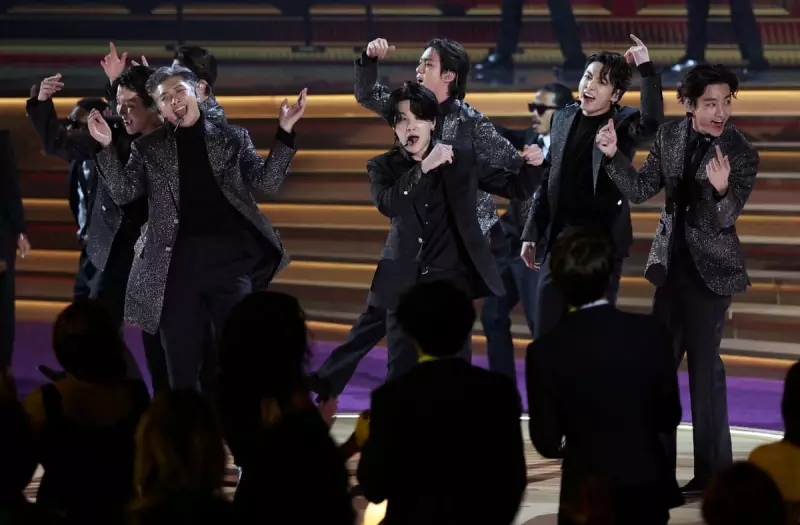
The global music phenomenon BTS is poised to unleash an unprecedented economic boom across the United States with its highly anticipated world tour, with economists predicting the financial impact could surpass even the record-breaking Eras tour by Taylor Swift. The K-pop supergroup, ending a nearly four-year hiatus due to mandatory military service, will embark on its largest tour yet, spanning 34 regions across five continents, with the first US stop in Tampa, Florida, on 15 April.
Forecasting an Unprecedented Financial Windfall
Economists and marketing experts are heralding the BTS tour as the event of the year, anticipating a surge in tourism, hotel occupancy, and local business revenue that could reshape how concerts boost city economies. Timothy Calkins, a marketing professor at Northwestern University, stated, "Every stop is going to see a boost in tourism, hotel occupancy, and economic activity to an extraordinary degree that might be even bigger than Taylor Swift." This comes after Swift's Eras tour sparked an estimated $5 billion in direct consumer spending across the US.
The Army's Unmatched Passion and Spending Power
BTS fans, known as the Army, share demographic similarities with Swifties, including loyalty and a willingness to spend, but researchers highlight a key distinction. Seoyoung Kwon, an economic researcher at Yonsei University, explained, "BTS fans are much more passionate and committed than western artists' fans. Especially given that BTS have not toured in so long, many BTS fans are willing to go the extra mile and attend concerts not just in their home country, but in other countries and cities as well."

This dedication is already evident, with fans like Leslie Huynh, a 28-year-old from New York, booking flights and hotels for multiple cities despite tickets not yet being on sale. Huynh, who plans to attend 22 shows across 11 cities, expects to spend at least $6,000, describing BTS as "a very expensive hobby." Similarly, Cailey Merulla, a 25-year-old content strategist from New Jersey, plans to attend six shows across three US cities, viewing the concerts as a source of happiness and community.
Historical Precedent and Multiplier Effect
The group's most recent tour in 2021, Permission to Dance, featured just 12 shows across three cities, yet generated staggering local economic impacts. Four nights in Los Angeles reportedly brought in over $100 million, while Las Vegas saw an estimated $160 million in revenue. The upcoming 79-show tour is expected to multiply these figures many times over.
Michael Mariano, head of economic development at Tourism Economics, emphasized that average concert tourism statistics do not apply to BTS. "They will well surpass these numbers, and I honestly don't think it's possible to understand how big this tour can be," he said, referencing a 2024 Bread Financial survey that found nearly three in five Gen Z and millennials are willing to travel over 50 miles for concerts, with non-local attendees spending about 3.4 times their ticket cost on travel and tourism.
Beyond the Concert: A Cultural and Commercial Catalyst
The economic impact extends far beyond ticket sales and hotel bookings. Richie Karaburun, professor of hospitality and tourism at New York University, noted the tour's "trickle-down effect," which expands its potential economic reach. Fan-organized events and pop-up vendors, specific to K-pop fanbases, are likely to increase the tour's economic impact beyond that of the Eras tour, providing phenomenal opportunities for small businesses and entrepreneurs.
Small businesses are already mobilising. Cherry Benyasri, co-founder of the K-pop inspired clothing brand Ordinary Affair, stated, "We are running off of the hype and excitement of BTS's comeback for a new product launch soon. Compared to the time BTS were away and now, you can feel Army's excitement and they are showing up stronger than before."

Accelerating the Korean Consumer Boom in the US
Jaerim Choi, professor of economics at Yonsei University, views the tour as part of a sustained expansion of Korean consumer goods in the US market. Research by Kwon and Choi indicates that last year, the US imported over $2 billion in Korean beauty products, up 34% from 2024, driven by K-pop's cultural influence. "This is much bigger than concerts," Choi said. "This BTS tour will only accelerate the Korean boom. It's not just short-term economic gain. It's expanding the entire Korean consumer market in the US for the long horizon."
As BTS hints at unveiling more tour dates, the scope and scale of this economic phenomenon remain to be fully determined. However, with guaranteed fan demand and a perfect storm of mass following, high demand, and willingness to travel, the BTS tour is set to deliver a transformative boost to US cities, enhancing their global brand and economic vitality in a way that traditional marketing cannot replicate.