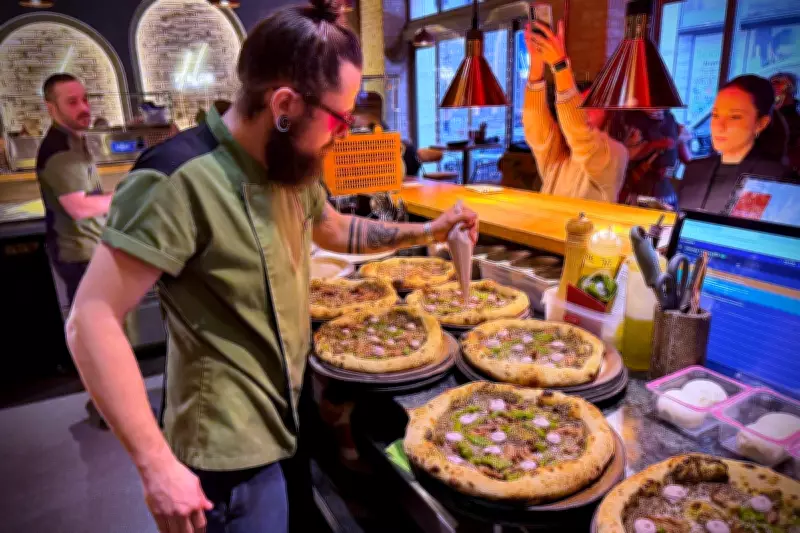
Budapest Pizzeria Serves Ancient Roman Pizza with Historical Ingredients
In the heart of Budapest, a city renowned for its traditional goulash, a pizzeria is offering a culinary journey back two thousand years. Neverland Pizzeria has introduced a limited-edition pizza that uses only ingredients that would have been accessible during the time of the Roman Empire, long before tomatoes, mozzarella, or even the concept of pizza as we know it existed in Europe.
A Curiosity-Driven Culinary Experiment
Founder Josep Zara explained that curiosity sparked the idea. "We wondered what pizza might have been like in ancient times," he said. "We went back to the Roman Empire and questioned whether they even ate pizza then." Strictly speaking, they did not, as tomatoes arrived from the Americas centuries later, and mozzarella was unknown. However, Romans did consume oven-baked flatbreads topped with herbs, cheeses, and sauces, which are considered the ancestors of modern pizza. These were often sold in ancient Roman snack bars known as thermopolia.
The inspiration came from a 2023 archaeological discovery in Pompeii, where a fresco depicted a focaccia-like flatbread adorned with pomegranate seeds, dates, spices, and a pesto-like spread. This image captured global attention and ignited Zara's imagination. "It made me very curious about the flavors of that era," he noted. "That's how we got the idea to create a pizza using only widely available ingredients from Roman times."

Historical Research and Ingredient Constraints
Zara embarked on extensive research into Roman culinary history, consulting a German historian and referencing the ancient cookbook De re coquinaria, believed to date from the 5th century. He compiled a list of historically documented ingredients to present to head chef László Bárdossy. "We had to exclude all ingredients originating from America, like tomatoes," Zara emphasized. "We sat down to imagine what we could make with these limitations."
Chef Bárdossy revealed that the constraints led to months of experimentation and some initial failures. "We had to discard a couple of ideas," he admitted. One significant challenge was the absence of modern water systems in Roman times, which complicated dough preparation since water constitutes over 80% of pizza dough. The team innovated by using fermented spinach juice to help the dough rise.
The Ancient Roman Pizza Creation
The final product features a base made from ancient grains like einkorn and spelt, which were widely cultivated in Roman times, resulting in a slightly denser dough than modern varieties. Toppings reflect Roman aristocratic cuisine, including:
- Epityrum, an olive paste
- Garum, a fermented fish sauce common in Roman cooking
- Confit duck leg
- Toasted pine nuts
- Ricotta cheese
- A grape reduction
Bárdossy described the pizza as a modern interpretation designed to be comprehensible to contemporary diners. "It's not for everyday eating," he said. "There's a niche audience that finds it delicious and intriguing, while most prefer conventional pizza. It's something special."
Philosophy and Modern Boundaries
For Zara, this project aligns with Neverland Pizzeria's philosophy of blending innovation with tradition. "We enjoy creating new and interesting things, but tradition is also important to us," he stated. However, he drew a clear modern boundary: "We experiment a lot, but we definitely do not use pineapple on our pizzas."
This unique offering not only showcases culinary creativity but also highlights the intersection of history and gastronomy, inviting diners to experience a taste of ancient Rome in modern Budapest.