Every region of Italy boasts its own unique culinary heritage, from Rome's carbonara to Bologna's tortellini. As the Winter Olympics co-host, Cortina d'Ampezzo proudly presents its signature dish: the strikingly colourful, stuffed pasta known as casunziei.
The Alpine Delight: Casunziei all'Ampezzana
This ravioli-style creation, formally called casunziei all'Ampezzana, features homemade half-moon shaped pasta parcels filled with boiled red beets. It is traditionally topped with a luscious sauce of melted butter, grated Parmesan cheese, and a sprinkling of poppy seeds.
Originating from the Alpine area's more modest history, long before Cortina evolved into a glamorous winter destination for the global elite, this simple yet flavourful meal relied on pantry staples that local families could access even during the harshest winter months. While beet is the classic filling, variations with spinach or other ingredients are also popular.

A Champion's Favourite and Cultural Heritage
Stefania Constantini, a defending Olympic curling champion in mixed doubles and native of Cortina, shared her personal connection to the dish. "It's a typical local dish. My favourite casunziei are the ones cooked by my grandmother—the spinach ones," she told The Associated Press.
Casunziei is deeply intertwined with Cortina's Ladin culture, which dates back a thousand years. Today, it remains a culinary highlight, available in both upscale restaurants and cosy, rustic eateries throughout the town.
Mastering the Recipe: A Step-by-Step Guide
Gianluca Belli, chef at the Michelin-starred Ristorante Tivoli, demonstrated the art of making casunziei to the AP, with Luca Noale, manager of restaurant The Roof, providing translation and detailed explanations.
Ingredients (for 2 people, approximately 22 pieces)
- 1 ⅔ cups (200 grams) of flour
- 2 eggs
- about ¾ pound (400 grams) of beets
- Salt and pepper
- Half a stick (50 grams) of butter
- Grated Parmesan
- Poppy seeds
Cooking Steps
- Begin by preparing the pasta dough a day in advance. Place flour on a work surface, create a well in the centre, and crack the eggs into it. Gradually incorporate the eggs into the flour using a fork, then knead by hand until smooth. Refrigerate overnight.
- The following day, peel and boil the beets until tender (around two hours), then puree in a food processor. Season with salt and pepper to taste.
- Divide the dough into four portions, flatten with a rolling pin, and pass through a pasta maker on the thinnest setting until nearly transparent.
- Cut circles from the pasta using a water glass, add beet puree to the centre of each, fold into half-moon shapes, and seal edges with a fork.
- Boil in salted water; remove and drain once the pasta floats to the surface (about one minute).
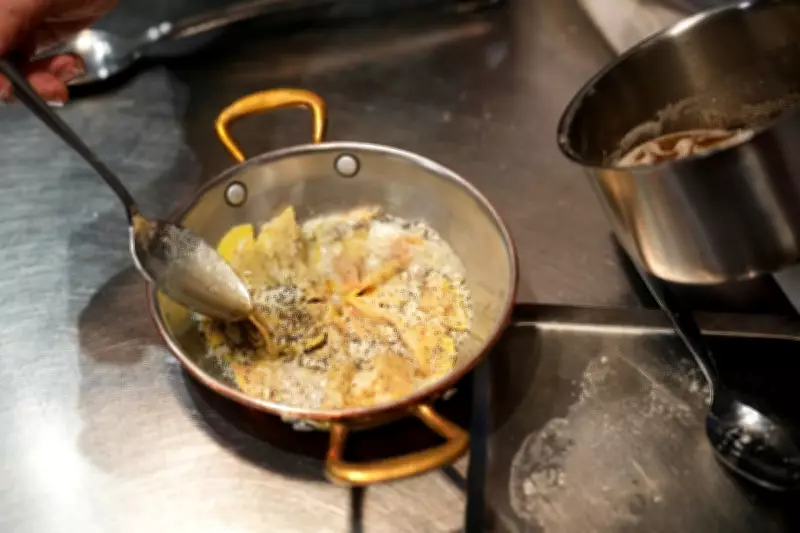
- Brown the butter in a pan.
- Plate with grated Parmesan, top with the casunziei, drizzle with browned butter, sprinkle poppy seeds, and serve immediately.
Perfect Wine Pairing
As with many Italian specialties, the right wine enhances the experience. Luca Noale advises, "The sweetness of the beets needs to be balanced by a light-bodied wine." He recommends a young, local pinot nero (pinot noir) to complement the dish perfectly.
Olympic Hosts and Their Culinary Treasures
Cortina will host women's Alpine skiing, sliding sports (bobsled, luge, and skeleton), and curling during the Games. Other Olympic venues across northern Italy include Milan for skating, Livigno for freestyle skiing and snowboarding, Bormio for men's Alpine skiing, Val di Fiemme for Nordic sports, and Anterselva for biathlon.
The vast distances between these clusters mean that cuisine varies significantly from one area to another. Milan is famed for ossobuco (veal shank with bone marrow) served with risotto Milanese (saffron-flavoured rice). Bormio is known for bresaola (dried, cured beef), while Val di Fiemme and Anterselva specialise in canederli (bread-and-prosciutto dumplings).
This diversity showcases Italy's rich gastronomic landscape, with casunziei standing out as a vibrant symbol of Cortina's Olympic hospitality and cultural pride.