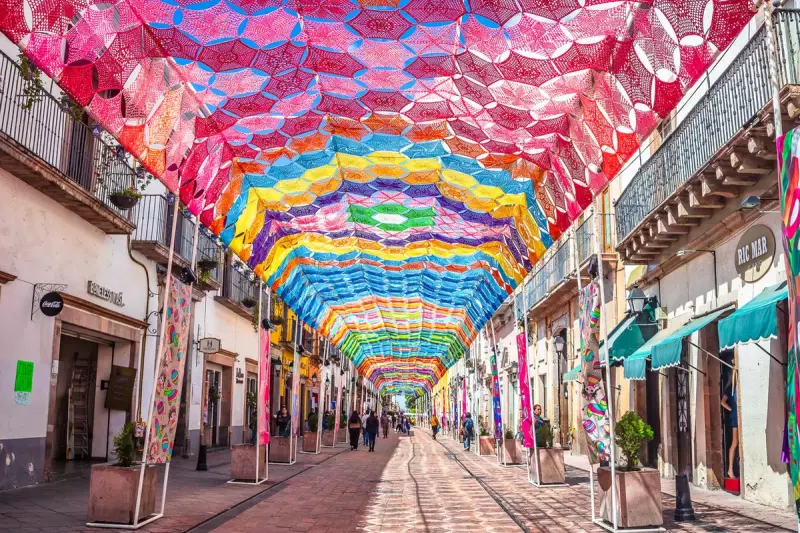
For British travellers seeking a destination that blends profound history with a dynamic, contemporary buzz, look beyond Mexico's usual suspects. The central Mexican city of Santiago de Querétaro, commonly called Querétaro, is emerging as a compelling and surprisingly accessible escape, boasting a 17 per cent growth in state tourism last year.
A City Reborn: From Textile Mills to Trendsetting Nightlife
The city's new energy is palpable. On a typical Friday night, the crumbling walls of a former textile factory on the outskirts pulse with life, transformed into a vibrant dance hall. Beneath a vast disco ball, revellers move to the infectious rhythms of cumbia, a scene emblematic of Querétaro's resurgence. Nearby, under fairy lights, locals and visitors alike sample craft beers from the famed Cervecería Hércules, enjoying open-air cinema or live music.
This is a city with significant pedigree, having twice served as Mexico’s capital during the nation's struggle for sovereignty. Today, as a hub for Mexico's data centre industry, it's one of the fastest-growing cities in the northern hemisphere. Yet, it retains an intimate charm, often overshadowed by San Miguel de Allende or Mexico City (CDMX). Its ascent is set to continue, with a new electric passenger train from CDMX to Querétaro planned for 2027.

Exploring the Walkable Heart of History and Culture
Querétaro's centro histórico offers a welcome, serene contrast to the frenzy of larger metropolises. It's a postcard-perfect mosaic of pastel-hued buildings with flaking facades, draped in blazing bougainvillaea and dominated by the elaborate domes of Baroque churches. The city is mercifully flat, walkable, and safe, laid out in a simple grid from the Spanish colonial era. Locals are often puzzled as to why more international tourists haven't discovered their home.
Spend an afternoon browsing antique bazaars, artisanal markets, and quirky cafes like La Compania. The central Jardin Zenea is the perfect spot to pause, visit a Saturday street food market, and even try the local delicacy of chapulines (grasshoppers). On Thursday evenings, free dance classes with live music take over the quaint bandstand. The city's symbol, the colourful handmade doll Lele, even flashes as a neon silhouette on traffic lights.
A defining landmark is the vast 18th-century aqueduct, a pink-stone marvel nearly a mile long. It once delivered the city's clean water, born from a local legend involving a nun and a marquis. For history enthusiasts, the Museo Regional, housed in a former monastery, details Querétaro's pivotal role in independence, displaying the desk where the Treaty of Guadalupe Hidalgo was signed. A short journey away, the Hill of the Bells marks the execution site of Emperor Maximilian.
Culinary Delights and Nearby Escapes
Querétaro's food scene is eclectic and rewarding. Start the day with pastries from Panico and a pour-over from El Apapacho cafe. The digital nomad hub Monono Cafe offers a surprising avocado pie and local orange wine. For tacos, join the queue at legendary stall El Feo on Calle Corregidora. Despite being inland, excellent seafood can be found at spots like PalMar. Sundays are for barbacoa (pit-roasted lamb) or carnitas, best experienced at Don Chamorro in the Mercado de la Cruz.
Venturing out, the Alamos neighbourhood showcases the city's cultural makeover with cosmopolitan cafes, independent bookshops, and jazz at Cafe Moser. For a deeper historical dive, the El Cerrito pyramid complex, a 15-minute Uber ride away, reveals pre-Hispanic roots. Roughly an hour by bus, the tranquil town of Bernal, designated one of Mexico's 'Pueblos Magicos', offers hiking and stories of alien encounters near its monolith. The region is also Mexico's second-largest wine producer, perfect for a cheese and wine tour.

How to visit: Querétaro International Airport (QRO) has direct flights from major US hubs and Mexico City. From the UK, United Airlines flies via Houston from £604 return. Coaches from Mexico City take about three hours. For accommodation, the design-led Hotel Hércules (from £163/night) offers a beer garden, while the central Hotel Criol (from £140/night) provides rooftop views.