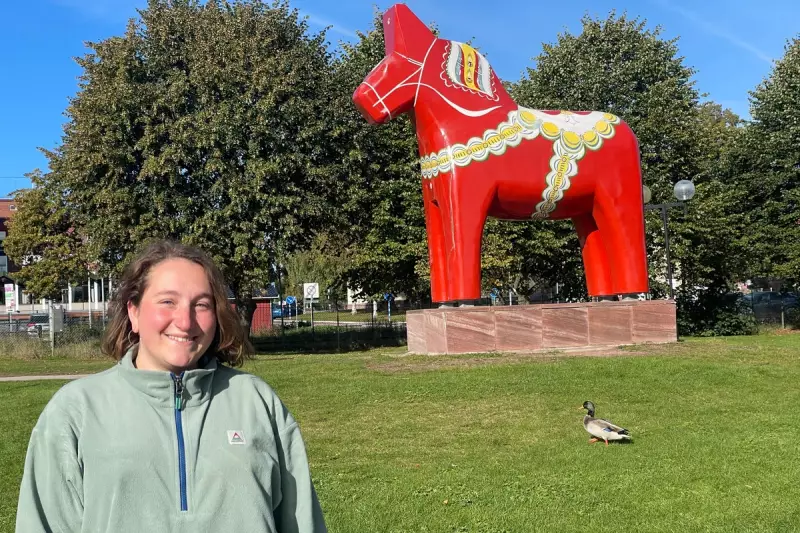
As soaring temperatures and crowded paths challenge the classic Camino de Santiago, a growing number of walkers are seeking quieter, cooler alternatives. Journalist Rory Buccheri found a profound sense of peace on Sweden's historic Romboleden, the oldest pilgrimage route in the Nordic region, trading Spain's sun-bleached cobblestones for mossy, blueberry-lined trails.
Embracing the Nordic Right to Roam
Pitching a tent amidst Sweden's tall, slender pines, Buccheri reflected on the guiding principle of Allemansrätten – the right of public access. This ethos, explained by a local guide, grants everyone the freedom to explore nature responsibly. For someone from England, where land ownership is highly concentrated, this liberty was both refreshing and central to the journey's appeal. With over 500,000 people walking the Camino last year, the search for solitude and a milder climate led north.
Tracing Ancient Steps Through Dalarna
The Romboleden is a formidable 560-mile path stretching from Trondheim in Norway to Köping in Sweden, near Stockholm. Buccheri chose a section through central Dalarna, a region dubbed "Sweden in miniature." Here, the trail converges with others, marked clearly with its signature red cross following a recent signage revamp.

Guided by local expert Daniel Nilsson, the walk revealed layers of history beyond pilgrimage. Nilsson shared tales of ancient nomadic farming, where families would trek cattle to mountain pastures each spring. This legacy is preserved in the Unesco-listed Fäbodkultur, with open-air museums showcasing the traditional farmstead life.
A Journey of Slow Travel and Natural Wonders
The route offered a tapestry of unique experiences, fostering a deep connection with the landscape. At Lindängets Natural Reserve, a pre-dawn start allowed for the rare opportunity to observe and assist in ringing birds on their winter migration. The hike passed centenary woodlands and the stunning Siljan lake, formed by a meteor impact 377 million years ago.
Nilsson's guidance proved invaluable, not only for foraging berries and building fires but for imparting ecological wisdom. He explained how a fallen pine, possibly dating to the 1700s, would nurture an entire ecosystem for centuries before returning to the soil. The presence of bears added a wild edge, with a guide ensuring safe passage.
Cultural Detours and the Journey's End
The pilgrimage also wove through cultural highlights, including the lakeside town of Mora, home to the famed Vasaloppet ski race and the extravagant residence of painter Anders Zorn. The journey concluded with a five-hour train ride back to Stockholm, a modern contrast to the historic modes of transport—horse, carriage, and boat—once used by pilgrims.
How to Plan Your Romboleden Adventure
When to go: Ideal conditions are in summer and early autumn, with temperatures between 15C and 27C. Hikers should be aware of Sweden's moose hunting season, which runs from 1st September to 31st October, though it is safe to walk during the break in the third and fourth weeks of September.
Navigation: The free Naturkartan app details all Swedish walking trails, including the Romboleden, with further resources on the official route website.
Getting there: SAS operates direct flights from London Heathrow and Manchester to Stockholm, with a flight time of approximately two and a half hours.
Where to stay: Accommodation options range from Hotel Villa Långbers on Lake Siljan (from £82) with sauna access, to the unique floating room at Kungshaga Hotel (£280 in summer). For a more secluded stay, wooden chalets at Smidgården in Fryksås offer views of Orsa Lake from £140.
Rory Buccheri's trip was hosted by Visit Dalarna and Visit Sweden, revealing a pilgrimage route that offers not just a physical journey, but a serene and sustainable alternative to Europe's more trodden paths.