Europe's Seasonal Spectacles: Six Unmissable Natural Wonders for a Weeklong Getaway
Some of Europe's most captivating natural phenomena appear and vanish with the changing seasons, creating fleeting spectacles that demand precise timing to witness. To ensure you don't miss these extraordinary events, we've compiled a guide to six of the continent's most eye-catching seasonal wonders, complete with recommendations for weeklong vacations and nearby activities.
1. Spring, Late March to Mid-May: Tulip Season in the Netherlands
The Netherlands dominates global tulip production, cultivating billions of bulbs annually, accounting for approximately 80 percent of the world's total. A premier destination for viewing these vibrant flowers is the Keukenhof spring garden in Lisse, open from March 19 to May 10, located about 20 miles west of Amsterdam. Here, walking paths meander through seven million bulbs arranged in stunning multicolored displays.
Exploring the surrounding Bollenstreek region reveals farmland tulips in perfectly ordered rows, with some farms, like The Tulip Barn, welcoming visitors. Extend your trip with a visit to Amsterdam, home to renowned art museums such as the Rijksmuseum and Van Gogh Museum, Unesco-listed canals, historic houses, and the scenic Vondelpark. Don't miss the iconic windmills in Kinderdijk and Zaanse Schans, or the golden beaches of The Hague.

Great place to stay: Golden Tulip Leiden Centre offers comfortable accommodations from $200 per night, conveniently located opposite the railway station in Leiden, with regular trains to Amsterdam and the Keukenhof garden just 10 miles away.
2. Late Spring to Summer, May–August: Alpine Wildflower Meadows in Switzerland
While Switzerland is famous for winter skiing, its dreamy wildflower meadows paired with breathtaking mountain views make it an ideal spring and summer destination. The Schynige Platte ridge, 6,500 feet above sea level in the Bernese Oberland region near Interlaken, offers rich floral displays without requiring mountaineering skills. Reach it via the historic cogwheel train from Wilderswil and follow the Swiss Flower & Panorama Trail through alpine flora, with the Eiger, Mönch, and Jungfrau mountains as a dramatic backdrop.
Expand your vacation with visits to the picturesque Lauterbrunnen Valley, cruises on lakes Thun or Brienz, and rides on the Eiger Express cable car and Jungfraubahn cogwheel train to Jungfraujoch, Europe's highest railway station at 11,332 feet.
Great place to stay: Hotel Interlaken, with rooms from around $200 per night, provides a convenient base in Interlaken, with easy access to trains, boats, buses, and mountain railways.
3. Early Summer: Midnight Sun in Northern Norway
About one-third of Norway's landmass lies above the Arctic Circle, where the summer sun remains above the horizon for 24 hours from May to late July, creating an ethereal glow. For optimal viewing, take the Fjellheisen Cable Car in Tromsø to a viewpoint at 1,380 feet, offering panoramic views of fjords, islands, and mountains under the midnight sun.
Other hotspots include the coastal area of Sommarøy, known as the "Arctic Caribbean," and the Lofoten Islands archipelago, with its jagged peaks and colorful fishing villages. Extend your trip with visits to the Lyngen Alps and Senja Island, both within 100 miles of Tromsø.
Great place to stay: Radisson Blu Hotel in Tromsø, with rooms from $365 per night, features harbor views and a bar serving beer from one of the world's northernmost breweries.
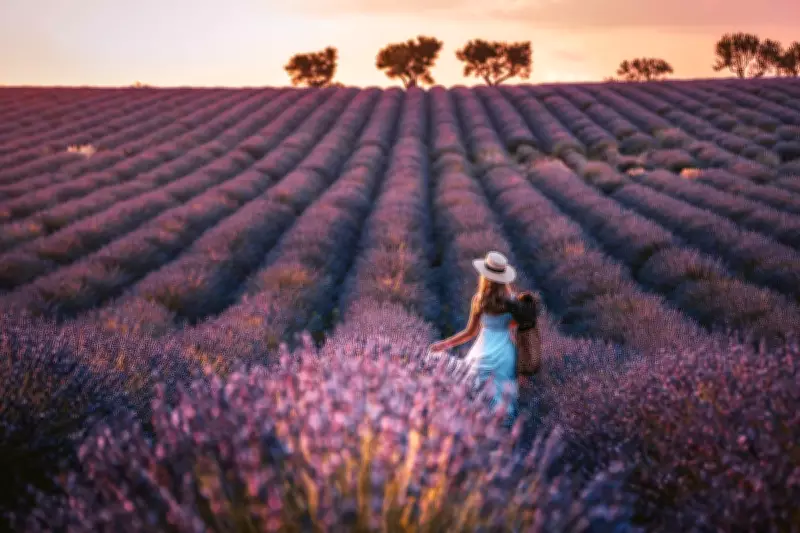
4. High Summer, Late June–July: Lavender Blooms in Provence
Provence transforms into a purple paradise in summer, with lavender fields covering vast landscapes. The Valensole Plateau, about 60 miles north of Marseille, offers endless rows of lavender, while the Sault Plateau and Abbaye de Sénanque near Gordes provide postcard-perfect scenes.
Enhance your week with trips to Verdon Gorge, France's answer to the Grand Canyon, and the historic city of Avignon, a Unesco World Heritage Site featuring the Palais des Papes, Les Halles d'Avignon market, and Avignon Cathedral.
Great place to stay: Hôtel Le Pré Saint Michel in Manosque, with rooms from $112 per night, offers easy access to lavender areas and Verdon Gorge.

5. Fall, Late September–October: Autumn Colors in the Scottish Highlands
Scotland's landscape bursts with vibrant red, orange, and bronze hues in fall, complemented by misty lochs and snow-covered mountains. Cairngorms National Park and Glen Affric, near Inverness, are prime spots for foliage chasing, while Perthshire's The Hermitage features towering Douglas firs and waterfalls.
Round out your visit with explorations of Loch Ness and the Isle of Skye, home to the Cuillin mountains and Old Man of Storr pinnacle.
Great place to stay: Kingsmills Hotel in Inverness, with rooms from $79 per night, includes an indoor pool and gardens, providing a comfortable base for autumn adventures.
6. Winter, December to February: Northern Lights in Finnish Lapland
Finnish Lapland offers some of the clearest and most frequent views of the Northern Lights, with dancing curtains of green, pink, and red visible from December to February. Rovaniemi, the region's gateway town, serves as an ideal base, with dark skies just a short drive away. For even better displays, head to Saariselkä or Urho Kekkonen National Park.
Add dog sledding, cross-country skiing, and snowshoeing to your weeklong vacation for a complete Lapland experience.
Great place to stay: Arctic Light Hotel in Rovaniemi, with rooms from $180 per night, is housed in the former city hall and features a restaurant serving regional specialties like Arctic char and reindeer.