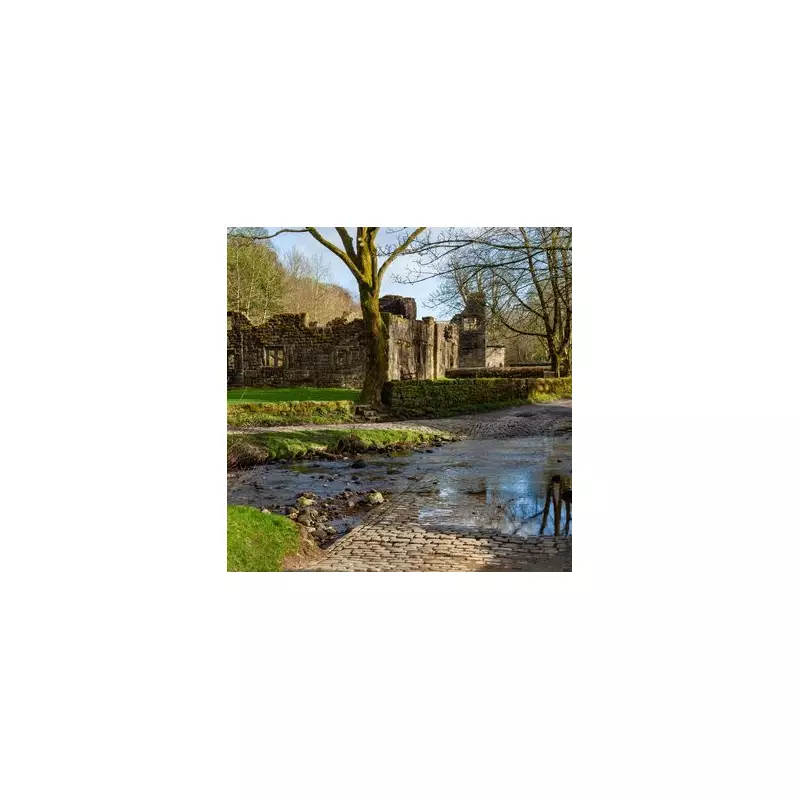
Nestled in the Lancashire countryside, just four miles from Colne, lies the captivating and historic village of Wycoller. Once nearly lost to time, this picturesque settlement now offers visitors a remarkable journey through centuries of history, complete with ancient bridges, literary legends, and evidence of human habitation stretching back to the Stone Age.
A Literary Legacy and a Hall in Ruins
The deserted village is perhaps most famous for its connection to one of England's greatest literary families, the Brontës. Charlotte Brontë, who lived nearby in Haworth, is believed to have drawn inspiration from Wycoller Hall for the setting of Ferndean Manor in her classic novel Jane Eyre.
From the 16th to the 18th century, the hall was the bustling heart of the community. It is highly probable that Charlotte saw the building during her travels, especially when visiting friends at Gawthorpe Hall. The description of the approach to the manor in her book aligns strikingly with the old coach road leading to Wycoller Hall. Today, however, only evocative ruins remain where a vibrant estate once stood.

Rescue and Revival: From Neglect to Country Park
After years of decline, the fate of Wycoller changed in the 1940s when dedicated local volunteers stepped in to save it. Their efforts were later bolstered when Lancashire County Council purchased the site. This intervention preserved Wycoller for future generations.
It now forms the core of the Wycoller Country Park, a beautiful and completely free-to-explore landscape where visitors can roam among the ruins and along the tranquil beck that threads through the valley.
Ancient Crossings and a Deep Historical Tapestry
The village's history is written in stone, most notably across its several ancient bridges. The most venerable is the Clam Bridge, a simple slab crossing that is believed to be over 1,000 years old, making it an ancient monument far predating the Brontë era.
Other significant crossings include:
- Sally's Bridge: A sturdy packhorse bridge dating from the 13th to 15th centuries, which gained fame for featuring in the beloved film The Railway Children.
- Clapper Bridge: Constructed from large gritstone slabs resting on stone piers, thought to originate in at least the 16th century.
Archaeological finds in the area suggest a human presence extending back to the Stone Age, weaving an incredibly long narrative of settlement in this now-quiet dale.
Visiting a Preserved Piece of History
To protect its unspoilt charm, Wycoller is kept deliberately free from modern intrusions. The village is a vehicle-free zone, accessible only on foot or to residents with a permit, ensuring its peace and beauty endure.
Recent visitors on TripAdvisor praise its idyllic atmosphere, noting the lovely stream for paddling, ample shade from ancient trees, well-preserved bridges, and the perfect setting for a family picnic. Many highlight the small exhibition, ruins, and the friendly ducks awaiting a feed.
Wycoller stands as a testament to community conservation, a hidden gem where the footsteps of Neolithic settlers, medieval farmers, Georgian gentry, and a famed Victorian novelist can all be felt amidst the ruins and the gentle babble of the beck.