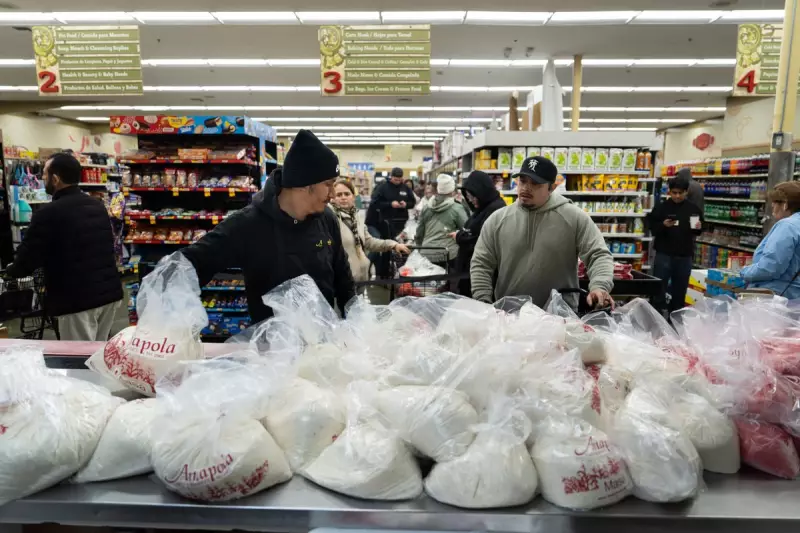
In the weeks surrounding Christmas and New Year, a festive pilgrimage unfolds at Amapola Market in Los Angeles. Tens of thousands of people descend upon its three locations, enduring hours-long queues for one crucial ingredient: freshly produced masa, the corn dough essential for making traditional holiday tamales.
The Annual Masa Pilgrimage
For many Latin American families, the ritual of gathering to make tamales is a cornerstone of the festive season. The process becomes an assembly-line affair, with masa spread onto dried corn husks and filled with an array of sweet or savoury ingredients. Amapola Market has facilitated this tradition for 64 years, a responsibility its CEO, Rolando Pozos, takes very seriously. "We want them to have a good Christmas," Pozos said. "It kind of becomes more of a responsibility than a job."
Customers demonstrate remarkable dedication, with some travelling from as far as Bakersfield, California, or Las Vegas. On Tuesday 23 December, one group drove approximately 60 miles from Hesperia and camped overnight to secure their place at the Downey location. Many arrive well before dawn, wrapped in blankets, with some families sending sleepy children to hold their place in line while they search for parking.

A Tradition Passed Through Generations
The queue is a testament to both quality and tradition. Christina Chavarria, who had already prepared nearly 200 tamales, returned for more of the market's renowned dough. "It's always seasoned perfect, ready to go," she remarked. For her, the activity is a precious chance to bond with her mother and 26-year-old daughter, incorporating roasted chillies from El Paso, Texas, that connect them to their heritage from Chihuahua, Mexico.
This intergenerational handover is common. Melissa Perkins, waiting in line with her father, noted her family has used Amapola's masa for nearly 30 years. Their production line now includes almost two dozen siblings, nephews, aunts, and uncles. Similarly, Giselle Salazar, who arrived at 4:15 a.m. with her sister and cousin, explained, "At first it was just our mums together. They passed the torch down to us basically. We're the new generation of aunties."
Quality, Consistency, and Stable Prices
The market's reputation hinges on the quality of its product. In a busy backroom operation, cooked corn is ground in massive vats with salt, lard, and other ingredients. The mixture is lifted eight feet into the air and poured into a giant funnel to fill bags, which are then double-bagged by workers. Employees begin at 3 a.m. to keep up with demand.
Customers are discerning. Cousin Alexa Campos carefully examined each bag, exchanging one that looked watery at the bottom. "Consistency is key for tamales to cook through properly," she said. The stakes are high; a 2016 incident where spoiled masa made people sick led loyal customers to declare Christmas ruined, prompting the company to vow improvement.
Under Pozos's leadership, who took charge five years ago, the market has also focused on affordability. He proudly states prices have remained stable for the third consecutive year, a significant consideration for families making hundreds of tamales while facing broader inflation. The market sells various prepared masas, from savoury pork and chilli to sweet pineapple and strawberry versions, also used for tortillas and champurrado, a thick Mexican hot chocolate.
As the sun rose on Tuesday, the line continued to move, replenished just as quickly by new arrivals. For people like Mark Monroy, who drove 90 minutes from Riverside with his nine-year-old daughter Avery, the journey is about more than just dough. It's about preserving memory and ensuring tradition. "You can have a little bit of presents or maybe not even any presents for certain years," Monroy reflected, "but you'll always have a tamale to unwrap."