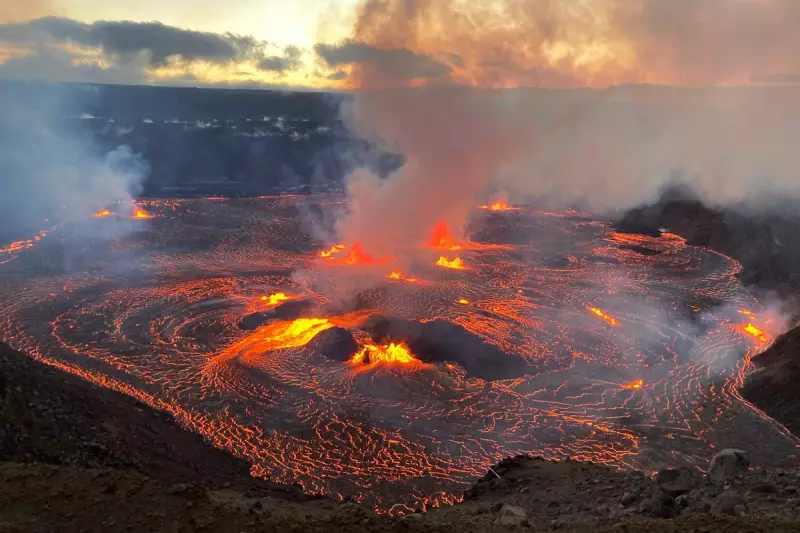
Hawaii's mighty Kilauea volcano has now been in a state of continuous eruption for an entire year, a fiery anniversary marked by its 39th major explosive episode.
A Year of Record-Breaking Fire
The volcano, one of the world's most active, commemorated the first anniversary of its current eruptive phase on 23 December. The latest event, its 39th, was a powerful display lasting nearly six hours. During this time, it produced a staggering 10 million cubic metres of lava.
A scientist from the US Geological Survey (USGS) hailed the ongoing activity as potentially the "most amazing thing" witnessed in Hawaiian volcanism. This claim is backed by extraordinary visuals, with recent footage capturing lava plumes soaring to an incredible 1,400 feet – a height that surpasses that of the Eiffel Tower and sets a new benchmark for the eruption.
Tourist Magnet and Health Hazard
While the flowing lava currently poses no direct threat to residential communities, the eruption presents a dual-edged sword. On one hand, it has become a major tourist attraction. In November alone, the spectacle drew 157,000 visitors to Hawaii Volcanoes National Park, representing a substantial 43% increase compared to the same period the previous year.
On the other hand, the volcano's constant emission of sulfur dioxide gas creates a persistent environmental concern. This gas forms 'vog' or volcanic smog, which can drift downwind and cause significant respiratory problems for exposed populations.
Looking Ahead
The anniversary serves as a potent reminder of nature's raw power. The Kilauea eruption continues to break records, reshape landscapes, and impact Hawaii's environment and economy in equal measure. Authorities continue to monitor the situation closely, balancing public safety with the public's fascination with this relentless geological force.