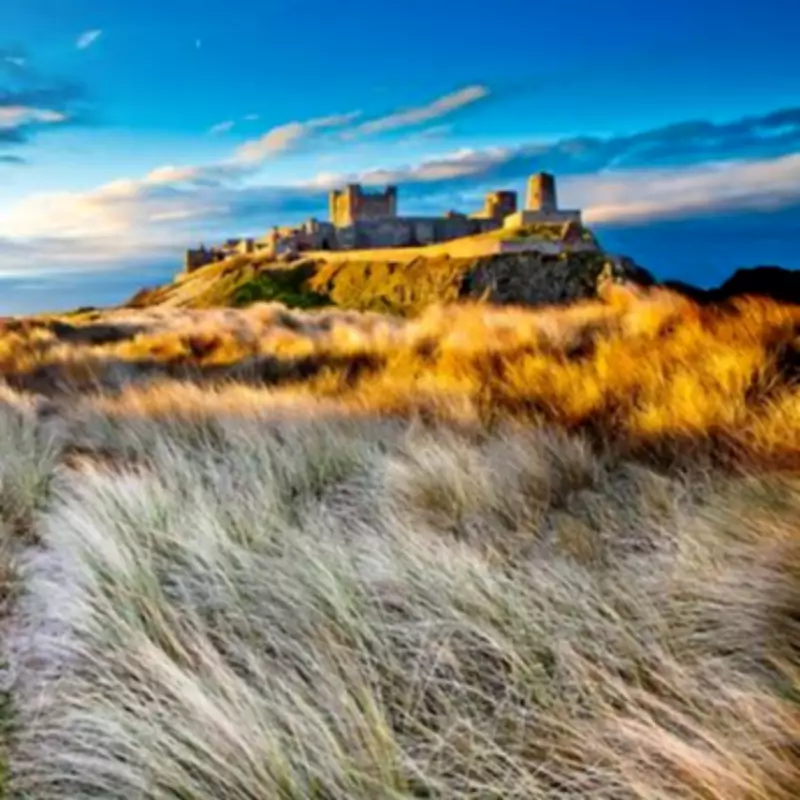
Ross Back Sands: Northumberland's Secluded Coastal Treasure
Nestled along the rugged Northumberland coastline, Ross Back Sands beach stands as a breathtaking hidden gem, offering visitors a spectacular three-mile expanse of golden sand framed by verdant dunes. This pristine shoreline creates an idyllic thirty-minute walking route that elegantly connects two of England's most historic medieval fortresses: Bamburgh Castle to the south and Lindisfarne Castle to the north.
A Peaceful Escape Accessible from Newcastle
Located just forty minutes by car from the vibrant city of Newcastle, Ross Back Sands provides a serene escape from urban life. The beach remains remarkably quiet and deserted throughout the year, largely due to its secluded access. The closest car park requires a fifteen-minute walk to reach the shoreline, ensuring the area maintains its tranquil atmosphere away from crowded tourist spots.
Lindisfarne Castle: A Fortress on Holy Island
At the northern tip of Ross Back Sands stands the majestic Lindisfarne Castle, a 16th-century fortress perched dramatically atop Holy Island. This historic structure underwent significant modifications in 1901 under the guidance of renowned architect Sir Edwin Lutyens, blending medieval foundations with Edwardian elegance. During low tide, visitors can access the castle by walking across the ancient causeway, following in the footsteps of Vikings who once raided this contested boundary between England and Scotland.

Lindisfarne's rich history includes its time as a priory, which ceased functioning in 1537 during Henry VIII's dissolution of the monasteries following his union with Anne Boleyn. Today, the castle stands as a testament to centuries of architectural evolution and historical significance.
Bamburgh Castle: Ancient Stronghold with Royal Connections
To the south of Ross Back Sands lies the magnificent Bamburgh Castle, a Grade I listed structure with origins dating back to the 6th or 7th century. Historians believe the site originally served as a Celtic Brittonic stronghold called Din Guarie, potentially functioning as the capital of Bernicia from 420 to 547 AD. Control of this strategic location alternated between Britons and Anglo-Saxons on three occasions before remaining under Anglo-Saxon dominion from 590 AD.
The Normans later constructed a new castle on this historic site, which eventually reverted to Royal possession in 1095. After years of neglect, the fortress underwent extensive restoration throughout the 18th and 19th centuries, with industrialist William Armstrong completing the final renovations during the Victorian period, preserving this architectural masterpiece for future generations.
Visitor Experiences and Practical Considerations
Recent visitors to Ross Back Sands have praised the beach's unspoiled beauty and peaceful atmosphere. One TripAdvisor reviewer noted: "Beautiful beach, I have visited many times and never seen more than a handful of people on it. You can often spot seals, with the end nearest Holy Island being best for seal watching."
The reviewer added practical advice about the accessibility: "It's amusing to see other reviews saying 'it is worth the walk', which makes it sound like a bit of a slog to get there - in reality it's about a mile of very easy walking, although the last part through the dunes undulates a bit. So if you think a gentle 20-25 minute walk is a bit of an 'effort' perhaps try a different beach!"
Another important consideration for visitors is navigation through the dunes. The reviewer cautioned: "One thing to bear in mind is to take note of where you come out onto the beach from the dunes as it is easy to miss when going back, usually there is a marker like a bit of wood - or even a rusty gas canister when I was last there!"
Ultimately, the journey to Ross Back Sands forms an integral part of the experience. As the reviewer concluded: "Enjoy the beach, enjoy the peace and enjoy the very pleasant little walk to get there, it is part of the experience." This hidden coastal treasure offers not just stunning natural beauty but a tangible connection to England's rich historical tapestry, framed by two of the country's most significant medieval castles.