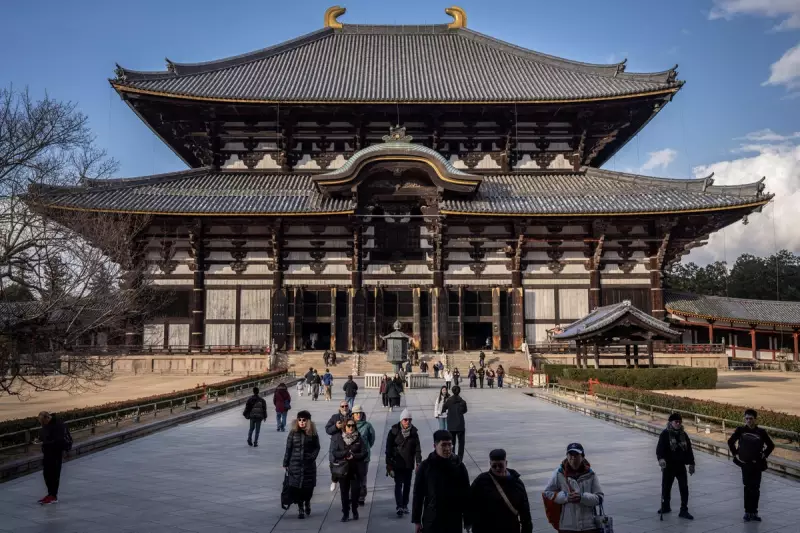
Japan's tourism industry celebrated a historic milestone in 2025, welcoming a record number of international visitors, but the achievement was tempered by a dramatic late-year slump in arrivals from its largest market, China.
Record Numbers Amidst Shifting Visitor Trends
Official figures released on Tuesday 20 January 2026 confirmed that Japan received 42.7 million foreign visitors last year, surpassing the 40-million threshold for the first time. Tourism minister Yasushi Kaneko hailed the surge as a "significant achievement," putting the country on a firm path towards its ambitious goal of 60 million annual visitors by 2030.
This marks the second consecutive year of record-breaking tourist numbers, following 2024's total of 36.87 million. The influx provided a substantial boost to the economy, with travellers from overseas injecting 9.5 trillion yen into Japanese businesses, up from 8.1 trillion yen the previous year.

Diplomatic Tensions Trigger Chinese Visitor Crash
Despite the overall success, the visitor landscape shifted dramatically in the final months of the year. Travel from China, traditionally Japan's biggest source of tourists, fell off a cliff in December. Arrivals from the mainland dropped by 45 per cent in that month alone.
The sharp decline came after Beijing limited outbound tourism to Japan. This move was a direct response to escalating diplomatic tensions sparked by remarks from Japanese Prime Minister Sanae Takaichi concerning Taiwan. Ms Takaichi stated that instability in the Taiwan Strait, which China claims as part of its territory, could prompt Japanese military mobilisation if deemed an "existential threat." Beijing, which asserts its right to use force for "reunification," reacted with a sharp backlash.
For the full year of 2025, the total number of Chinese visitors still showed an increase of roughly 30 per cent compared to 2024. However, with bilateral relations yet to improve, Japanese officials anticipate a further decline during the crucial Chinese New Year period in February 2026.
Managing Success and the Challenge of Over-Tourism
Minister Kaneko sought to downplay the impact of the Chinese downturn, emphasising the robust growth from other regions. "While the number of Chinese tourists in December decreased, we attracted a sufficient number of people from many other countries and regions to offset that," he said, while expressing hope for their swift return.
Government data revealed that Asian nations collectively provided the largest share of inbound travellers. Meanwhile, combined visitor numbers from Europe, the United States, and Australia rose by an impressive 22 per cent year-on-year.
Japan's tourism boom has not been without significant challenges, however. The phenomenon of over-tourism has strained popular destinations like Kyoto, where residents report worsening congestion, longer queues, and disruption to daily life. In response, authorities are actively promoting travel to lesser-known regions to ease pressure on major cities and distribute economic benefits more widely. A dedicated government body was also established last year to tackle issues related to over-tourism and the behaviour of some foreign visitors.