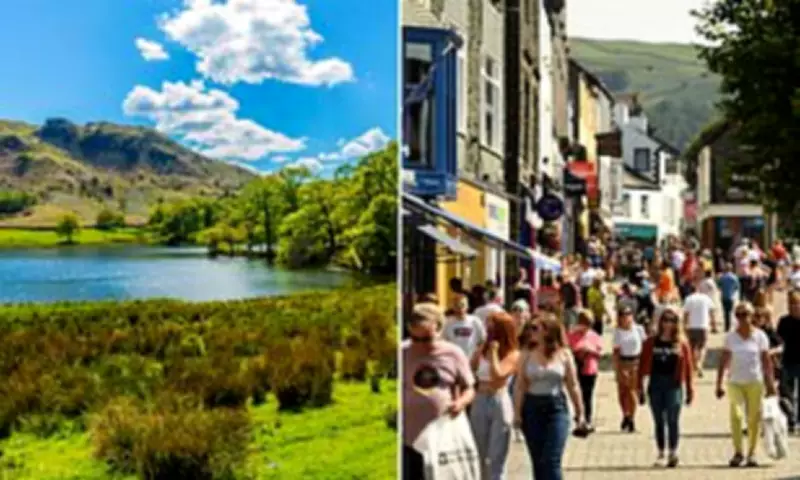
Lake District's Tranquil Image Shattered by Overtourism Crisis
The Lake District, long celebrated for its serene solitude, rolling hills, and peaceful waters, presents a dramatically different reality in 2026. This iconic region, designated a UNESCO World Heritage Site in 2017, now contends with year-round influxes of tourists armed with camera phones and picnic baskets, transforming its characterful villages into bustling hubs.
Central Areas Overwhelmed, Outer Regions at Risk
Popular central locations including Ambleside, Windermere, and Coniston experience constant visitor crowds, while outer areas face becoming England's next overtourism hotspots, following patterns seen in Cornwall and the Cotswolds. Approximately 18 million visitors journey to the Lake District annually, with a staggering 41 million descending upon the wider Cumbrian region.
Dr Karen Lloyd, a local author and campaigner, describes tourism as 'incredibly disruptive for local people' in recent years. She explains to the Daily Mail that residents now encounter 'gridlocked roads' when attempting to access the Lakes' most beautiful parts, raising concerns about environmental damage to landscapes immortalised by William Wordsworth and Alfred Wainwright.

Multiple Challenges from Popularity
Local communities identify several pitfalls accompanying the region's popularity:
- Severe traffic congestion throughout the year
- Consistently full car parks limiting access
- Proliferation of holiday lets reducing available housing
- Second home purchases pricing out lifelong residents
Dr Lloyd, who moved to Cumbria at age six, reveals she 'hardly ever goes into the Lake District and haven't done for years' due to practical difficulties. 'Because if you don't go early or late, you won't get parked, you'll get snarled up in traffic. It's unpleasant and when you do get to places, they're too busy,' she elaborates.
Controversial Solutions and Community Focus
In our social media era, where capturing and sharing photographs of photogenic locations has become almost obsessive for tourists, reversing the tourism tide presents significant challenges. Dr Lloyd proposes a previously controversial idea: removing the Lake District's UNESCO World Heritage status entirely.
'It was very controversial when it was thought of, it was very controversial when it was going through and it's even more controversial now because of the hike in numbers, because of the relentless pursuit of tourism,' Dr Lloyd states.
While UNESCO status removal remains unlikely, alternative approaches include focusing on 'what makes a community vibrant' beyond tourism, with emphasis on sustainable, well-paid year-round employment opportunities.
Statistical Reality and Housing Pressures
Cumbria has not yet returned to pre-pandemic visitor levels, but recovery appears inevitable. Recent Scarborough Tourism Economic Activity Monitor data indicates a 14 percent decline in overall visitors during 2024 compared to 2019.
However, tourism manifests differently now. Investigative journalist Jo Lonsdale told BBC Radio Cumbria that between 2019 and 2022, holiday lets in England increased by 40 percent. In Keswick specifically, holiday home proportions rose from 14 percent in 2011 to 25 percent a decade later, a trend replicated across the Lake District.
Governmental and Local Responses
Westmorland and Furness Council acknowledges that 'high levels of second home ownership can have negative consequences for local communities'. The government's Levelling Up and Regeneration Act 2023 enables local authorities to double council tax on second homes, a measure implemented across Cumbria. Additional tax revenue will support community services and core infrastructure.
Dr Lloyd expresses mixed feelings: 'in another sense I feel, along with a lot of people, that we're being squeezed out of our own home and that's very difficult.' She clarifies she isn't advocating tourist exclusion but worries about overtourism spreading from central areas to peripheral regions.

'If you're thinking about where's the next bit, well the next bit in the Lakes will be around the edges,' she predicts, noting that overcrowding 'doesn't work for anybody in the end', disappointing both locals and visitors whose expectations remain unfulfilled.
Wildlife Protection and Tourism Management
Dr Lloyd contrasts international approaches where national parks prioritise wildlife protection through human access restrictions, suggesting 'we really need to think carefully about how our national parks are failing wildlife, and they're currently failing the communities that live in them.'
Gill Haigh, managing director of Cumbria Tourism, highlights tourism's economic contribution: approximately £4.6 billion to Cumbria's economy, supporting over 74,000 jobs and sustaining local facilities including transport, shops, cultural venues, and schools.
'Our tourism industry was hard hit by Covid, with visitor numbers remaining 14.4 per cent down since 2019,' Haigh notes, acknowledging challenges during peak periods. 'The county's shared Destination Management Plan is about ensuring tourism brings real benefits to business, communities, the natural environment and visitors.'
Collaborative Management Approaches
Multiple organisations collaborate on visitor management through the Strategic Visitor Management Group, addressing visitor safety, experience, fly-camping, litter, and community disruption. Partners include Westmorland and Furness Council, the Lake District National Park Authority, Cumbria Police, Cumberland Council, Cumbria Tourism, and the National Trust.
Haigh emphasises ongoing efforts: 'Lots of organisations are working together, improving and increasing public transport and parking management. Getting the accommodation balance right, including more affordable housing, is a key part of this and we look forward to the introduction of the Government's short term lets registration scheme.'
Dr Karen Lloyd's forthcoming book, Earthworks: Land And Nature In Uncertain Times, will be published on April 2, 2026, further exploring these pressing environmental and community issues.