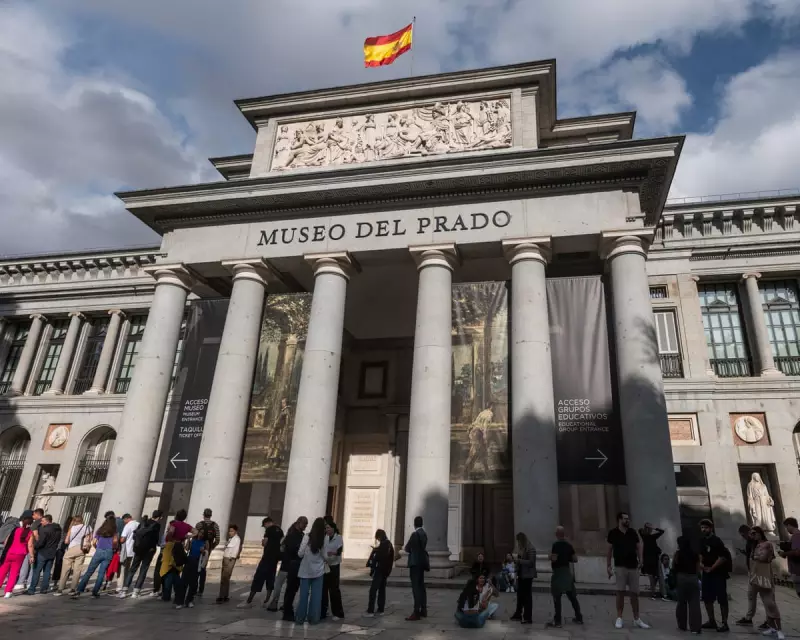
The world-renowned Prado Museum in Madrid has declared that it has reached a critical visitor threshold and is now actively exploring strategies to prevent its hallowed galleries from feeling like a congested metro carriage during peak hours.
A Record Year Prompts a Strategic Rethink
Speaking at a press conference this week, the museum's director, Miguel Falomir, delivered a striking message. He revealed that the institution, which attracted an unprecedented 3.5 million visitors in the last year, believes it has hit a sustainable limit. "The Prado doesn't need a single visitor more," Falomir stated. "We feel comfortable with 3.5 million. A museum's success can collapse it... The important thing is not to collapse."
His comments drew a direct parallel to the well-documented overcrowding issues at the Louvre in Paris, where the director previously admitted a visit could be a "physical ordeal." Falomir is determined to ensure a trip to the Prado does not become similarly overwhelming, insisting the experience "can't be like catching the Metro at rush-hour."

Balancing Access with Atmosphere
The museum's leadership is now investigating a series of measures designed to preserve, and where possible, improve the quality of a visit. Key ideas under consideration include:
- Optimising entrance procedures to manage flow.
- Re-evaluating the size of guided tour groups.
- Enforcing a strict no-photography policy within the galleries to reduce congestion and distraction.
A recent Friday morning visit revealed the delicate balance the Prado is trying to strike. While queues were minimal in the January chill, a far cry from the snaking summer lines, certain iconic works naturally drew crowds. At Hieronymus Bosch's mesmerising The Garden of Earthly Delights, around fifty people gathered, temporarily obscuring the lower portion of the triptych. Yet, as groups moved on, space opened up, allowing for contemplation.
In the rooms dedicated to Francisco de Goya, visitor movement was steady. A school group observed Fight to the Death with Cudgels and the haunting The Drowning Dog, while visitor Alexander Jute from Stockholm sat with his children before the powerful The 3rd of May 1808. "I think it's perfect," Jute remarked. "Perhaps it could even be a little more crowded. I've been here a couple of times before – including in the summer, and that was much busier."
Finding Solace in the Less-Trodden Galleries
For those seeking a quieter experience, the Prado's extensive collection offers ample refuge. During the same visit, the Alonso Cano gallery was completely deserted, allowing solitary appreciation of works like Dead Christ Supported by an Angel. Similarly, a room containing Velázquez's portraits of court entertainers, including The Buffoon Calabacillas, was nearly empty save for one regular visitor.
That visitor, Enrique, a Madrid local and museum member, welcomed the rising attendance. "Visitor numbers keep going up and up and I'm glad that they do," he said. "It's really good that people want to come and see culture." His sentiment highlights the museum's core challenge: celebrating public engagement while safeguarding the contemplative environment essential to appreciating art.
However, the magnetic pull of the museum's most famous masterpiece remains undeniable. By mid-morning, Room 12, the home of Diego Velázquez's Las Meninas, was filling up and growing audibly busier. Attendants vigilantly policed the no-photography rule, gently repeating "No photos, por favor" to those attempting to capture the scene. As the buzz of the crowd rose, the figures in the masterpiece—from the infanta and her maids to the artist himself and the dozing mastiff in the foreground—maintained their eternal, watchful silence, a stark contrast to the living museum's new, active battle against the perils of its own popularity.