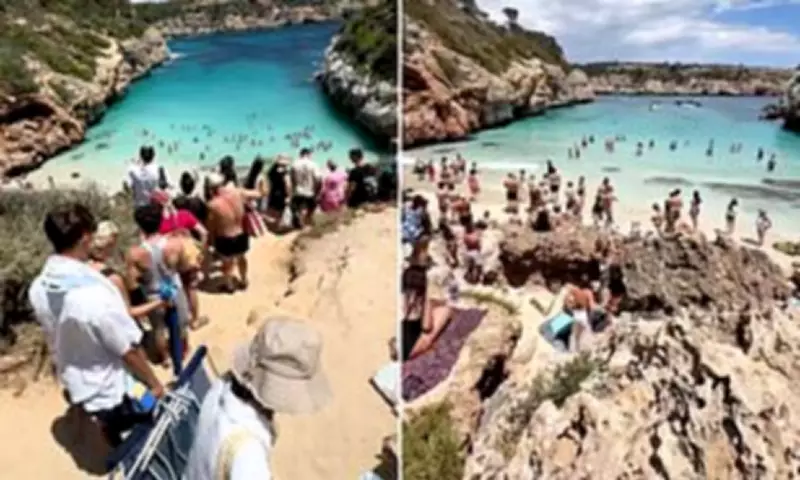
The fed-up German millionaire owners of a once-secluded Spanish beach that went viral on social media are taking drastic action, shutting public access completely. Maren and Hans-Peter Oehm, caretakers of Caló des Moro in Mallorca, have applied to local authorities to erect a fence, citing unbearable pressure from thousands of daily selfie-hunters swarming their property.
From Secluded Cove to Instagram Hotspot
Caló des Moro, a picturesque cove in Mallorca, was historically a quiet, hidden gem known for its crystal-clear waters and stunning scenery. However, after Instagrammers began posting striking shots of the location, it transformed into a tourist-choked destination virtually overnight. In 2024, tourism officials had encouraged content creators to visit lesser-known areas like Caló des Moro to ease pressure on busier island hotspots, but this strategy backfired spectacularly.
Viral posts lured swarms of holidaymakers to the once-remote beach, with an estimated 4,000 people visiting daily during peak tourism season. Footage from last summer showed sunseekers queuing just to access the sand, while piles of rubbish now litter the once-pristine shoreline. In some clips, the beach is so densely packed that the ground is barely visible beneath the crowds.

Environmental and Maintenance Toll
The Oehms, who live nearby in Santanyí and have cared for the beach for many years, report that the influx has forced them to spend significant time and money on cleanup efforts. They clean and tidy the land, replant damaged vegetation, and even extinguish fires lit by tourists. The environmental impact is severe: mass tourism currently sees six tonnes of sand disappear from the cove every three months, with 70kg lost daily in towels and footwear alone.
Locals describe the cove, accessible by traversing rocks and 120 steep steps, as a dumping ground for tourists too lazy to carry their possessions back. The German family says they have been 'begging' local authorities for help for years, but to no avail, leading to their decision to close access.
Local Protests and Tourist Reactions
In 2024, frustrated locals voiced their outrage through protests. Hundreds of campaigners stormed the beach, vowing to 'reclaim' it from holidaymakers. Over 300 protesters descended last June, unfurling a huge banner reading: 'Let's occupy our beaches.' Others distributed leaflets in English and German, forcing tourists to turn back.
Footage from the demonstrations shows locals blocking paths and shouting at would-be tourists to leave. One protester explained to disgruntled holidaymakers, 'tourists have taken over the beach... for one day, we're going to enjoy it.' Tourists like Ukrainian Kristina Vashchenko, 20, who came after seeing TikTok videos, were forced to retreat, acknowledging the locals' plight while seeking alternative beaches.
This closure marks a stark example of how social media-driven tourism can overwhelm fragile ecosystems and local communities, prompting owners to take extreme measures to protect their property and the environment.