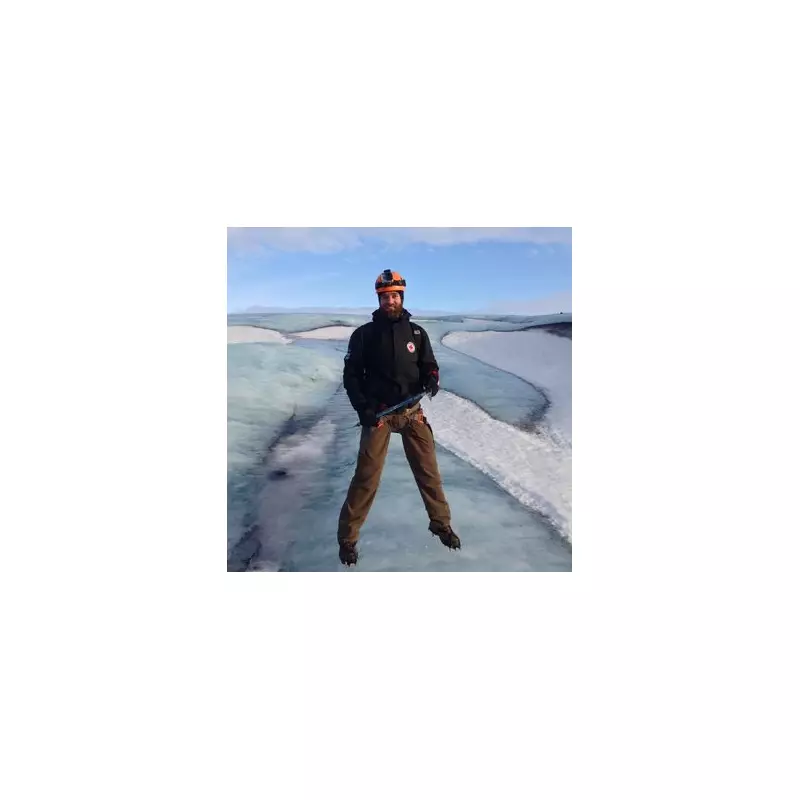
Torbjørn "Thor" Pedersen, a Danish adventurer who set out on an unprecedented global journey in 2013, has accomplished what many would deem impossible: visiting every country in the world without ever boarding a plane. His remarkable feat, which he initially thought would take just three or four years, ultimately stretched into an almost decade-long odyssey filled with extraordinary challenges and profound personal discoveries.
The Unforeseen Challenges of a Ground-Based Global Expedition
Despite his professional background in logistics and shipping, Pedersen admits that "nothing quite prepared" him for the array of obstacles he encountered. His commitment to avoiding air travel meant relying on a patchwork of public transport, including hundreds of buses, trains, and ferries, as well as persuading vessels like fishing boats and container ships to grant him passage. This ground-based approach was compounded by significant hurdles, including regional conflicts, complex visa complications, and, most notably, the global Covid-19 pandemic, which saw borders shuttered worldwide.
A Journey That Spanned 203 Destinations
Throughout his expedition, Pedersen reached all 197 nations acknowledged by the United Nations, plus several with limited recognition, totalling an impressive 203 destinations visited. He adhered to a strict rule of spending a minimum of 24 hours in each country, emphasising that his endeavour was not mere tourism but an accomplishment akin to "running a marathon or going to the moon." This distinction sets his achievement apart from other globe-trotting feats, highlighting the logistical and personal endurance required.

The Pandemic Stranding That Forged Deep Connections
During the height of the pandemic, with international travel severely restricted, Pedersen found himself marooned in a location that would become his most cherished: Hong Kong. Stranded there for two years due to closed borders, this unexpected delay allowed him to develop "real friendships" and gain a deep understanding of the territory's culture, landscape, and offerings. In a recent interview with Business Traveller Middle East, when asked to name the destination he'd "return to tomorrow" given the chance, he unequivocally responded: "Hong Kong. I was there long enough to form real friendships and get a deep understanding of the place - its culture, its landscape, and everything it has to offer. And then the project had to continue, and I was yanked out of it. I miss Hong Kong."
Hong Kong: A Special Administrative Region with Unique Appeal
Hong Kong, classified not as a sovereign country but as a special administrative region of China, holds a distinct status acquired in 1997 following the end of the UK's 99-year lease of the New Territories. Its governance operates under the "one country, two systems" principle, granting it a high degree of autonomy. Renowned for its bustling markets, shopping, temples, dim sum, and East-meets-West culture, the territory boasts iconic sights such as Victoria Peak, The Big Buddha on Lantau Island, and its spectacular skyline. Additionally, it features the 800m-long Central-Mid-Levels escalator and walkway system, reputed to be the world's longest outdoor escalator system.
The Inspiration Behind the Quest
Reflecting on what drove him to undertake such a gargantuan task, Pedersen explained: "I got wind that no one in history has gone to every country in the world completely without flying, and I was caught up in the idea that I might have my shot at doing something remarkable." This pursuit of a unique historical accomplishment fuelled his determination through years of travel, transforming a simple idea into a life-defining journey that tested his limits and reshaped his perspectives on global connectivity and human resilience.