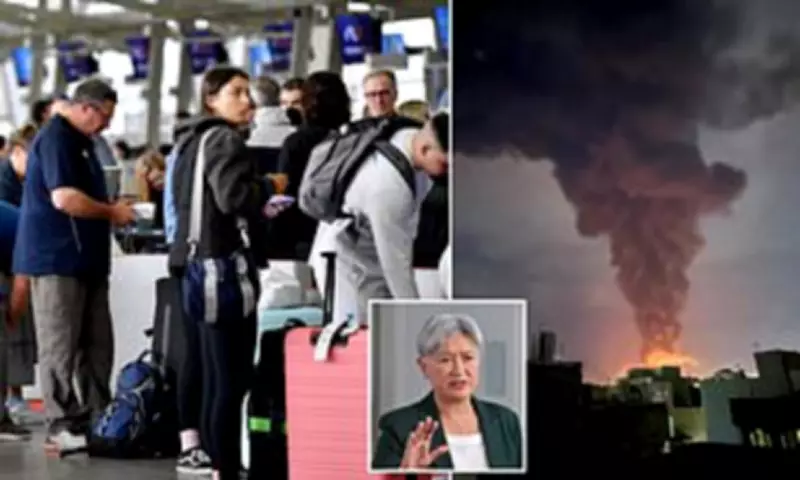
Middle East Conflict Sparks Travel Shift as Aussies Seek European Alternatives
As the Middle East conflict intensifies into its third week, Australian travellers have received mixed messages about their European summer holiday plans. Despite US President Donald Trump's warning of imminent strikes against Iranian targets, travel industry representatives maintain that dream European vacations remain possible with careful planning.
Travel Agents Adapt to Geopolitical Realities
Helloworld travel agent Kim Owen acknowledged the current "very tense situation" but insisted Australians shouldn't abandon their overseas travel ambitions. "If we can get you there safely, why not?" Ms Owen told the Daily Mail, emphasizing that while immediate travel presents challenges, May and June departures remain viable through alternative Asian routing.
"It would be very difficult to get to Europe in the next couple of weeks because of limited aircraft seat availability regardless of which hub you're going through," she explained. "But we can get you through Asia to reach Europe. Why should your life change?"

Government Warnings Create Insurance Dilemmas
The Australian government has closed diplomatic missions in Abu Dhabi, Tel Aviv, and Dubai while urging citizens in the Middle East to return home. Official travel warnings now cover Bahrain, Iran, Israel, Kuwait, Lebanon, Qatar, UAE, Palestine, and Yemen, with Jordan, Oman, and Saudi Arabia designated for reconsideration.
These warnings create significant insurance complications for travellers. "If people have airfares booked and the airline is flying, then what do they do?" Ms Owen questioned. "Their travel insurance won't cover them if they're going somewhere they're told 'do not go.'"
This uncertainty has dramatically impacted new bookings. "We're not seeing new bookings this week at all. People are cautious and that's normal. People aren't thinking about travelling overseas," she reported.
Alternative Destinations Gain Popularity
As European travel becomes more complicated, Australians are increasingly exploring alternative destinations. Ms Owen noted growing interest in New Zealand and Asian locations, while other travel specialists report similar shifts.
Hilary Dubyk, general manager at Eclipse Travel, observed "a noticeable shift in behaviour" toward wildlife and nature-focused destinations in Africa and Latin America. "We are seeing an increase in last-minute enquiries from travellers who appear to be adjusting their short-term plans away from Europe," she said.
Destinations like South America and Southern Africa offer particular appeal as they don't require Middle Eastern transit. "Travellers can fly east directly to Santiago to reach South America, or west directly to Johannesburg for Southern Africa," Ms Dubyk explained. "Many Australians still feel comfortable travelling, they're simply opting for destinations and flight routings that feel further removed from current geopolitical tensions."
Insurance Experts Warn Against Short-Term Savings
Peter Carter, director of Carter Capner Law, cautioned Australians against booking discounted fares with Middle Eastern carriers during the conflict. "Airlines never accept liability for disruption to forward travel arrangements that follow flight diversions or delays," he warned.
Most travel insurance policies exclude coverage for war-related disruptions regardless of official declaration status. "This exclusion applies to related claims, such as trip cancellations, medical expenses, or evacuations," Mr Carter emphasized.
He advised travellers considering flights terminating or transiting through UAE, Qatar, Bahrain, Israel, or Lebanon to specifically inquire about extended insurance coverage. "If you don't ask or if they refuse the additional cover, any disruption to your travel schedule due to hostilities could result in significant expenses," he concluded.
Creative Solutions for Determined Travellers
Despite the challenges, travel agents continue finding innovative solutions for determined European travellers. Ms Owen described rerouting clients through the United States for Paris-bound trips scheduled in coming weeks. "We're trying to get people to their destinations however we can," she affirmed.

The situation highlights the travel industry's adaptability during geopolitical crises while underscoring the importance of comprehensive insurance coverage and flexible planning for Australian travellers navigating uncertain international landscapes.