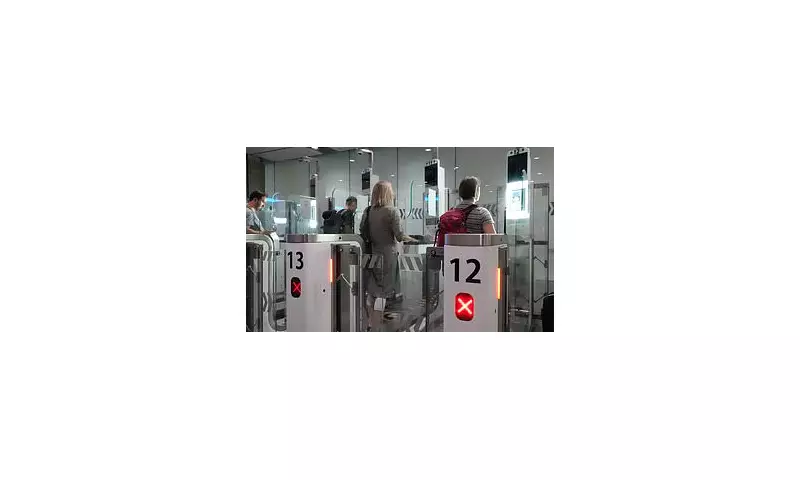
British holidaymakers planning trips to Europe will soon face a new entry requirement and a small fee. From late 2026, UK tourists will need to obtain online authorisation and pay €20 (approximately £17.50) to visit 30 European countries under a new system.
What is the ETIAS and How Does It Work?
The European Travel Information and Authorisation System, known as ETIAS, is a new pre-travel screening process for visitors from visa-exempt, non-EU nations. This includes travellers from the United Kingdom, Australia, the United States, and Canada. It is not a visa, but a travel authorisation.
Applicants must complete an online form, providing personal details and answering security questions, and pay the €20 fee before their journey. The charge will be waived for travellers under 18 and adults over 70, though they must still complete the application. Once approved, an ETIAS authorisation permits multiple short stays of up to 90 days within any 180-day period and is valid for three years or until the passport expires.

Key Dates and Countries Affected
The rollout of ETIAS is now expected in late 2026, with the system becoming mandatory in 2027. It will be required for travel to 30 European destinations, including popular holiday spots like Spain, France, Italy, Greece, and Portugal.
The full list of countries requiring ETIAS is: Austria, Belgium, Bulgaria, Croatia, Cyprus, Czech Republic, Denmark, Estonia, Finland, France, Germany, Greece, Hungary, Iceland, Italy, Latvia, Liechtenstein, Lithuania, Luxembourg, Malta, Netherlands, Norway, Poland, Portugal, Romania, Slovakia, Slovenia, Spain, Sweden, and Switzerland.
It is crucial to note that ETIAS is distinct from the Entry/Exit System (EES) launched earlier in 2024. The EES records biometric data and fingerprints at the border, while ETIAS is a pre-travel online authorisation.
Official Warnings Over Rising Scam Websites
With confusion between ETIAS and EES, travel authorities have issued strong warnings about fraud. The travel association ABTA and the European Union have highlighted that scammers are exploiting the upcoming change.
More than 60 fake websites are already claiming to sell the ETIAS visa waiver, even though the system is not yet operational. ABTA has cautioned that people attempting to apply now risk losing money and personal data to fraudsters.
Luke Petherbridge, ABTA's Director of Public Affairs, stated: 'The European Union is very keen to stress the fact that there is only one official site for purchasing an ETIAS visa-waiver, and people should not use other channels.' When ETIAS goes live, the only legitimate application channel will be the official EU website. Travellers are advised to ignore any third-party apps, websites, or social media ads offering the service.
EU citizens and residents of the Schengen Area with a residence permit will not need to apply for ETIAS.