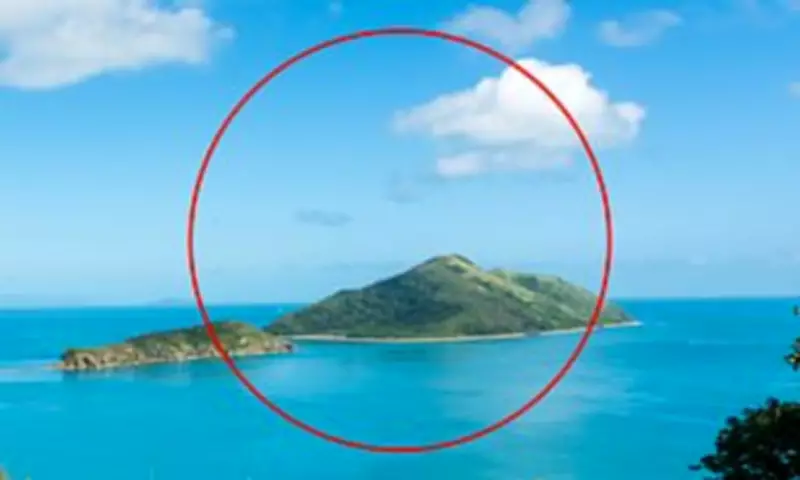
The owners of a deserted island resort in the Whitsundays are under increasing pressure to restore the once-thriving holiday destination, nearly a decade after a devastating cyclone left it in ruins. South Molle Island, located approximately twelve kilometres off the Queensland coast, was severely damaged by Category Four Cyclone Debbie in 2017 and has remained uninhabited ever since.
A Derelict Paradise
In the years following the disaster, visitors to the now-abandoned 200-room resort have captured footage revealing a stark scene of decay. The images show buildings with collapsed ceilings and walls, swimming pools littered with debris, and guest rooms completely overgrown with tropical foliage. The island's pool has even become an unexpected breeding ground for local frog populations, symbolising the extent of the neglect.
Owner Resistance and Government Crackdown
The island's owner, the ChinaCapital Investment Group (CCIG), has so far resisted calls to rejuvenate South Molle Island. This stance comes amidst a concerted crackdown by the Queensland Government on leaseholders who fail to maintain tourist facilities on island properties. Whitsunday Regional Council Mayor Ry Collins confirmed that CCIG has informed the state government it is not currently in a position to redevelop the site.

Mayor Collins expressed significant concern, stating that this decision leaves South Molle Island lagging behind neighbouring islands which are securing multi-million dollar development agreements. 'South Molle Island is really almost like a jewel in the crown of the Whitsunday Islands,' Collins told the Courier Mail. 'The council would be very, very keen to see that project be reactivated and a new resort developed there. We definitely want to see some activity.'
Contrasting Fortunes in the Whitsundays
The mayor noted that owners of other previously abandoned islands have begun major redevelopment projects following the government's enforcement of lease conditions, which mandate the maintenance of tourist facilities and transport services. This policy has already led to significant consequences; in June 2013, the government seized Double Island from a Hong Kong billionaire for resale after issuing a stark 'use it or lose it' warning to leaseholders.
Nearby Lindeman Island, once similarly derelict and located about fifteen kilometres southeast of South Molle, is now a hive of construction activity. A $583 million masterplan is underway, with plans for a five-star hotel, multiple dining venues, a pool, luxury spa, gym, and a new jetty, aiming for a reopening later this year. Further north, Hook Island has received development approval for approximately forty eco cabins.
For Sale with Potential
Shanghai-based CCIG, which purchased South Molle Island in 2016 for a reported $25 million, has listed the property for sale via private treaty with a guide price of $30 million. Marketing documents highlight the island's substantial development potential, suggesting a capacity for over 1,300 guest rooms alongside supporting amenities, pending council approval.
The sales material also notes several existing assets, including a recently completed $10 million jetty reconstruction, a new freshwater dam to reduce operational costs, and what agents describe as an 'impressive 600-metre stretch of rare, protected north-facing white sand beaches.' The site is promoted as being construction-ready.
Economic Stakes and Regional Context
The future of South Molle Island is a topic of discussion for Queensland Natural Resources Minister Dale Last, who is reportedly examining the ongoing 'inactivity' at the site. The pressure for redevelopment is underscored by the region's significant economic value. The Whitsundays attract an estimated 897,000 visitors annually, contributing a substantial $1.7 billion in spending to the local economy.
This context makes the stagnation of South Molle Island particularly conspicuous. The news follows the recent announcement of the $1.2 billion sale of the famed Hamilton Island to US private equity giant Blackstone, highlighting the intense investor interest and high stakes involved in the future of Queensland's iconic island tourism destinations.