While the rest of the United Kingdom has packed away the tinsel and finished the last of the turkey, one remote community is only just preparing for its festive celebrations. On the isolated Shetland island of Foula, Christmas Day falls not on December 25th, but on January 7th.
A Calendar Out of Time
This unique timing stems from the island's adherence to the old Julian calendar, abandoned by most of the world in favour of the Gregorian calendar centuries ago. This means that for Foula's tiny population of just 30 residents, New Year's Day follows a week later on January 14th.
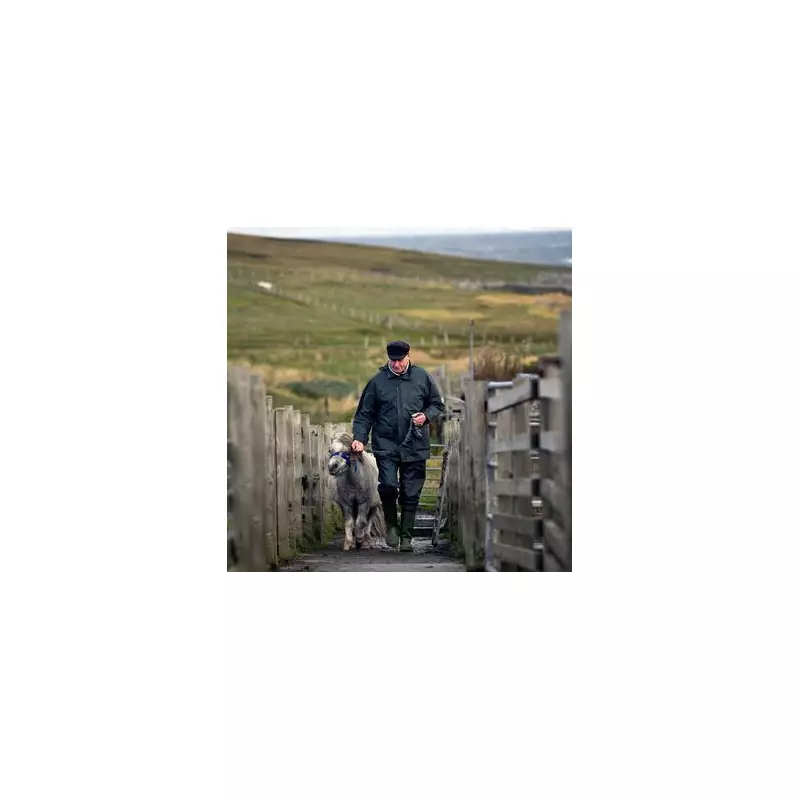
The island, which measures three-and-a-half miles by two-and-a-half miles, is officially Britain's most remote inhabited island. Its community maintains strong Norse traditions in folklore and music, a legacy from when its inhabitants were among the last to speak a Nordic language. At its peak, Foula was home to 287 people.

Life on the Edge of the World
Modern amenities arrived late to this rugged outpost. Running water was only installed in 1982, with a diesel generator providing full electricity by 1984. Today, the island operates on a renewable energy system, primarily solar photovoltaic panels, backed up by diesel.
Life here is dictated by the fierce weather of the North Atlantic. The island's isolation is so profound that a visiting Church of Scotland minister, Reverend Tom Macintyre, once had to abandon three separate attempts to reach Foula to conduct a single Christmas service.
Access for visitors is challenging: a ferry from Walls on Shetland's west mainland takes around two hours, while a flight from Tingwall airport is a quicker but weather-dependent 15-minute journey.
A Rich History and Global Connections
Foula's name translates to "bird island" in Old Norse, and its dramatic cliffs have featured on film, most notably in "The Edge of the World". Its treacherous waters were also the site of the wreck of the RMS Oceanic on the nearby Shaalds of Foula.
The use of the Julian calendar connects this Scottish island to traditions far beyond the UK. It is still used by the Berbers of North Africa in the form of the Berber calendar. Notably, the calendar has been a point of cultural and political significance in Eastern Europe.
In 2023, for the first time, Ukrainian Orthodox Christians on the island marked Christmas on December 25th, aligning with the Gregorian calendar used in daily life in Ukraine—a deliberate move away from the Russian tradition of observing Christmas on January 7th.
For the steadfast community of Foula, however, the old ways endure. As January begins, they keep alive a centuries-old temporal tradition, proving that even in our hyper-connected world, unique pockets of culture can—and do—flourish on their own terms.