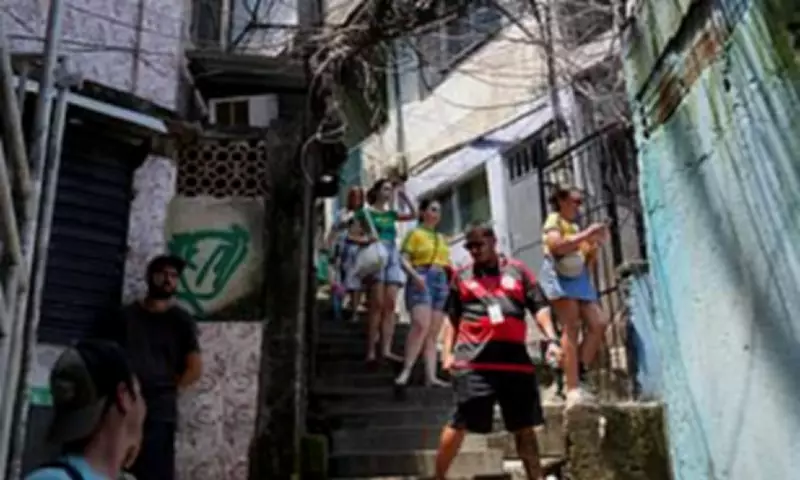
Traditionally, trending global destinations have been celebrated for their breathtaking natural landscapes, monumental historical sites, vibrant cultural centres, or exceptional culinary scenes. However, a significant shift is occurring in Brazil, where Rio de Janeiro's iconic favelas are now attracting enormous numbers of international visitors. A growing cohort of tourists is actively seeking immersive, authentic experiences within some of the city's most economically disadvantaged neighbourhoods.
The Rise of Favela Tourism in Rio
Favelas, which are informal, self-constructed, low-income communities, have long been stigmatised in Brazilian society. Yet, as Rio de Janeiro reports a record-breaking influx of tourists, with an estimated 12.5 million visitors in 2025, a substantial portion are demonstrating more interest in these vibrant communities than in the city's world-famous landmarks like Copacabana Beach or Christ the Redeemer. This burgeoning interest is being viewed by many local residents as a vital economic opportunity to generate much-needed income.
Local Guides Leading the Way
Local guide Vitor Oliveira exemplifies this new economic reality. A former motorcycle taxi driver in Rocinha, Rio's most populous favela, he identified the potential for tourism and began offering guided tours. This venture has now become his primary source of livelihood. Vitor told the Associated Press, 'To come to Rio and only visit Copacabana Beach, the statue of Christ and Sugar Loaf Mountain, you're not really visiting Rio. You're visiting a posh and expensive side of Rio. But Rio's essence comes from the favelas.'

Guided groups are now regularly escorted through these areas by residents like Vitor. Activities range from tourists taking selfies on Rocinha's rooftops to playing football with local residents, offering a glimpse into daily life.
Understanding Rocinha: A Complex Community
Rocinha stands as one of Rio de Janeiro's largest and most densely populated favelas. It is home to an estimated population between 100,000 and 200,000 people, many living in cramped conditions. While poverty is widespread, with most houses having only basic sanitation, plumbing, and electricity, the community is far more than its hardships.
The 'Poverty Tourism' Debate
This surge in visitation has not been without controversy. Critics have accused the trend of constituting 'poverty tourism' – a form of tourism focused on visiting impoverished areas, which is becoming increasingly prominent across Brazil. The ethical implications of filming and touring these neighbourhoods are frequently questioned, with terms like pornomiseria, slum tourism, and the 'romanticisation of favelas' often entering the discourse.
Despite these concerns, it is remarkably straightforward for visitors to book a tour with a local guide to discover the reality of life within a favela. The attractions are diversifying, drawing more visitors with viewpoints, art galleries, striking street art and graffiti, and local restaurants.
Visitor Perspectives and Community Impact
Tourists exploring Rio's favelas have taken to social media to share their complex experiences. One visitor posted a clip captioned, 'Ever since I was a kid, I dreamed of visiting the favelas of Rio. Today, I finally made it to the biggest one in Brazil.' Another expressed gratitude, stating, 'Rocinha, the biggest favela in the world. Thank you for showing me so many beautiful people, your culture, your bjj gym, capoeira, art galleries, and for keeping me safe while guiding me around your neighborhood, your home.'
Reflecting on the morality of such visits, one thoughtful tourist noted, 'What I encountered in Rocinha was more complex than the narratives we usually hear. Projects like this can create work, return resources to the community, and support people directly. They can also reveal something less visible: that the favela is not defined only by hardship, but is a place people call home: marked by creativity, dignity, resilience, and everyday life.' This perspective highlights the potential for tourism to foster economic benefits and challenge simplistic stereotypes, while the debate over its ethics continues.