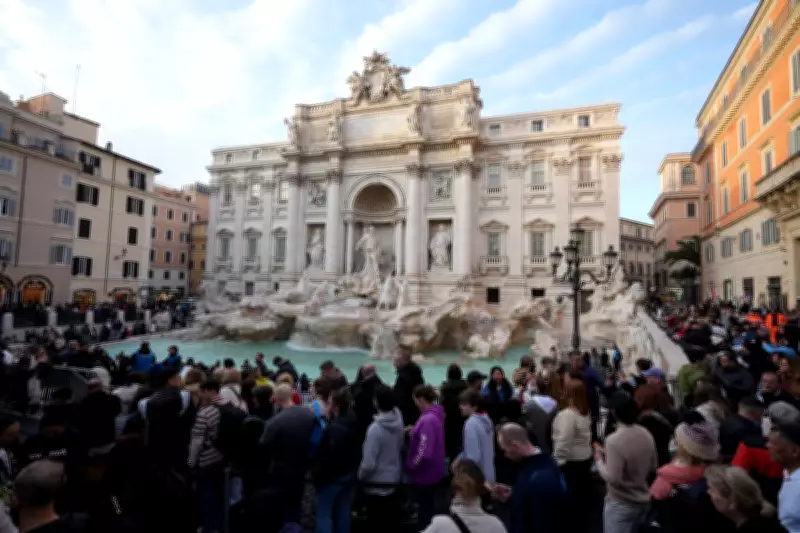
Rome Introduces €2 Tourist Charge for Trevi Fountain Access
The city of Rome has implemented a new €2 fee for tourists wishing to get close to the iconic Trevi Fountain during prime daylight hours. This measure is part of a broader strategy to control crowds at one of the world's most celebrated landmarks, which has been overwhelmed by overtourism in recent years.
Enhanced Visitor Experience and Revenue Generation
The fee, which can be paid in advance online, allows tourists to bypass the previously chaotic scenes and enjoy quality access to the fountain. Officials estimate that this initiative could generate an additional €6.5 million annually for the city. This revenue will help offset maintenance costs and expand the number of city-run museums that are free for registered Roman residents, who are exempt from both the fountain and new museum fees.
Alessandro Onorato, Rome's assessor of tourism, commented on the modest charge, stating, "I think tourists were shocked by the fact that the city of Rome is only asking for €2 for a site of this level. I believe that if the Trevi Fountain were in New York, they would have charged at least $100."

Positive Feedback from Early Visitors
Initial reactions from tourists have been largely positive. Ilhan Musbah, a visitor from Morocco, noted, "Before, there were problems accessing the fountain. There were a lot of people. Now, it's very easy. You can take photos, you feel good, you're comfortable, and on top of that, €2 is not much." This sentiment reflects the city's goal of improving the overall visitor experience while managing congestion.
Broader Context of Italian Tourism Management
The Trevi Fountain fee follows similar measures elsewhere in Italy, such as the ticketing system at Rome's Pantheon and Venice's tourist day-tripper tax. These efforts aim to make historic sites more sustainable and livable for residents. In comparison, the French authorities recently announced a 45% price hike for the Louvre Museum, bringing tickets for most non-European visitors to €32, highlighting the relative affordability of Rome's approach.
The decision to impose the fee was influenced by a successful year-long experiment that staggered visitor numbers through controlled lines and pathways. The view from the piazza above remains free, as does access after hours, ensuring that the fountain's beauty is still accessible to all.
Cultural Significance and Legend
The Trevi Fountain, an 18th-century late Baroque masterpiece, features the Titan god Oceanus and is famously associated with Federico Fellini's film La Dolce Vita. Legend holds that tossing a coin over one's shoulder into the turquoise pool ensures a return to Rome, a tradition that continues despite bathing being prohibited today.
This move underscores Rome's commitment to preserving its cultural heritage while adapting to the challenges of modern tourism, balancing accessibility with sustainability for future generations.