Tewkesbury's 'Bin Blight' Battle: Council Proposes Fines to Protect Town's Charm
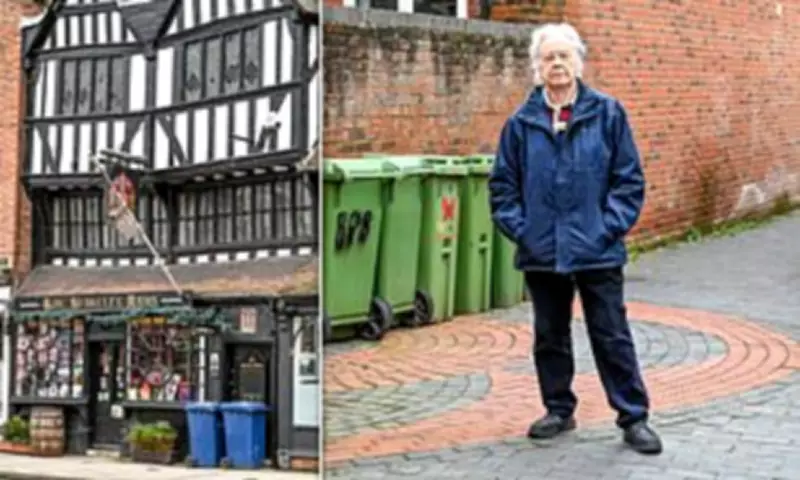
The picturesque Gloucestershire market town of Tewkesbury, nestled on the edge of the Cotswolds, is considering imposing fines on residents who leave their wheelie bins on the street after collection. This move aims to combat what local campaigners describe as 'bin blight,' which they argue is ruining the town's historic conservation area and deterring tourists seeking 'Instagrammable' photos.
Petition Sparks Action Against Unsightly Clutter
The proposal follows a petition by the Tewkesbury Civic Society, which raised concerns about bins left on pavements reducing property values, creating obstacles for wheelchair and pram users, and spoiling the aesthetic appeal of the town. Society Chair Alan Purkiss stated that the conservation area is being 'severely degraded' by domestic bins, affecting tourism, business, and inward investment.
'It's a lovely old town,' Mr Purkiss said. 'But if you're disabled, in a wheelchair, or a buggy, you can't get past sometimes due to the bins. You can't get past sometimes, particularly in the alleys, which are narrow.'

Six-Month Pilot Scheme with Warnings and Potential Fines
A council working group has recommended changing existing guidance from a 'request' to a 'requirement' that bins are removed from the street after collection. A six-month pilot scheme is being proposed, where written warnings would be issued to households that repeatedly leave bins out. Persistent offenders could eventually face fines, similar to penalties for littering or dog fouling.
Councillor Murray Stewart, lead member for environmental services at Tewkesbury Borough Council, explained: 'We will be working with residents first to understand their specific challenges, which we can then take forward. It's proposed for a six-month trial and would need dedicated resources to work directly with households where bins are not being taken in, with support and education. Any enforcement measures could come later and only if agreed.'
Mixed Reactions from Local Residents
Local residents have expressed divided opinions on the proposal. Angela Hanbury, 65, supported the idea, saying: 'Lots of people don't collect them so they could be out there for days. They are horrible, especially in the summer, they stink. It just makes the town smell. I think it's great because the bins are in the way of people.'
Retired architect Marty Trembath, 71, added: 'I hate all the bins. If you look at every town, city, village, in this country, what do you see? Green, purple, blue bins and then the whole pile of other bins - it's just rubbish. It affects the look of the town centre. If you come as a tourist, why do you want to see bins everywhere?'
However, not all residents are in favour. Kamila Pavlova, 45, a local doctor, called the proposal 'nonsense,' citing practical challenges like being at work when bins need to be moved. Mr Purkiss acknowledged such issues, suggesting alternatives like a blue bag policy, but noted it is not enforced well enough.
Economic and Social Impacts Highlighted
The Civic Society argues that the visual impact of bins has tangible economic effects. Mr Purkiss claimed that property values are hard to measure but definitely affected, and business owners report losses due to bins outside their properties. 'People come to tell me that they've been approached by visitors saying 'it's a pity about the bins',' he said.
He also pointed to examples from neighbouring areas, like the Cotswolds, where similar measures are successfully implemented. 'Just look across the border at Cotswold, they do it there, as a matter of course. It's easy peasy,' he remarked.
Next Steps and Council Decision
The proposal will be submitted to the full council for approval once a fully costed plan is developed. Councillor Stewart emphasised that fines would be a last resort, with the initial focus on education and support. 'It would be a last resort, but we're making it clear to members of the public that it could be an avenue we explore,' he said.

Mr Purkiss expressed hope for the scheme's adoption, stating: 'I'll just keep my fingers crossed that the council decides that they're going to give it a proper go. I mean, they could kill it at the next hurdle.' The outcome could set a precedent for other historic towns facing similar aesthetic and tourism challenges.