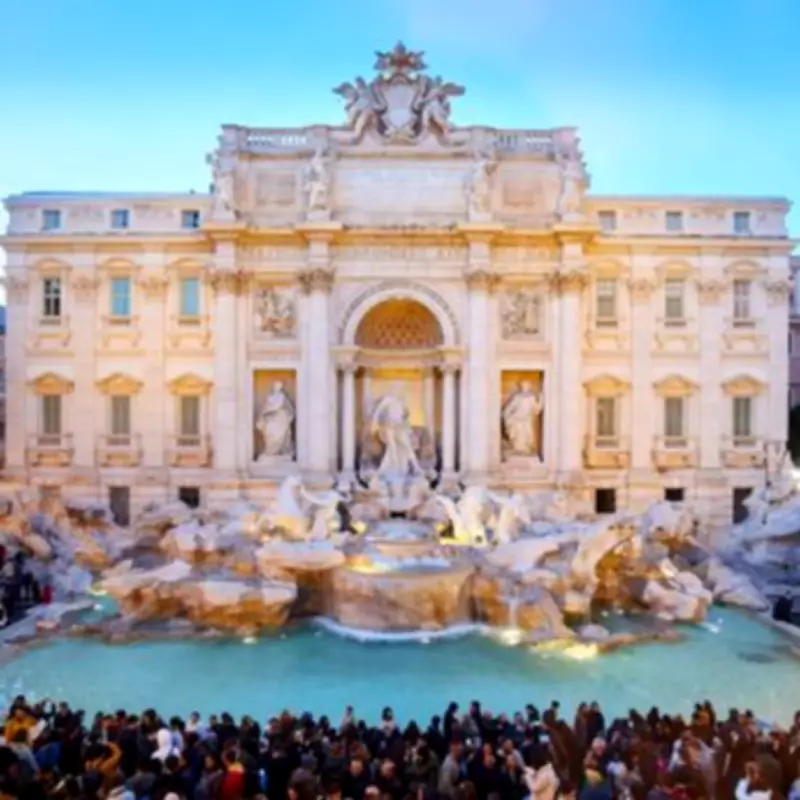
Rome's world-famous Trevi Fountain, one of Europe's most visited attractions, has introduced a mandatory entry fee of €2 (approximately £1.75) for tourists wishing to approach the historic monument. This significant policy change marks the end of free access to the Baroque masterpiece that has drawn millions of visitors annually.
Addressing Tourist Overcrowding Through Financial Measures
Italian authorities have implemented this charge as part of a comprehensive strategy to manage what they describe as the "chaos" frequently surrounding the fountain. The decision follows a year-long trial period during which visitor numbers were regulated through designated queuing systems and controlled entry and exit routes. Officials hope the fee will not only reduce congestion but also generate essential revenue for the fountain's ongoing maintenance and preservation.
Broader Cultural Funding Initiative
The Trevi Fountain charge coincides with a new five euro (£4.32) visitor fee for certain municipal museums in Rome. Together, these measures are projected to generate an additional €6.5 million (£5.6 million) annually for the preservation of the capital's countless historic treasures. This represents a significant shift in how Rome funds the maintenance of its cultural heritage sites.

Mixed Reactions from International Visitors
The introduction of the fee has sparked considerable debate among tourists and cultural commentators alike. American visitor Alma Peterson expressed strong disapproval to The Guardian, stating: "It's not right to charge people - this is history, it should be free." This sentiment reflects concerns about commercialising access to cultural heritage that many consider public property.
Conversely, Moroccan tourist Ilhan Musbah offered a contrasting perspective to ITV, noting: "Before, there were problems accessing the fountain. There were a lot of people. Now, it's very easy. You can take photos, you feel good, you're comfortable, and on top of that, two euros is not much." This view highlights potential benefits in visitor experience and accessibility despite the new charge.
Official Justification and International Comparisons
Alessandro Onorato, Rome's tourism chief, has vigorously defended the decision to implement the fee. He remarked: "I think tourists were shocked by the fact that the city of Rome is only asking for two euros for a site of this level. I believe that if the Trevi Fountain were in New York, they would have charged at least $100 (£73)." This statement positions Rome's approach as comparatively modest within global tourism practices.
The policy represents a growing trend among European cities struggling to balance preservation needs with mass tourism pressures. As visitor numbers continue to rebound post-pandemic, such measures may become increasingly common at popular heritage sites facing similar challenges of overcrowding and maintenance funding.