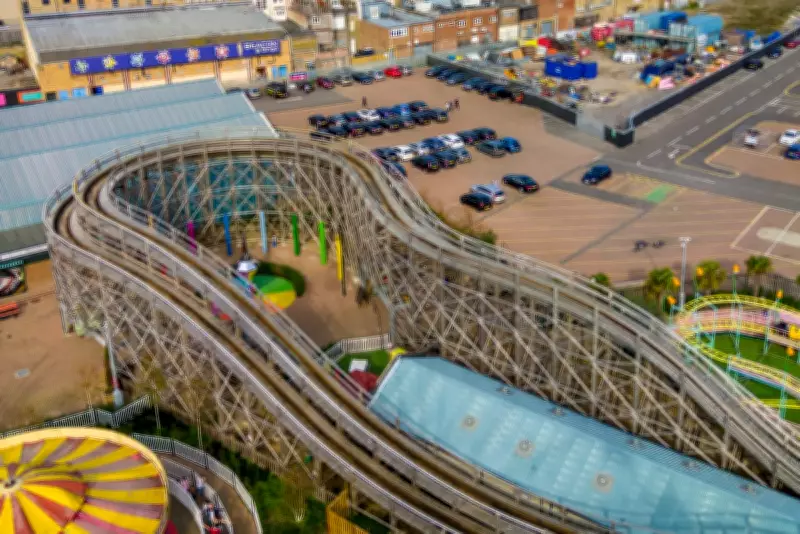
Britain's most venerable rollercoaster has completed its final journey, marking the end of an era for amusement park enthusiasts across the nation. The iconic Scenic Railway at Dreamland Margate, which first thrilled riders in 1920, will no longer operate as a functioning attraction after more than a century of service.
A Century of Thrills Comes to an End
Dreamland Margate amusement park has confirmed that its historic Scenic Railway attraction will now "take well-earned retirement from operation as a ride" following extensive consultations. The grade II-listed wooden structure, which has stood as a prominent seafront symbol for generations, had not been operational since a technical fault was identified back in 2024.
The decision to permanently close the ride came after park management concluded that the Scenic Railway had "come to the end of its life" as a functioning rollercoaster. A spokesperson for the park explained that this conclusion followed a comprehensive assessment process that considered the structure's age and condition.

Historical Significance and Challenges
When the Scenic Railway first opened its tracks in 1920, it represented an ambitious attempt to recreate the excitement of New York's famous Coney Island on British shores. Marketed originally as Europe's largest rollercoaster, the attraction proved immediately popular, drawing nearly one million riders during its inaugural season alone.
The structure's long history has not been without challenges. The rollercoaster suffered significant damage from fires in both 1949 and 1957, and was forced to close for nearly a decade between 2006 and 2015 following an arson attack that required extensive restoration work.
Preserving Heritage While Reimagining Purpose
Although the Scenic Railway will no longer function as a traditional rollercoaster, the structure itself will remain in place at the Margate seafront location. Dreamland has expressed strong commitment to developing a new long-term vision for the historic attraction that will preserve its architectural significance while finding fresh purpose.
The park management stated they are dedicated to creating plans that "will not only showcase this remarkable grade-II listed structure, but reimagine its purpose so it can continue to be enjoyed by future generations in a fresh and meaningful way."
Public Engagement and Future Plans
Dreamland is actively seeking public input regarding the future of the historic structure. The park has launched an initiative calling for people to submit their "reimagining proposals" for how the Scenic Railway might be repurposed, while simultaneously collecting personal memories and stories from those who experienced the ride over its 106-year history.
This summer, Dreamland will host a special pop-up exhibition celebrating the rollercoaster's rich heritage and cultural impact. Looking further ahead, park officials have indicated they intend to "reuse the structure for people to enjoy in a different way," though specific plans remain under development.
The Legacy of Scenic Railways
The Scenic Railway represents a particular type of amusement ride that gained popularity during the late 19th and early 20th centuries. The first such attraction appeared in Atlantic City, New Jersey in 1887, featuring distinctive characteristics that set them apart from modern rollercoasters.
These historical rides typically operated on looped tracks and employed a unique safety system requiring a "brakeman" to ride between carriages, manually slowing the cars during steep descents. At their peak, thirty-one Scenic Railways operated across the United Kingdom, though today only one functioning example remains at Great Yarmouth Pleasure Beach, constructed approximately a decade after the Margate original.
The closure of Dreamland's Scenic Railway marks a significant moment in British amusement park history, ending more than a century of operation while opening new possibilities for how historic structures might be preserved and repurposed for future enjoyment.