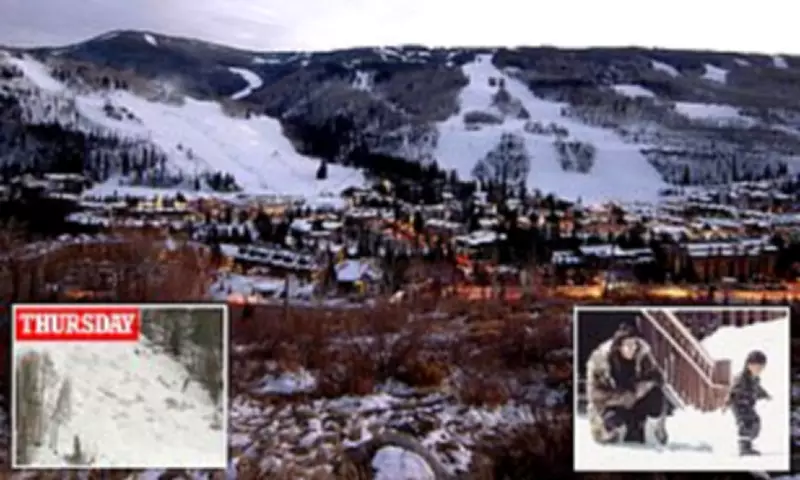
Vail's Tourism Crisis: Historic Snow Drought Threatens Millions in Revenue
The world-renowned ski town of Vail, Colorado, is confronting a severe economic threat as historically low snowfall this winter drives away tourists, potentially costing millions in lost revenue. This picturesque resort, home to fewer than 5,000 permanent residents, typically welcomes approximately 2.8 million visitors during the winter season, including high-profile celebrities like the Kardashian family.
Celebrity Haven Faces Unprecedented Challenge
Vail has long been a magnet for the rich and famous, with notable residents including Olympic ski champion Lindsey Vonn and Metallica frontman James Hetfield. However, the town's economy depends overwhelmingly on the financial injection provided by tourist spending to sustain operations throughout the entire year. This vital lifeline is now under serious strain.
Unusually sparse snowfall has left Vail Ski Resort's normally vibrant slopes virtually barren. According to data from the Natural Resources Conservation Service, Colorado currently sits at just 55 percent of its median historical snowpack, a statistic that has prompted numerous travelers to reconsider their winter vacations.

Officials Sound the Alarm
Vail Town Manager Russell Forrest expressed grave concern in a recent interview with KDVR-TV, stating, 'I don't think any of us have seen anything like this yet. We are seeing cancellations as people are looking at the snow.' While December sales tax collections showed a decline of less than two percent, the situation is expected to deteriorate if poor weather conditions persist.
Official projections now forecast a ten percent revenue loss from January through April, with an overall annual decline of four percent. In response, city staff have recommended substantial budget reductions totaling $4.5 million, impacting essential services such as policing, community events, and snow removal operations.
Visitor Numbers Plummet as Cancellations Rise
Mia Vlaar, Vail's Director of Tourism and Economic Development, provided updated hotel booking projections during a city council meeting. She explained, 'What's happened is after the holidays there were a lot of cancellations in that seven to 14 day range and now those are going a little further out because cancellation policies are less severe. People are waiting and seeing, but then when they have the opportunity they're going ahead and pulling the trigger on canceling.'
Vlaar anticipates that hotel and condo occupancy rates will continue to decline through President's Weekend, with only a modest potential recovery by Easter. Visual evidence from trail cameras reveals starkly barren landscapes at locations like the Sun Up Bowl Overlook and Gore Range, where grass visibly protrudes through thin snow cover.
Corporate Impact and Regional Contrast
Vail Resorts, the publicly-traded corporation that owns and operates 42 ski resorts across the United States, Canada, Australia, and Switzerland, reports significant operational challenges. Company spokesperson Lee Nielsen confirmed that no employee layoffs have occurred at the Vail location, but the broader picture remains bleak.
The corporation revealed that only 11 percent of its Rocky Mountain terrain was open in December, with snowfall in November and December measuring 50 percent below typical levels. CEO Rob Katz stated, 'We experienced one of the worst early-season snowfalls in the western US in over 30 years, which limited our ability to open terrain and negatively impacted visitation and ancillary spending.'
While western ski destinations endure one of their most difficult seasons on record—including two Oregon mountains that completely closed due to snow shortages—the East Coast is enjoying remarkably favorable conditions. Multiple snowstorms have deposited unusually deep snowpacks across Northeastern mountains, with Vermont resorts like Jay Peak, Killington, and Stowe boasting snow bases exceeding 150 inches.

The persistent cold temperatures throughout December and January have also produced higher quality, powdery snow than typically found in eastern regions. Remarkably, Vermont's current snowpack even surpasses that of Alaska's Alyeska Resort, which normally receives the nation's highest precipitation levels.