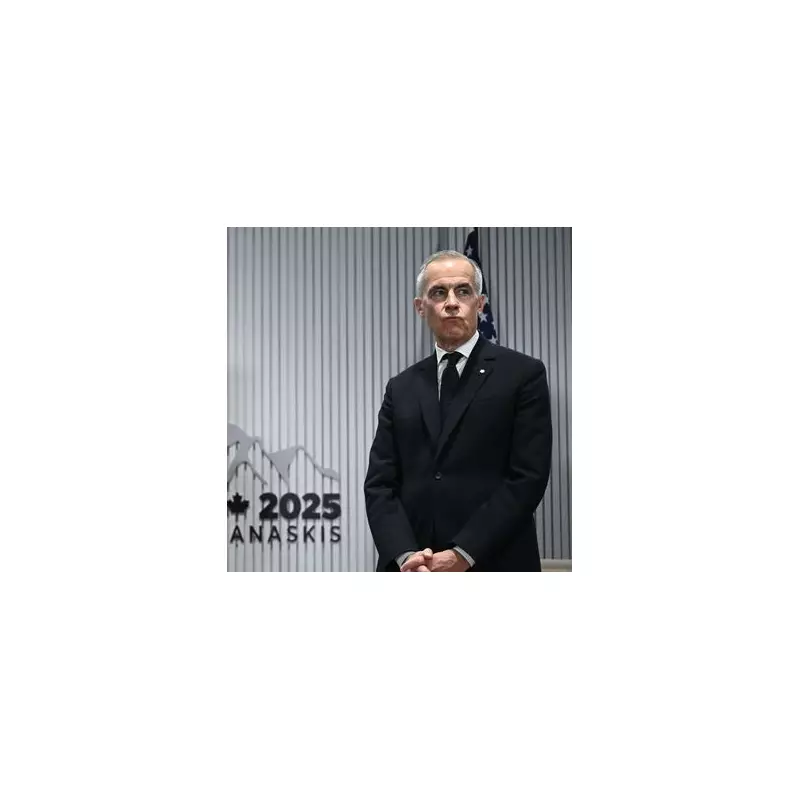
Canadian Prime Minister Mark Carney has issued a stark warning about his nation's security while orchestrating a significant strategic pivot towards China, a move directly prompted by escalating hostility and economic threats from the United States under President Donald Trump.
A Strategic Shift to Beijing
In a major diplomatic and economic manoeuvre, Carney flew to Beijing on Friday, 17th January 2026, to meet with Chinese leaders and corporate executives. The centrepiece of the visit was the signing of a landmark trade agreement designed to lessen Canada's deep economic dependence on its southern neighbour. Carney framed the deal as essential "at a time of global trade disruption."
The pact will facilitate the import of thousands of Chinese electric vehicles into the Canadian market. In return, China will provide tariff concessions on Canadian agricultural products. Carney explicitly told reporters that this economic partnership was designed to position both Ottawa and Beijing advantageously for what he termed the "new world order."

The Trump Factor: Tariffs and Territorial Threats
This re-engagement with China, Canada's second-largest trading partner, occurs against a backdrop of increasingly fractious relations with the US, its largest. The rift has been primarily driven by President Trump's aggressive policies. Last year, Trump imposed 25% tariffs on Canadian goods, justifying the harsh economic measure by accusing Canada of not doing enough to halt the flow of illegal fentanyl and migrants into the United States.
The situation deteriorated further in May 2025 when Trump took to his Truth Social platform to suggest Canada should become the 51st state of the USA. In a post, he wrote: "I told Canada, which very much wants to be part of our fabulous Golden Dome System, that it will cost $61 Billion Dollars if they remain a separate, but unequal, Nation, but will cost ZERO DOLLARS if they become our cherished 51st State. They are considering the offer!"
Tensions were further inflamed when a Canadian province used an image of former US President Ronald Reagan in an anti-tariff advertisement, prompting Trump to threaten an additional 10% tariff hike. Carney was subsequently forced to apologise for the advert.
Security Implications and a New Alliance
Speaking in Beijing, Prime Minister Carney delivered a grim assessment of the changing international landscape. "The security landscape continues to change. We face many threats. You manage those threats through alliances," he stated, implicitly signalling the diversification of Canada's traditional alliances beyond Washington.
This strategic recalibration deals another blow to the historically strong bond between the US and Canada, a relationship Trump has persistently undermined. Analysts view the Beijing deal as a direct attempt by Ottawa to build economic resilience and reduce vulnerability to unpredictable US policy shifts.
The context of Trump's parallel pursuit of Greenland, a Danish territory near Canada, has amplified security concerns in Ottawa. Trump has asserted the US needs to own Greenland to pre-empt Chinese or Russian influence, threatening to acquire it "the easy way or the hard way," despite firm rejections from the Danish government.
Carney's Beijing mission represents a clear and calculated response to these compounded pressures, marking a potential watershed moment in North American geopolitics and trade dynamics.