Political Pressure Mounts on Carney to Abandon F-35 Fighter Jet Contract
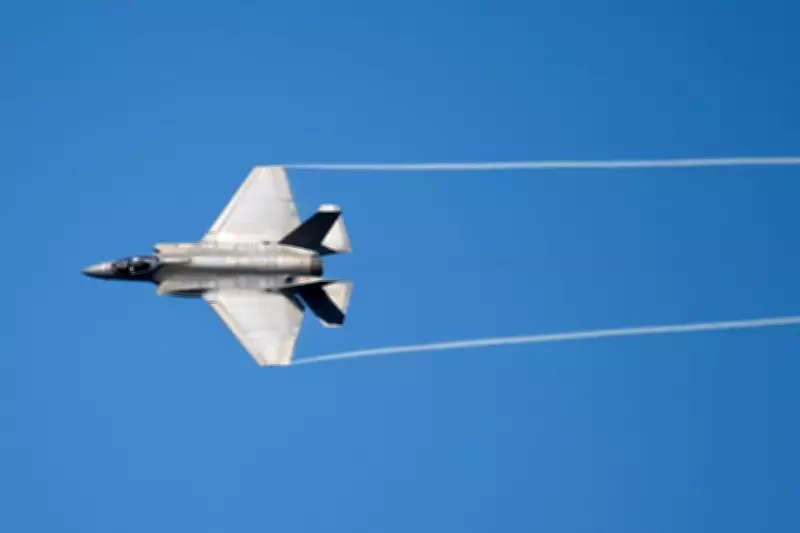
Canadian Prime Minister Mark Carney is confronting significant political pressure to terminate contracts for purchasing American-made F-35 fighter jets. This comes despite stark warnings from Washington that such a decision could have serious repercussions for continental defence cooperation.
NDP Proposes Cancelling Committed Jet Purchases
The New Democratic Party has formally proposed that Carney's government cancel the contract for 16 F-35 jets to which Canada had already committed. Interim NDP leader Don Davies articulated the party's position on Wednesday, stating that purchasing these advanced aircraft from the United States would deepen military integration with a superpower rather than reduce it.
"The bottom line is that purchasing F-35s from the United States will deepen our military integration with a superpower, not reduce it," Davies asserted. He referenced Carney's recent call for middle powers to establish a new world order in response to Donald Trump's increasingly aggressive foreign policy stance.

Trump's Tariff Threat Over Gulfstream Certification
The political debate has intensified following a direct threat from former US President Donald Trump. Last week, Trump warned he would impose a substantial 50 per cent tariff on all Canadian-made aircraft sold to the United States if Canada failed to certify several Gulfstream jet models.
In a characteristically forceful statement, Trump declared: "Based on the fact that Canada has wrongfully, illegally, and steadfastly refused to certify the Gulfstream 500, 600, 700, and 800 Jets, one of the greatest, most technologically advanced airplanes ever made, we are hereby decertifying their Bombardier Global Expresses, and all Aircraft made in Canada, until such time as Gulfstream, a Great American Company, is fully certified, as it should have been many years ago."
Swedish Gripen Jets Emerge as Alternative
In response to these tensions, the NDP has suggested Canada should instead procure Swedish Gripen fighter jets manufactured by Saab. According to reports from Canada's CTV News, Davies believes this alternative would provide Ottawa with a more predictable source of defence cooperation.
"This would provide Ottawa with a predictable source of defence co-operation and would see two middle powers fulfilling Mr Carney's stated goals," Davies explained regarding the potential Swedish partnership.
Canadian Officials Exploring International Options
It has emerged that Canadian defence officials are actively investigating alternative international suppliers for fighter jets. Saab has reportedly offered to manufacture the Gripen jets within Canada, a proposal that could generate approximately 12,600 domestic jobs.
Industry Minister Mélanie Joly addressed these considerations in comments to CBC News, stating: "The government is interested in all major projects that can not only protect Canada's security and sovereignty, but also create jobs across the country."
Joly added a pragmatic perspective on the geopolitical situation: "We certainly can't control President Trump, but we can control our defence investments, who we award contracts to and how we are ultimately able to create jobs in Canada. So we're going to focus on that."
Background of the Troubled F-35 Programme
Canada originally agreed to purchase 88 F-35A advanced fighter jets from American manufacturer Lockheed Martin in 2022, with an initial commitment to fund 16 deliverable aircraft. The programme has encountered multiple challenges since its inception.
The manufacturing process has taken considerably longer than initially projected, while a comprehensive audit conducted in 2025 revealed that programme costs had escalated dramatically. The total expenditure has risen to $27.7 billion (£20.4 billion), representing a significant increase from the original $19 billion (£14 billion) estimate.
This substantial cost overrun has further complicated the political calculus surrounding the defence procurement, adding financial concerns to the existing geopolitical and strategic considerations facing the Carney government.