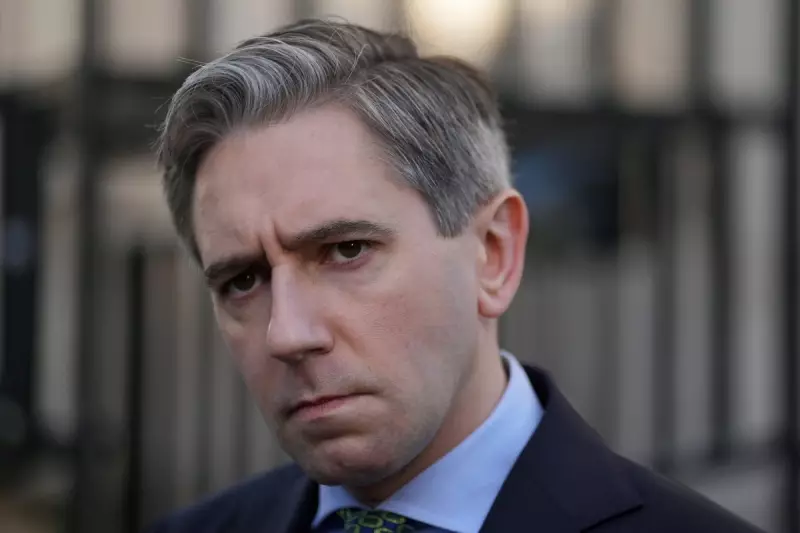
Ireland's deputy premier has issued a stark warning over US President Donald Trump's threat to impose sweeping tariffs on several European nations, calling for "cool heads" to prevail in the escalating transatlantic dispute.
A Destabilising Threat to Trade
Speaking to reporters at a Eurogroup meeting in Brussels, Tánaiste and Finance Minister Simon Harris stated that President Trump's proposed measures carry a "very significant destabilising effect". The threat, which has sent shockwaves through diplomatic circles, involves imposing a 10% tariff on all goods sent to the US from the UK, Denmark, Norway, Sweden, France, Germany, the Netherlands, and Finland starting in February.
Mr Harris emphasised the critical importance of the existing EU-US trade agreement, painstakingly negotiated to ensure smooth economic activity across the Atlantic. "Anything that now moves away from that or deviates from that could have potentially very, very significant consequences," he cautioned.

The Greenland Ultimatum and European Unity
The controversial tariffs are reportedly conditional on Washington being enabled to purchase Greenland from Denmark, with President Trump not ruling out military action to gain control of the semi-autonomous territory. This unprecedented demand has united European leaders in defence of a fellow member state.
"Europe will always stand with Greenland, will always stand with the kingdom of Denmark, we will always stand together for our values," Mr Harris declared, underscoring the need for a united front. He stressed that the bloc is not seeking confrontation but is prepared to "respond accordingly should that be required".
Window for Dialogue Narrows
With the first wave of tariffs slated for 1 February, Mr Harris pointed to a narrowing window for diplomacy. "It's very important now that we use the brief window available between now and the first of February to seek dialogue," he stated, advocating for a "cool and calm" approach.
However, he acknowledged the necessity to "prepare for all eventualities", highlighting the potential for an enormous cascading effect on global trade and stability. His concerns were echoed by UK Prime Minister Sir Keir Starmer, who labelled the use of tariffs against allies as "completely wrong", though he downplayed the seriousness of the military annexation threat.
In his concluding remarks, Mr Harris reaffirmed the mutual benefits of transatlantic cooperation. "When Europe and the United States work together, it's good for the EU and it's good for the US," he said, framing the current crisis as a departure from a more productive path of collaboration.