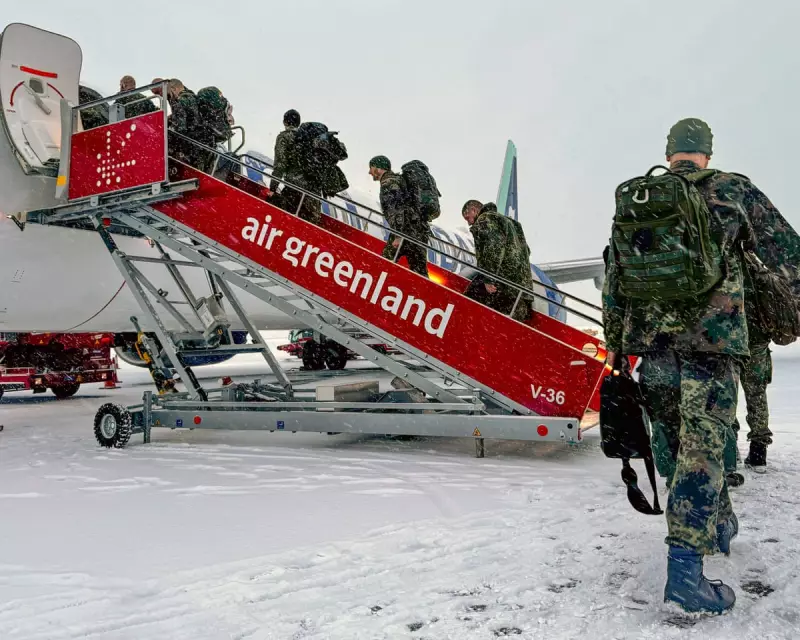
European Union leaders are actively considering imposing retaliatory economic sanctions against the United States, including tariffs on goods worth €93 billion, following threats from former President Donald Trump to levy new taxes on eight allied nations. The crisis talks, held on Sunday, 18 January, were triggered by Trump's aggressive stance on Greenland and his tariff warnings, which one European minister labelled as "blackmail".
European Unity in the Face of "Blackmail"
The leaders of Denmark, Norway, Sweden, France, Germany, the United Kingdom, the Netherlands, and Finland issued a powerful joint statement condemning the American threats. They declared that "tariff threats undermine transatlantic relations and risk a dangerous downward spiral," firmly committing to uphold their national sovereignty. The EU's top diplomats convened for emergency discussions, with a central item on the agenda being the revival of a previously suspended plan to target American imports.
Reaction from individual European capitals was swift and severe. Italy's Prime Minister, Giorgia Meloni, stated that implementing such tariffs would be a significant error. Echoing the sentiment of coercion, Dutch Foreign Minister David van Weel explicitly described President Trump's actions towards allies as "blackmail." The most forceful proposal came from France, where President Emmanuel Macron urged fellow leaders to be ready to deploy the EU's formidable "anti-coercion instrument"—a powerful legal mechanism nicknamed the "big bazooka"—should the US follow through on its threats.

Domestic and Diplomatic Fallout for the US
The controversy extends beyond Europe's borders, causing significant political friction within the United States itself. Donald Trump's escalating rhetoric regarding the acquisition of Greenland has ignited fresh criticism from within his own Republican party. Some GOP figures have warned that the move could damage the US economy and place severe strain on the NATO military alliance, a cornerstone of transatlantic security for decades.
Meanwhile, the Trump administration is facing scrutiny over its domestic tactics. Michigan Senator Elissa Slotkin, a Democrat currently under investigation by the administration, has accused the president of borrowing strategies from authoritarian regimes to intimidate potential critics. This follows her involvement in a video urging military personnel to refuse any "illegal orders." In a separate incident highlighting the administration's combative media approach, White House Press Secretary Karoline Leavitt was recorded warning CBS News to broadcast an interview with Trump in full, threatening to "sue your ass off" if edits were made.
Broader Implications and Global Context
The transatlantic trade dispute is unfolding amidst other significant international and domestic developments. On the global stage, far-right members of Israel's governing coalition rejected a US-backed plan for Gaza, criticising their Prime Minister for not annexing the territory. In Iran, President Masoud Pezeshkian issued a stark warning that any attack on the country's supreme leader would be considered a declaration of war.
Domestically, the Pentagon has reportedly placed approximately 1,500 active-duty soldiers in Alaska on prepare-to-deploy orders for a potential deployment to Minnesota, where large-scale protests against government deportation drives have occurred. President Trump has threatened to use the Insurrection Act if state officials do not curb the demonstrations. Furthermore, a growing sense of embarrassment is reported within FIFA over its decision to award a peace prize to Donald Trump in December, a move that has drawn widespread criticism.
As European leaders weigh their next steps, the spectre of a full-scale trade war with the United States looms large. The decision on whether to activate the €93bn tariff package or the unprecedented "anti-coercion instrument" will define the future of EU-US relations and test the resilience of the Western alliance in an increasingly volatile geopolitical climate.