EU Leaders Set for Heated Debate on 'Buy European' Policy at Belgian Summit
European Union leaders are poised to clash over the controversial 'Buy European' initiative during a crucial summit in Belgium this week. The once-taboo policy of favoring European companies in strategic sectors has gained momentum as the bloc seeks to regain economic competitiveness against global rivals like the United States and China.
Diverging Views on European Preference
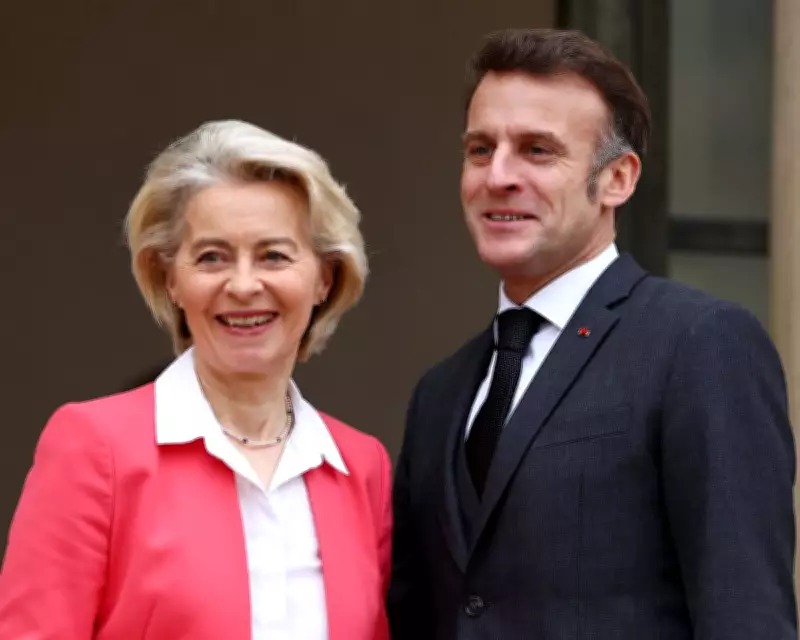
French President Emmanuel Macron has emerged as the strongest advocate for European preference, describing it as 'a defensive measure' essential for protecting European industries from unfair competition. Macron argues that without such measures in strategic sectors including clean technologies, chemicals, steel, automotive, and defense, 'Europeans will be swept aside' by competitors who no longer respect World Trade Organization rules.
In stark contrast, a coalition of northern European nations including Sweden, the Netherlands, and Baltic states has issued a stern warning against protectionist policies. Swedish Prime Minister Ulf Kristersson expressed deep skepticism about any agenda that seeks to protect European business by avoiding trade with other countries, stating such approaches could 'risk adding another layer of complex regulation' and deter vital investment.

Key Players and Their Positions
European Commission President Ursula von der Leyen has adopted a cautious middle ground, acknowledging European preference as 'a necessary instrument' in strategic sectors while warning that 'it is a fine line to walk.' She emphasized that any proposals must be supported by robust economic analysis and comply with international obligations.
The German-Italian partnership has notably avoided direct endorsement of Buy European policies. German Chancellor Friedrich Merz and Italian Prime Minister Giorgia Meloni instead focused on promoting 'legislative self-restraint' and reducing EU regulations. This alignment has raised questions about the traditional Franco-German engine of European integration, particularly as Merz and Macron disagree on key economic issues including the EU's proposed trade deal with Mercosur.
Broader Summit Agenda
The Buy European debate forms just one part of a comprehensive agenda at the Alden Biesen estate in Limburg, where leaders will also address:
- Deregulation efforts to streamline business operations
- Fragmented capital markets that constrain green and digital investments
- Barriers within the European single market that hamper internal trade
- Integration of EU capital markets to create a more unified financial system
Von der Leyen highlighted practical examples of regulatory obstacles, noting that a truck permitted to carry 44 tonnes in Belgium can only transport 40 tonnes when crossing into France due to differing national regulations.
Expert Warnings and Future Directions
The summit will feature presentations from former Italian prime ministers Mario Draghi and Enrico Letta, whose reports have shaped the economic agenda. Draghi delivered a particularly stark warning that the current economic world order is 'dead' and Europe risks becoming 'subordinated, divided and deindustrialised at once.' He advocated for moving from a confederation to a federation model to prevent individual member states from being picked off by global competitors.
Von der Leyen acknowledged the EU's decision-making challenges and expressed openness to advancing capital market integration with smaller groups of willing nations if unanimous agreement among all 27 members proves impossible. 'We have to make progress and tear down the barriers that prevent us from being a true global giant,' she declared, underscoring the urgency of the competitiveness crisis facing Europe.