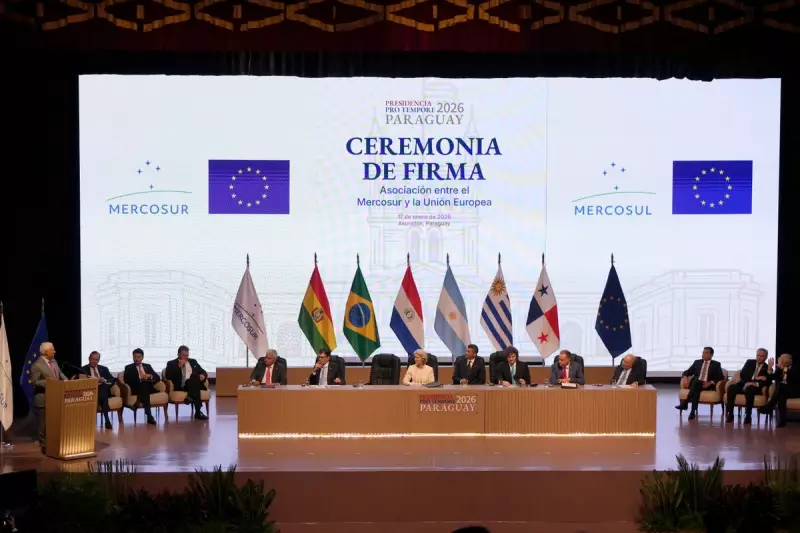
In a significant move against a backdrop of rising global protectionism, the European Union and the Mercosur bloc of South American nations have formally inked a historic free trade agreement. The landmark pact was signed on Saturday 17 January 2026 in Asunción, the humid capital of Paraguay, concluding more than a quarter of a century of complex and often stalled negotiations.
A Geopolitical Victory for the European Bloc
The signing ceremony represents a major strategic achievement for the EU. At a time defined by American tariff policies and a surge in Chinese exports, the deal solidifies Europe's economic footprint in a resource-rich region that has become an arena for competition between Washington and Beijing. This agreement is seen as a crucial step in diversifying and securing the EU's supply chains and trade partnerships beyond its traditional allies.
Overcoming Decades of Negotiation Hurdles
The path to this moment has been exceptionally long and fraught with difficulty. Over 25 years of torturous negotiations were required to align the interests of the EU with those of the Mercosur countries—Argentina, Brazil, Paraguay, and Uruguay. The final accord aims to dramatically strengthen commercial ties by eliminating the vast majority of tariffs on goods traded between the two economic areas, fostering increased market access for businesses on both sides of the Atlantic.

A Signal of South American Strategic Independence
Beyond the immediate economic benefits, the pact sends a powerful diplomatic message. It underscores South America's commitment to cultivating a diverse portfolio of trade and diplomatic relations. This development occurs even as U.S. President Donald Trump reasserts claims of American dominance in the Western Hemisphere. The deal effectively demonstrates that Mercosur nations are actively pursuing their own strategic interests and partnerships on the global stage.
The finalisation of this agreement marks a defiant stand for multilateralism and open markets in an era increasingly characterised by trade tensions and inward-looking policies. Its implementation will be closely watched by economists and policymakers worldwide, as it sets a new precedent for intercontinental cooperation.