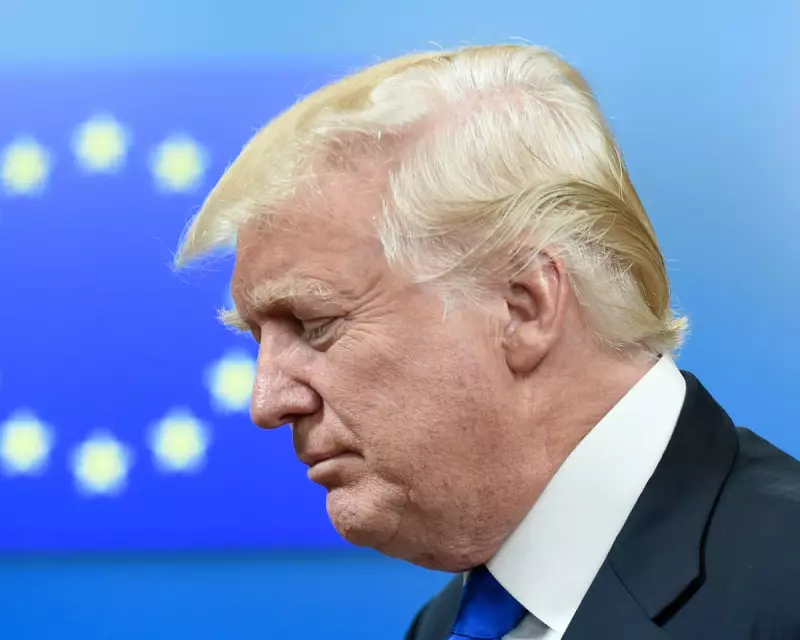
The transatlantic alliance faces one of its most severe tests in decades following former US President Donald Trump's announcement of punitive tariffs targeting eight nations supporting Greenland. The move, widely seen as an attempt to force the sale of the territory, has sent shockwaves through European capitals and forced a fundamental reassessment of the EU's relationship with the United States.
A Strategy of Appeasement in Ruins
The tariff threat, issued over the weekend, directly targets six European Union member states alongside Norway and the United Kingdom. This action starkly contradicts the routine description of the US as a key "ally and partner," a phrase used by European Commission President Ursula von der Leyen in Cyprus just days before. It renders Europe's recent strategy of placating Trump effectively obsolete.
The clearest evidence of this failed approach is the EU-US trade deal signed at Trump's Turnberry golf course in July last year. Widely viewed as skewed in Washington's favour, the agreement saw the EU eliminate many of its tariffs while accepting US duties of 15% on numerous products and 50% on steel. Von der Leyen defended the pact as providing "crucial stability" in an unstable world. That argument now lies in tatters.

In a rare show of unity, the European Parliament, spanning from the radical left to the far-right, has turned against the deal. Jordan Bardella, leader of France's National Rally, labelled Trump's latest threats "commercial blackmail" and demanded the agreement's suspension. Manfred Weber of the centre-right European People's Party joined mainstream voices calling for a pause in ratification.
The Unspoken Bargain and a Growing Backlash
The rationale behind accepting such an unequal trade term was largely unspoken but understood: maintaining vital US support for Ukraine against Russian aggression. Europe lacks comparable intelligence and military capabilities after years of underinvestment. As former Latvian Prime Minister Krišjānis Kariņš noted, this security dependence makes European leaders hesitant to criticise Trump openly.
However, the demand concerning Greenland—a territory that left the European Community in 1985 but remains under the sovereignty of EU member Denmark—may represent a step too far. Acquiescing to the forced sale of part of a member state would catastrophically undermine the EU's credibility as a geopolitical actor and its commitment to Ukrainian sovereignty.
As European leaders publicly affirm their support for Danish and Greenlandic sovereignty, calls are mounting for the bloc to deploy its powerful but never-used Anti-Coercion Instrument against the United States. Conceived as a response to Chinese economic pressure, this regulatory 'big bazooka' would allow the EU to impose sweeping restrictions on US goods and services, suspend investment flows, or revoke intellectual property protections.
A Path of Confrontation or Continued Conciliation?
France, a long-time advocate for a tougher line against US pressure, has explicitly urged the EU to trigger the instrument if Trump proceeds with the tariffs. Yet the process is neither swift nor simple. While the Commission promises speed, agreeing on specific punitive measures could take up to a year, requiring the backing of at least 55% of member states representing 65% of the EU population.
This dilemma echoes the bloc's response to Trump's "liberation day" tariffs in 2025. Then, despite promises of a "robust response," internal divisions and a desire to shield national industries led the EU down a path of appeasement rather than confrontation.
The coming weeks will prove decisive in revealing whether the EU's approach has fundamentally changed. With the 80-year-old transatlantic relationship undergoing epoch-defining strains, Europe must decide if it will finally wield its new trade weapons or seek another uneasy accommodation with Washington.