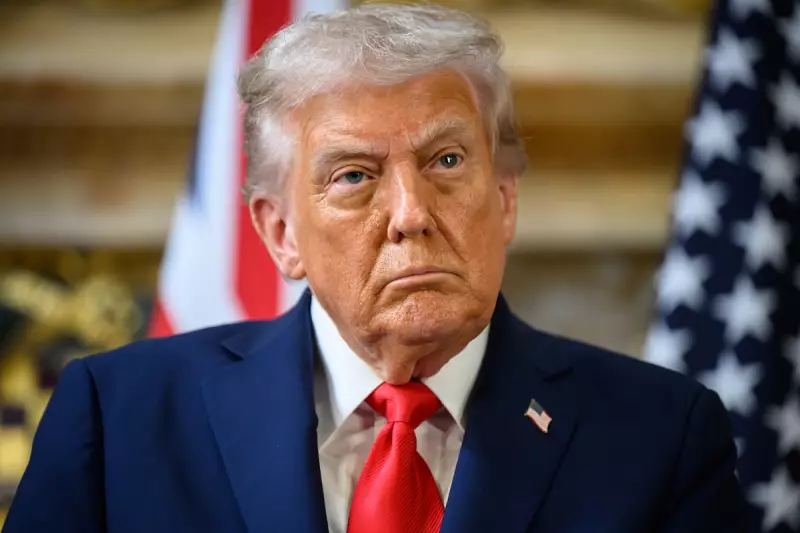
European nations and the United Kingdom have issued a stark warning of a "dangerous downward spiral" in transatlantic relations following former President Donald Trump's threat to impose sweeping tariffs. The move is an aggressive attempt to force a deal for the United States to purchase Greenland.
Europe Unites in Condemnation and Prepares Retaliation
In a joint statement released on Sunday, 18 January 2026, Denmark, Finland, France, Germany, the Netherlands, Norway, Sweden, and the United Kingdom declared that "tariff threats undermine transatlantic relations and risk a dangerous downward spiral." The countries expressed their "full solidarity with the Kingdom of Denmark and the people of Greenland."
The European Union is now preparing a formidable response. According to reports, the bloc is readying retaliatory tariffs worth €93 billion (approximately $107.71 billion) on US imports. This package had been suspended for six months in early August 2025 but is now being reactivated. The EU is also considering measures to restrict US companies from its single market.

EU Commission President Ursula von der Leyen stated the bloc would protect its strategic interests with "steadiness and resolve." The retaliatory plans were agreed upon during a meeting of EU ambassadors in Brussels on Sunday, aimed at providing European leaders with leverage ahead of pivotal meetings with Trump at the World Economic Forum in Davos this week.
UK and Global Leaders React to the Escalation
British Prime Minister Sir Keir Starmer held a phone call with Trump on Sunday, conveying that "applying tariffs on allies for pursuing the collective security of NATO allies is wrong." He had previously branded the tariff decision as "completely wrong."
On the Sunday media rounds, UK Culture Secretary Lisa Nandy emphasised the need for an "adult debate" with the US administration. Speaking to the BBC, she suggested Trump often expresses strong views to encourage dialogue and welcomes a difference of opinion. However, she rejected the idea he would simply "chicken out," stating the issue was serious and required mature discussion beyond mutual threats.
Other global voices echoed the concern. NATO Secretary General Mark Rutte, who has a warm relationship with Trump, said he had discussed Greenland's security with the president. French President Emmanuel Macron vowed not to bow to "intimidation," while Sweden's Prime Minister Ulf Kristersson said "we will not let ourselves be blackmailed."
The Stakes: Trade, Security, and Global Stability
Announcing the measures on Truth Social on Saturday, Trump stated the proposed 10 per cent tariffs would increase to 25 per cent by 1 June. He controversially warned that "world peace" is at stake if the US is not permitted to control the semi-autonomous Danish territory.
The threat has derailed a period of relative trade calm following a deal between the EU and US last summer. Industry chiefs, particularly in export-focused Germany, reacted with anger, warning Europe not to cave to demands. The German economy, emerging from two years of decline, is seen as especially vulnerable.
EU foreign policy chief Kaja Kallas warned that the divisions primarily benefit geopolitical rivals like China and Russia, undermining shared Western prosperity. Meanwhile, Denmark's Foreign Minister, Lars Løkke Rasmussen, indicated his country is pursuing a diplomatic track to resolve the dispute, having discussed the matter with US Vice President JD Vance.
The situation leaves the international community braced for a significant trade confrontation, with European solidarity being tested against the unilateral demands of the US administration.