

Irish Leaders Condemn Trump's Tariff Threats Over Greenland Bid
Irish political leaders have issued strong condemnations of Donald Trump's tariff threats, describing the US president's warnings as deeply regrettable and potentially catastrophic for transatlantic relations. The controversy centres on Mr Trump's continued push to acquire Greenland, a semi-autonomous Danish territory, with the US president threatening to impose 10% tariffs on eight European allies from February 1 unless they agree to his purchase plans.
Threats to EU-US Trade Deal
Irish Foreign Minister Helen McEntee warned that Mr Trump's tariff threats would essentially rip up the comprehensive trade agreement struck between the European Union and United States last year. Speaking to reporters on her way into cabinet on Tuesday, Ms McEntee emphasised that support for Greenland and Denmark remained absolute among EU member states.
Of course, a threat of tariffs on eight member states is essentially a threat of tariffs on all member states, and it would be hugely regrettable for last year's deal between the US and the EU to essentially be ripped up, Ms McEntee stated. She added that if the threatened tariffs materialise, 93 billion euros worth of counter-measures would be back on the table as the EU would need to respond strongly.

Calls for Dialogue and Firm Response
The Irish Foreign Minister stressed the importance of intensifying diplomatic engagement with the United States in the coming days, while simultaneously preparing multiple response options should the threats become reality. It is utterly regrettable that a president of the US would say that they're not focused on peace, but we need to engage, we need to use our voice, as we always have in Ireland, to try and bring reason and to try and bring calm to the current situation, she remarked.
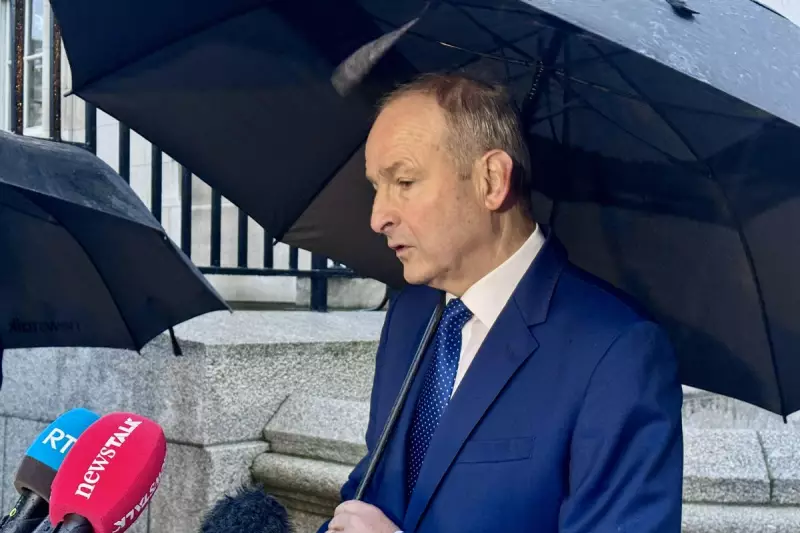
Taoiseach Micheál Martin echoed these concerns, expressing hope that common sense will prevail here in the interests of all our people that we represent, both in Europe and in the US. Speaking outside Government Buildings in Dublin, the Irish premier warned that a trade war would be very, very damaging indeed to workers across Europe, the United States, and the wider global economy.
Critical Days Ahead for EU-US Relations
Ireland's deputy premier Simon Harris described the next few days as crucial for EU-US relations. Attending a Eurogroup meeting in Brussels, Mr Harris emphasised there was not an hour to spare as diplomatic efforts continue to de-escalate tensions. It's absolutely important that intensive diplomatic efforts are put under way to try and de-escalate an extraordinarily dangerous economic situation, the Tánaiste and finance minister stated.
Mr Harris elaborated on the broader implications: We all know that tariffs are bad for the Irish economy, they're bad for the European economy, they're bad for the US economy as well. But this is now deeper than that also. This has the potential to cause a spiral of destabilising actions that could have dire consequences.
Parliamentary Reactions and Criticism
In the Dáil parliament, opposition leaders offered scathing assessments of the situation. Social Democrats leader Holly Cairns described Mr Trump as a chaos merchant in the Oval Office and called for a strong, united European response rather than bowing to Trump's bully tactics. What is needed now is for the EU to stand firm and – instead of rolling over for Trump – adopt a strong, united response, making clear that all options, including retaliatory tariffs and using the anti-coercion instrument are on the table, Ms Cairns asserted.
Labour leader Ivana Bacik accused Mr Trump of ripping up the rule book on international diplomacy, while People Before Profit TD Richard Boyd Barrett labelled the US president a bully, imperialist and threat to humanity and urged European leaders to stop bending the knee to American pressure.

Uncharted Territory and Grave Consequences
Responding to these criticisms, Taoiseach Micheál Martin insisted the EU was adopting a principled, firm and robust stance on Greenland's territorial integrity and Danish sovereignty. He rejected suggestions that the European approach had been based on flattery towards Mr Trump, describing the threats against Greenland as representing uncharted territory in international relations.
The situation is serious and potentially very grave for the European economy, for the Irish economy, indeed to the United States economy, if a trade war was to break out, Mr Martin warned, as political leaders from across the spectrum united in their condemnation of what they view as dangerous economic brinkmanship.





