European Union leaders have issued a stark warning that Donald Trump's threat to impose tariffs on eight European nations over their stance on Greenland risks triggering a "dangerous downward spiral" in transatlantic relations. The move has prompted a defiant response from key European capitals and threatens to derail a major trade agreement.
European Defiance in the Face of 'Unacceptable' Threats
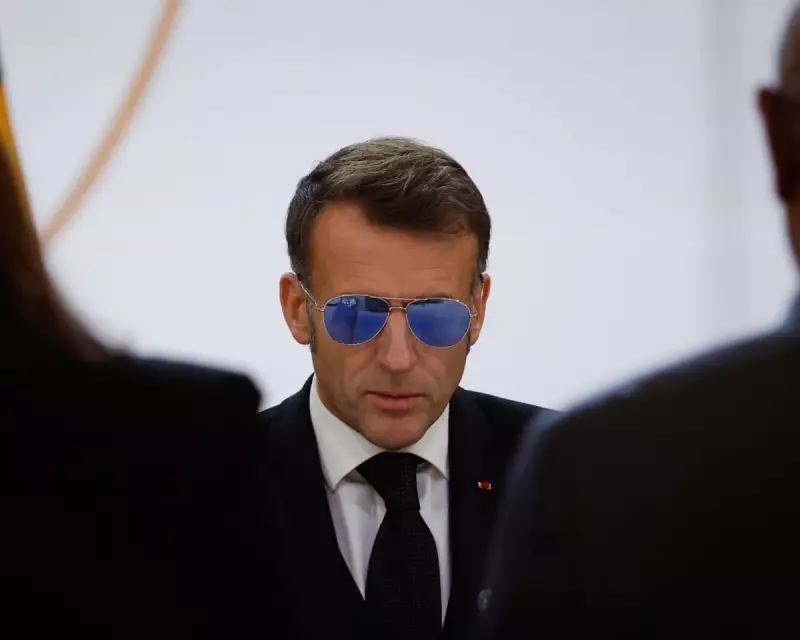
French President Emmanuel Macron led the charge, stating that "no amount of intimidation" would persuade European nations to alter their position regarding Greenland. He labelled the tariff threats as "unacceptable," emphasising that they had "no place" given Europe's efforts to support Greenland and Denmark's status as both an EU and NATO member.
"France is committed to the sovereignty and independence of nations, in Europe and elsewhere," Macron declared. "No intimidation or threats will influence us, whether in Ukraine, Greenland or anywhere else in the world."

His sentiments were echoed by Swedish Prime Minister Ulf Kristersson, who asserted that the EU would not be "blackmailed" by the US President. "Only Denmark and Greenland decide on issues concerning Denmark and Greenland," Kristersson stated firmly.
Tariffs Target Vocal Opponents, EU Trade Deal in Jeopardy
The proposed tariffs, announced by Trump on his Truth Social platform, target Denmark, Norway, Sweden, France, Germany, the UK, the Netherlands, and Finland. These are the nations that have been most vocal in opposing Trump's stated intentions to acquire Greenland. The plan involves a 10% tariff starting on 1 February, escalating to a further 25% from 1 June.
The immediate consequence is a likely freeze on the ratification of the EU-US trade deal agreed last summer. Manfred Weber, head of the European Parliament's largest voting bloc, the European People's Party, indicated the legal process would be paused.
Bernd Lange, chair of the Parliament's influential foreign affairs committee, confirmed the expectation, stating, "In view of the threat... I cannot imagine that we will continue business as usual." The Socialists and Democrats, the second-largest bloc, also pulled support, with trade vice-president Kathleen Van Brempt stating there could be "no trade deal under given circumstances."
A Unified European Front and a Warning of Escalation
In a joint statement, European Council President António Costa and European Commission President Ursula von der Leyen underscored the EU's unity. They reiterated the "shared transatlantic interest in peace and security in the Arctic" but warned explicitly that "tariffs would undermine transatlantic relations and risk a dangerous downward spiral."
The statement concluded with a resolve: "Europe will remain united, coordinated, and committed to upholding its sovereignty."
Analysts suggest Trump's move is a tactical play. Mikkel Runge Olesen, a senior researcher at the Danish Institute for International Studies, described it as a "negotiating tactic" directly linked to European nations sending troops to exercises in Greenland. "We are never going to see American troops on the ground in Greenland," he noted.
The crisis emerges as European leaders were in Paraguay to sign a landmark trade deal with South America's Mercosur alliance, highlighting the global diplomatic and economic stakes now entangled with the future of the Arctic.