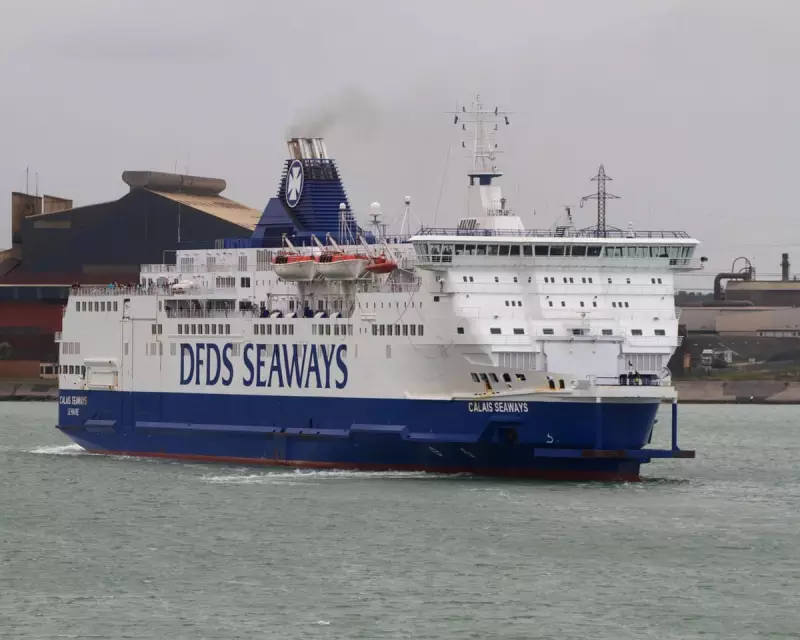
Scotland-France Ferry Service Poised for Revival Amid Major Dunkirk Regeneration
The long-awaited revival of a direct ferry link between Scotland and France is now anticipated to commence later this year, with the Danish operator DFDS potentially at the helm. This development coincides with the launch of an ambitious €40 billion (£35 billion) regeneration programme for the historic port of Dunkirk, a project being hailed as a modern-day embodiment of the resilience for which the city is renowned.
A Strategic Maritime Link Re-emerges
Plans are advancing for a new cargo and passenger service connecting Rosyth in Fife with Dunkirk. This would mark a significant restoration of direct maritime ties, coming eight years after the last freight ferries ceased operations and sixteen years following the halt of passenger services between Scotland and mainland Europe.
The proposed route would initially involve a single vessel making three weekly crossings from Rosyth, situated north-west of Edinburgh. While earlier reports suggested a spring launch, the timeline has shifted to later in the year. The journey is expected to take approximately 20 hours.

Daniel Deschodt, Deputy Chief Executive of the Port of Dunkirk, expressed optimism about the service's appeal, particularly for Scottish rugby fans travelling to events like the Six Nations tournament.
The Dunkirk Masterplan: A Green Industrial Renaissance
The ferry revival is intrinsically linked to a monumental transformation of the Dunkirk port area. Backed by approximately €4 billion (£3.5 billion) in initial private and public investment, the 60-year-old port is being redeveloped into a vast hub focused on the energy transition and new industrial growth.
"We are betting on the energy and ecological transition to redevelop an industrial region," stated Patrice Vergriete, the Mayor of Dunkirk and former French Transport Minister, upon unveiling the four-year plan.
The regeneration is seen as a critical test case for reindustrialising regions historically dependent on heavy, polluting industries. Vergriete noted that Dunkirk, famous for the Allied evacuation in World War Two, is a prime example of Western European deindustrialisation, with thousands of postwar heavy industry jobs dwindling to just a few hundred by the 1980s.
Pioneering Decarbonisation and New Industries
Central to Dunkirk's strategy is positioning itself at the forefront of Europe's green industrial shift. Key projects include:
- The recent opening of Verkor's electric vehicle battery factory.
- A partnership between Verkor and Renault Alpine to develop hydrogen fuel cell technology on-site.
- ArcelorMittal's transition from blast furnaces to electric arc furnaces for steelmaking, supported by €850 million in French state aid.
- A €1.7 billion industrial revamp of a former refinery site, which will host a new battery factory, an aviation biofuel plant, and specialised logistics terminals after a five-year soil decontamination.
The port is also expanding its rail infrastructure with a new €25 million terminal to shift freight from road to rail, further cutting carbon emissions. Additionally, plans are underway for a hub to capture and liquefy industrial carbon emissions from across Europe for storage, with potential facilities in Scotland.
Overcoming Logistical and Brexit Hurdles
The ferry service's revival is not without its challenges. It requires the construction of new post-Brexit border facilities for essential veterinary checks and passport controls. In November, Scottish Agriculture Minister Jim Fairlie announced a consultation on plans to process EU imports at Rosyth, with inspections conducted 20 miles away at Grangemouth.
This Scottish route is part of a broader expansion of Dunkirk's maritime connections, which includes new services to Nordic countries and enhanced trade with South America. Notably, one in every four pineapples and bananas consumed in France already arrives via Dunkirk from Colombia.

A European Laboratory for Renewal
The Dunkirk project is being closely monitored across the continent as a potential blueprint for industrial renewal. Marie-Pierre de Bailliencourt, Director General of the Institut Montaigne thinktank, described the area as a "laboratory" and a "testing ground for European industrial renewal."
A December report from the institute affirmed that "Dunkirk is at the forefront of industrial revitalisation efforts in France and, more broadly, in Europe with decarbonisation on the one hand and the establishment of new, related industries on the other."
While UK ports like Portsmouth and Dover grapple with physical constraints and Brexit-related disruptions, Dunkirk has strategically leveraged its maritime assets and the global shift towards decarbonisation to redefine its economic future. The potential return of the Scotland ferry service symbolises not just restored connectivity, but a tangible link to a wider, greener vision for European industry and trade.